
The Fable (2019)
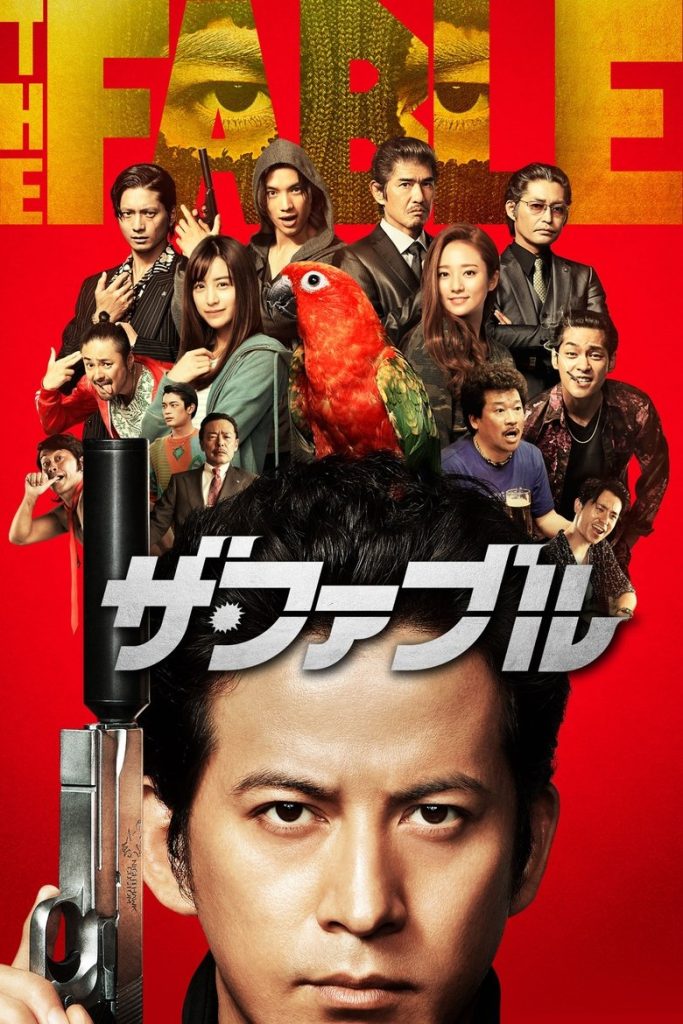
Story overview
A legendary yakuza hitman known as 'The Fable' is forced by his boss to take a year-long break from his violent profession. He and his female associate must relocate to Osaka and attempt to live ordinary civilian lives, despite their complete lack of experience with normal society. The film blends action and comedy as this deadly assassin navigates mundane jobs, social interactions, and the constant temptation to return to his old ways, all while hiding his true identity.
Parent Guide
A Japanese action-comedy about a yakuza hitman attempting civilian life. Contains stylized violence, criminal themes, and mature humor. While not excessively graphic, the subject matter and some intense scenes make it most appropriate for mature tweens and teens.
Content breakdown
Stylized action violence including fistfights, shootings (with some blood shown), threats with weapons, and criminal intimidation. Violence is often presented in a somewhat comedic or exaggerated manner rather than realistic gore. Several scenes show characters in peril from criminal elements.
Some tense moments involving criminal threats and violence, but generally not frightening in a horror sense. The premise of a professional killer might be conceptually disturbing to some viewers. No jump scares or truly terrifying imagery.
Mild profanity in the English subtitles (words like 'hell', 'damn'). No strong sexual language. Note that the original Japanese dialogue may contain different expressions that are translated mildly.
Some mild sexual references and innuendo in dialogue. The female associate is sometimes presented in a suggestive manner through clothing and behavior, but no explicit sexual content or nudity. Some flirtatious interactions.
Social drinking in bars and restaurants (beer, sake). Some smoking by characters, typical of yakuza film tropes. No depiction of drug use or excessive drunkenness.
Moderate emotional intensity from the main character's struggle to adapt to normal life and suppress his violent instincts. Some tense criminal confrontations. The comedic elements help balance the intensity. Themes of identity and morality may provoke thought in mature viewers.
Parent tips
This Japanese action-comedy features a professional assassin trying to live a normal life, resulting in humorous situations mixed with violent criminal elements. While not excessively graphic, it contains stylized violence typical of yakuza films, including fights, shootings, and criminal threats. The tone is often comedic, but the underlying themes involve organized crime, murder as a profession, and moral ambiguity. Best suited for mature tweens and teens who can distinguish between fictionalized criminal behavior and real-life values.
Parent chat guide
Parent follow-up questions
—
- Did you think it was funny when the hitman didn't know how to do normal things?
- How would you feel if you had to pretend to be someone different?
- Why do you think the boss made the hitman take a break from his job?
- Do you think the movie makes criminal life seem too exciting? Why or why not?
- What was the funniest part about someone trying to live a normal life?
- How does the film balance comedy with its violent subject matter? Does it work?
- What does the movie say about whether people can truly change their nature?
- Do you think the film romanticizes criminal life, or does it show enough consequences?
- How does Japanese culture influence how the story is told compared to similar Hollywood films?
🎭 Story Kernel
The Fable explores the psychological prison of extraordinary skill. The protagonist, a legendary assassin forced into a year of normal life, doesn't crave redemption but struggles with the fundamental human need for connection that his profession has systematically erased. The real conflict isn't about avoiding violence, but about suppressing an identity so ingrained it's become his sole mode of existence. His 'vacation' is a brutal exercise in existential restraint, where buying groceries is a greater challenge than a firefight. The film asks what remains of a person when you strip away the one thing they're perfect at, revealing a hollow man trying to assemble a facsimile of a soul from instruction manuals on normalcy.
🎬 Visual Aesthetics
The film employs a stark visual dichotomy. The action sequences are shot with a cold, clinical precision—static wide shots and smooth tracking that make violence look like a mundane, efficient trade. This contrasts sharply with the 'normal life' segments, which use warmer, slightly oversaturated colors and handheld camerawork that feels awkward and unstable, mirroring the protagonist's discomfort. The color palette is key: muted grays and blues dominate his assassin life and flashbacks, while his forced civilian life is bathed in the artificial yellows and greens of suburban Japan, making peace look more unnatural than war.
🔍 Details & Easter Eggs
💡 Behind the Scenes
Jun'ichi Okada, who plays the titular Fable, performed many of his own stunts, drawing on stage combat experience. The director, Kan Eguchi, insisted on practical effects for the action scenes, avoiding CGI to maintain the film's grounded, tactile feel. The suburban locations were specifically chosen for their generic, 'anytown' quality to emphasize the protagonist's fish-out-of-water reality. The script is adapted from a manga, but significantly condenses the plot to focus almost entirely on the psychological premise of the first arc.
Where to watch
Choose region:
- Netflix
- Netflix Standard with Ads
Trailer
Trailer playback is unavailable in your region.