
The Father (2020)
Story overview
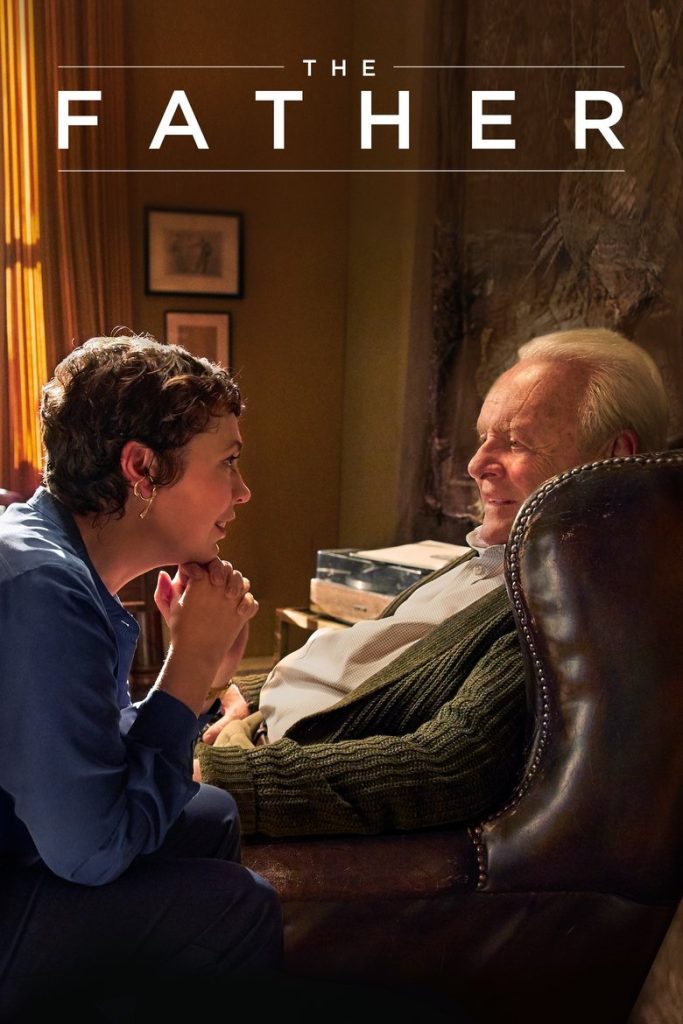
The Father is a poignant drama that explores the experience of aging through the perspective of an elderly man. As his memory and perception of reality become increasingly unreliable, he struggles to understand his changing relationships and environment. The film uses innovative storytelling techniques to immerse viewers in the confusion and emotional turmoil of dementia. It's a thoughtful examination of family dynamics, identity, and the fragility of the human mind.
Parent Guide
A thoughtful drama about dementia that requires emotional maturity to appreciate its themes.
Content breakdown
No physical violence or dangerous situations.
Psychological disorientation and confusion may be unsettling as the film immerses viewers in the experience of dementia.
Occasional mild language.
No sexual content or nudity.
Brief social drinking in a couple of scenes.
Deals with difficult themes of aging, memory loss, family strain, and existential confusion that may be emotionally challenging.
Parent tips
This film provides a sensitive portrayal of dementia and its impact on both the individual and their family. While there's no graphic content, the psychological themes and emotional intensity may be challenging for younger viewers. The film's non-linear narrative and shifting perspectives can be confusing, which mirrors the main character's experience but may require explanation for children. Parents should be prepared to discuss memory loss, aging, and family caregiving responsibilities that the film addresses.
Parent chat guide
Parent follow-up questions
- How did the man in the movie feel when he was confused?
- What are some ways we help people when they forget things?
- Why is it important to be patient with people?
- What did the daughter do to help her father?
- How can we show we care about our family members?
- What was confusing about the way the story was told?
- How did the movie make you feel about getting older?
- What do you think was real and what might have been in the man's imagination?
- How did the family members show they cared even when things were difficult?
- What would you do if someone you loved was having memory problems?
- How did the film's structure help you understand what dementia might feel like?
- What responsibilities do family members have when someone is aging or ill?
- How did the changing settings and characters reflect the main character's mental state?
- What did you learn about how memory affects our sense of identity?
- How might this film change how you think about elderly people in your life?
- How effectively did the film convey the subjective experience of dementia?
- What ethical questions does the film raise about caregiving and autonomy?
- How did the narrative techniques contribute to the emotional impact of the story?
- What insights did the film provide about family dynamics under stress?
- How might this film influence your perspective on aging and mental health?
🎭 Story Kernel
The Father isn't about Alzheimer's as a medical condition but about the subjective experience of reality dissolving. The film's true horror isn't memory loss but the complete erosion of trust—when Anthony can't trust his own senses, his daughter's identity, or even the passage of time. What drives characters isn't plot progression but desperate attempts to maintain narrative control in a world where walls shift and people transform. The daughter's struggle becomes a mirror of Anthony's—both trying to impose order on chaos, one through caregiving, the other through defiance. The film expresses how identity collapses when memory's scaffolding falls away, leaving only emotional echoes.
🎬 Visual Aesthetics
Director Florian Zeller masterfully uses architectural spaces as psychological maps. Apartments morph seamlessly—a hallway becomes a different hallway, furniture rearranges itself between scenes. The camera often adopts Anthony's disoriented perspective, with tight close-ups that exclude context, then sudden wide shots revealing shifted realities. Color palette remains muted but warm, creating domestic familiarity that makes the spatial betrayals more unsettling. Mirrors and reflections appear frequently, not as symbolism but as reality checks that often fail—sometimes showing different ages or versions of characters. The visual language makes viewers experience Anthony's confusion firsthand.
🔍 Details & Easter Eggs
💡 Behind the Scenes
Anthony Hopkins prepared by studying people with dementia but ultimately focused on capturing the emotional truth rather than clinical accuracy. The entire film was shot in sequence to help Hopkins track his character's deterioration. The apartment sets were built as interconnected rooms that could be quickly reconfigured to create the disorienting spatial continuity. Olivia Colman and Olivia Williams playing 'Anne' isn't just casting—their physical resemblance adds to Anthony's confusion about his daughter's identity. Director Florian Zeller adapted his own stage play, his first film, drawing from personal experiences with his grandmother's dementia.
Where to watch
Choose region:
- Amazon Video
- Apple TV
- Google Play Movies
- YouTube
- Fandango At Home
- Spectrum On Demand
Trailer
Trailer playback is unavailable in your region.