
The General (1926)
Story overview
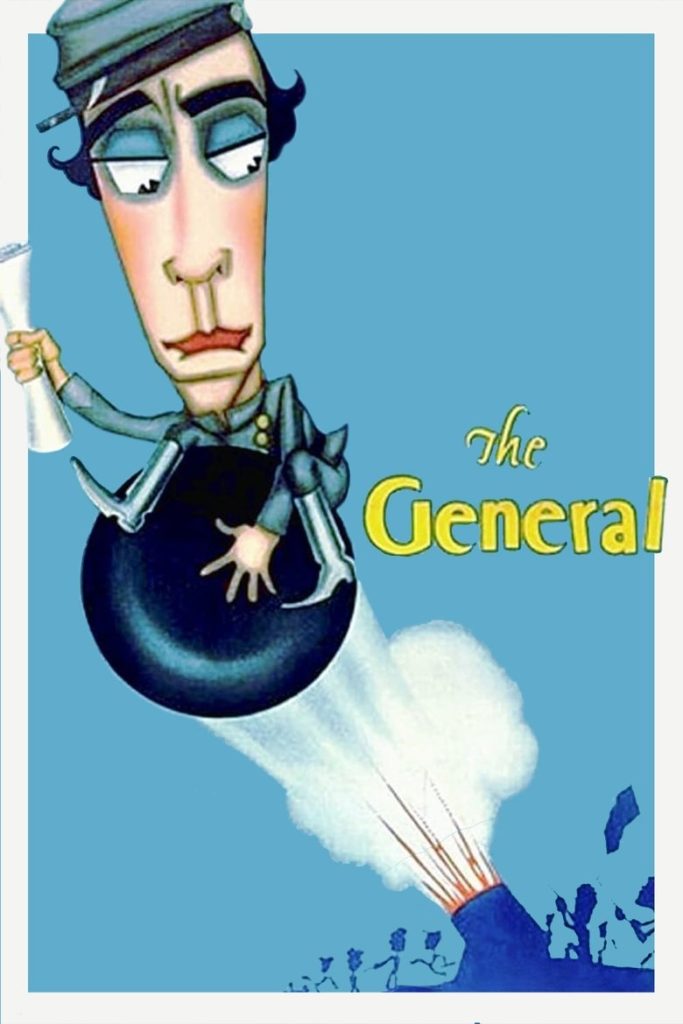
The General is a classic silent film set during the American Civil War. It follows a railroad engineer who must rescue his stolen locomotive and the woman he loves from Union spies. The movie combines thrilling action sequences with physical comedy as the protagonist undertakes this daring mission. As a silent film, it relies on visual storytelling and expressive performances to convey the narrative.
Parent Guide
A classic silent comedy-adventure with mild action and wartime themes suitable for most children with parental guidance.
Content breakdown
Contains comedic action sequences with mild peril, including train chases and wartime scenarios without graphic violence.
Some tense moments during action sequences, but overall tone is comedic and adventurous rather than frightening.
Silent film with no spoken dialogue; occasional title cards contain neutral text.
No sexual content or nudity; contains mild romantic themes typical of the era.
No depiction of substance use.
Some moments of tension and excitement during action sequences, but overall maintains a light, comedic tone.
Parent tips
This 1926 silent film features physical comedy and action sequences that are generally mild by today's standards, but some scenes involve peril and wartime themes. The Civil War setting includes depictions of soldiers and military conflict, though the tone is largely comedic and adventurous rather than grim. Since it's a silent film, there's no spoken dialogue to monitor, but the visual storytelling may require some explanation for younger viewers unfamiliar with this format.
Parent chat guide
Parent follow-up questions
- What was your favorite funny part in the movie?
- How did the characters show their feelings without talking?
- What would you do if something you loved was taken away?
- How did the main character solve problems without using words?
- What did you notice about how movies were made long ago?
- Why do you think trains were so important during this time period?
- How does the physical comedy in this film compare to modern comedy?
- What historical elements did you notice about the Civil War setting?
- How does the silent film format affect how the story is told?
- How does this film use visual storytelling techniques effectively?
- What commentary might the film be making about war through its comedic approach?
- How does this early action film compare to modern action movies in terms of pacing and tension?
🎭 Story Kernel
At its core, 'The General' is less about the Civil War and more about a man's obsessive devotion to his two loves: his locomotive and Annabelle Lee. Johnnie Gray's entire heroic journey is motivated by personal pride and romantic pursuit, not patriotism—he's rejected by the Confederate army, then becomes an accidental hero while trying to rescue his train and girlfriend. Keaton masterfully explores how society undervalues specialized expertise until it becomes essential, with Johnnie's railroad skills proving more valuable than conventional soldiering. The film suggests that true heroism emerges from authentic passion rather than ideological conformity.
🎬 Visual Aesthetics
Keaton's visual language is breathtakingly precise—every shot serves the narrative with mathematical clarity. The famous locomotive chase sequences use deep focus and wide shots to establish spatial relationships, making the physical comedy land with perfect timing. Notice how Keaton frames himself small against the massive machinery, emphasizing human vulnerability versus industrial power. The black-and-white cinematography creates stark contrasts that highlight both the physical gags and the film's darker undertones. The single-take train crash into the river remains one of cinema's most expensive and impressive practical effects, achieved through meticulous planning rather than editing tricks.
🔍 Details & Easter Eggs
💡 Behind the Scenes
Buster Keaton performed all his own dangerous stunts, including the legendary moment where he rides on the front of the moving locomotive's cowcatcher. The production used actual Civil War-era locomotives that had to be transported to Oregon, where filming occurred because the Southern locations resembled the 1860s landscape. The train crash sequence cost $42,000 (equivalent to about $700,000 today) and was so expensive it contributed to Keaton losing creative control at his studio. Remarkably, despite its now-classic status, the film was a commercial failure upon release, with critics calling it 'too mechanical'—a perfect irony for a film about machinery.
Where to watch
Choose region:
- fuboTV
- MGM+ Amazon Channel
- MGM Plus Roku Premium Channel
- Criterion Channel
- MGM Plus
- Philo
- FlixFling
- Cohen Media Amazon Channel
- Kino Film Collection
- Amazon Video
- Apple TV
- Google Play Movies
- YouTube
- Fandango At Home
- The Roku Channel
- Shout! Factory TV
- Filmzie
- Cineverse
- Kanopy
- Hoopla
- JustWatchTV
- FlixHouse
- Plex
- Plex Channel
- Darkroom
- Fawesome
- Artflix
Trailer
Trailer playback is unavailable in your region.