
The Godfather Part II (1974)
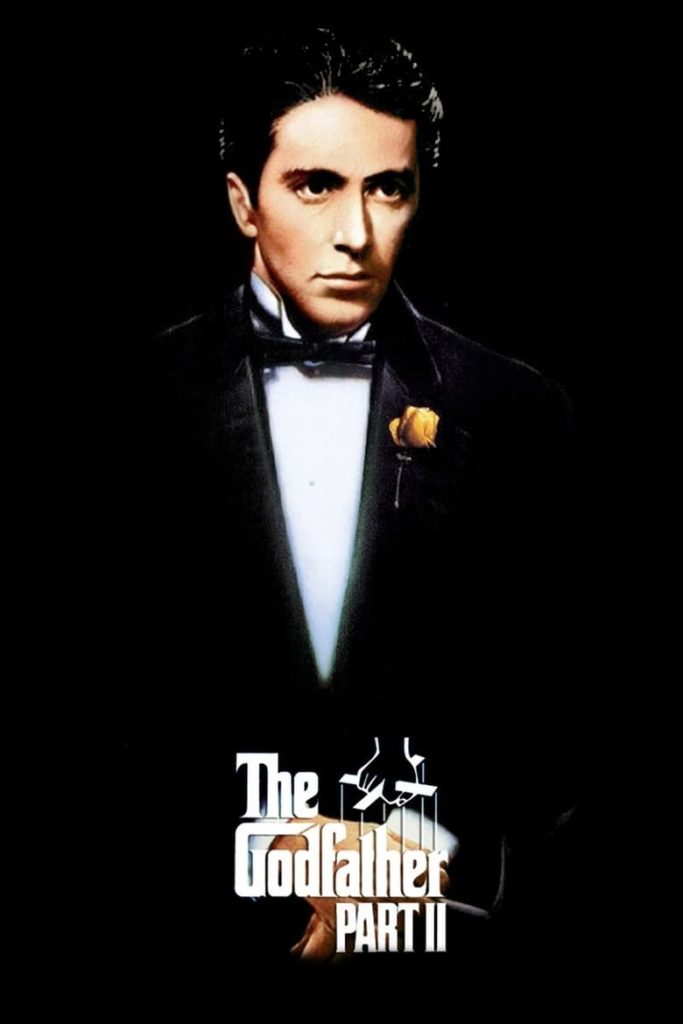
Story overview
This film continues the story of a powerful crime family, showing both the early life of its founder and the struggles of his son to expand their illegal operations decades later. It explores themes of power, loyalty, and the consequences of criminal life through parallel narratives set in different time periods. The complex story examines how ambition and family legacy can lead to moral compromise and personal isolation.
Parent Guide
A complex crime drama with mature themes and content suitable only for older teens and adults.
Content breakdown
Contains depictions of organized crime violence including shootings, beatings, and criminal intimidation as central plot elements.
Includes tense situations, criminal threats, and themes of betrayal that may be unsettling, though not graphically horrific.
Contains some strong language and ethnic slurs consistent with the criminal setting and time periods depicted.
Contains brief sexual references and situations, but no explicit nudity or graphic sexual content.
Shows alcohol consumption and smoking as part of social and business settings throughout different time periods.
Features high emotional stakes involving family conflict, moral dilemmas, betrayal, and the psychological weight of criminal life.
Parent tips
This R-rated crime drama contains mature themes and content unsuitable for younger viewers. Parents should be aware that the film depicts organized crime activities including violence, corruption, and criminal enterprises as central elements of the story. The lengthy runtime and complex narrative structure may also challenge younger viewers' attention spans and comprehension.
Parent chat guide
Parent follow-up questions
- What did you notice about how the family members treated each other?
- How did the music make you feel during different parts?
- What colors or places did you remember from the movie?
- Did you see any characters being kind to others?
- What was your favorite part to watch?
- What did you think about how the characters made important decisions?
- How did the movie show that actions have consequences?
- What did you notice about how the story jumped between different times?
- How did the characters show loyalty to their family?
- What parts made you feel curious about what would happen next?
- How does the film explore the difference between family loyalty and doing what's right?
- What techniques did the filmmakers use to show the passage of time and changing circumstances?
- How does the movie portray the costs and benefits of pursuing power?
- What did you think about how the characters balanced business and personal relationships?
- How did the historical settings affect the characters' choices and opportunities?
- How does the film use parallel narratives to comment on the cycle of violence and power?
- What commentary does the movie make about the American Dream and immigrant experiences?
- How does the cinematography and editing contribute to the themes of isolation and consequence?
- In what ways does the film explore the psychological costs of maintaining power through criminal means?
- How does the treatment of family dynamics reflect broader themes about tradition versus change?
🎭 Story Kernel
The Godfather Part II masterfully dissects the American Dream's dark underbelly through parallel narratives. While Michael Corleone consolidates power in 1958, losing his soul and family in the process, young Vito's rise in 1917 reveals how the system itself creates criminals. This isn't just a gangster saga—it's about how institutions (government, business, family) become indistinguishable from organized crime when driven by ambition. Michael's tragedy isn't his violence but his transformation into exactly what he vowed to escape: a man who puts business before blood, ultimately sitting alone in his compound as the family disintegrates around him.
🎬 Visual Aesthetics
Coppola employs a chilling visual dichotomy: Vito's early years glow with warm sepia tones, suggesting nostalgia for a simpler criminality, while Michael's present is dominated by cold blues and sterile interiors that mirror his emotional isolation. The camera often frames Michael in windows or doorways—physically present but emotionally distant. The Lake Tahoe compound becomes a gilded cage, its expansive windows revealing beautiful views that Michael can no longer appreciate. The parallel editing between eras creates a haunting dialogue where Vito's family gatherings contrast with Michael's empty celebrations.
🔍 Details & Easter Eggs
💡 Behind the Scenes
Robert De Niro spent months learning Sicilian dialect for Vito's scenes, improvising much of his dialogue since the script only indicated 'speaks Sicilian.' The Havana sequence was nearly cut due to political tensions with Cuba, forcing Coppola to use stand-in locations. Most remarkably, the studio wanted to cut the entire Vito backstory to reduce runtime, but Coppola fought to keep the parallel structure that makes the film thematically rich. Al Pacino's famously restrained performance emerged from his belief that Michael had become 'dead inside'—he deliberately limited his emotional range to show the character's disintegration.
Where to watch
Choose region:
- fuboTV
- Paramount+ Amazon Channel
- Paramount+ Roku Premium Channel
- Paramount Plus Essential
- Paramount Plus Premium
- Amazon Video
- Apple TV
- Google Play Movies
- YouTube
- Fandango At Home
- JustWatchTV
- FlixFling
- Spectrum On Demand
- Plex
Trailer
Trailer playback is unavailable in your region.