
The Grace Card (2011)
Story overview
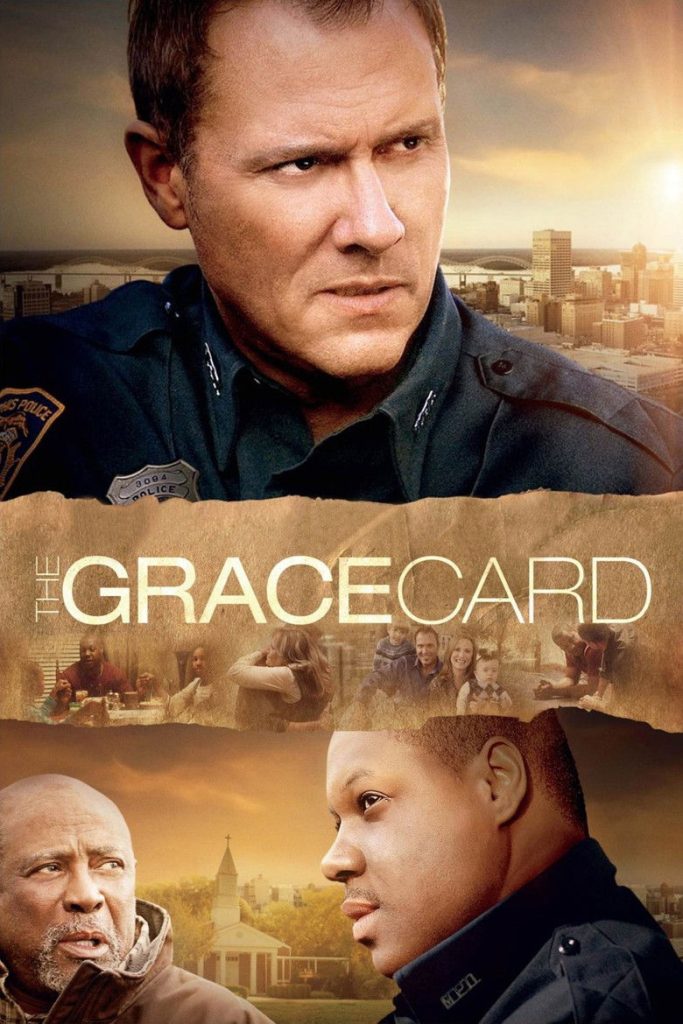
The Grace Card is a 2011 drama film that explores themes of forgiveness, redemption, and racial reconciliation through the story of two men from different backgrounds. The movie follows a police officer struggling with personal tragedy who forms an unlikely connection with a pastor. Their journey together addresses grief, faith, and the power of extending grace to others. The film presents a thoughtful examination of how people can overcome prejudice and pain through understanding and compassion.
Parent Guide
A faith-based drama dealing with mature themes of grief, racial reconciliation, and personal redemption. Suitable for families comfortable with religious content and discussions about difficult emotions.
Content breakdown
Some tense situations and references to past violence, but no graphic depictions.
Emotional themes of grief and loss may be intense for sensitive viewers.
No offensive language noted.
No sexual content or nudity.
No substance use depicted.
Deals with grief, anger, racial tension, and personal transformation.
Parent tips
The Grace Card deals with mature themes including grief, racial tension, and personal redemption that may require parental guidance for younger viewers. While the film has a PG-13 rating primarily for thematic elements, parents should be prepared to discuss the emotional content with children. The movie's focus on faith-based themes and interpersonal conflict makes it more suitable for families who are comfortable with religious content and discussions about difficult emotions.
Parent chat guide
Parent follow-up questions
- What does it mean to be kind to someone?
- How do you feel when someone says sorry to you?
- What makes you feel better when you're sad?
- Can you think of a time you helped someone?
- What is a friend?
- What does 'forgiveness' mean to you?
- How do the characters show they care about each other?
- Why do you think people sometimes have trouble understanding each other?
- What are some ways to help someone who is feeling sad?
- How can we be fair to everyone?
- How does grief affect people differently?
- What role does faith play in the characters' decisions?
- How do prejudices develop and how can they be overcome?
- What does 'grace' mean in the context of relationships?
- How can difficult conversations lead to better understanding?
- How does the film explore the relationship between justice and mercy?
- What societal factors contribute to the racial tensions depicted?
- How do personal tragedies shape worldviews and relationships?
- What does the film suggest about institutional biases?
- How can faith communities address social divisions constructively?
🎭 Story Kernel
The movie's core is the collision between performative faith and lived trauma. It's not about whether God exists, but whether forgiveness can function as a practical tool in a broken system. Mac's rage isn't just grief—it's the logical outcome of a justice system that failed his son. Sam's faith isn't tested by atheism but by the hypocrisy of offering platitudes while benefiting from racial privilege. The driving force isn't plot, but the unbearable tension between two men who are professionally required to trust each other while personally representing each other's deepest wounds. The 'grace card' becomes a physical manifestation of an emotional IOU—a debt that can't be repaid, only forgiven.
🎬 Visual Aesthetics
The visual language operates in stark contrasts: the sterile blue-tinged police precinct versus the warm amber tones of Sam's church, framing institutional coldness against spiritual community. Camera work is deliberately claustrophobic during confrontations, using tight close-ups that make the squad car feel like a confessional booth. Notice how Mac's flashbacks are desaturated almost to monochrome, while present-day scenes gradually gain color as he heals—a visual metaphor for emotional thawing. The film avoids dramatic camera movements, opting for a grounded, almost documentary style that makes the miraculous moments of connection feel earned rather than cinematic.
🔍 Details & Easter Eggs
💡 Behind the Scenes
The film was shot on location in Memphis, Tennessee, with many scenes using actual Memphis Police Department facilities. Actor Michael Joiner, who plays Sam Wright, is an ordained minister in real life, bringing authenticity to the pastoral scenes. Director David G. Evans intentionally cast mostly local actors for supporting roles to maintain regional authenticity. The famous squad car conversations were filmed in a single day using multiple cameras to capture natural reaction shots. Producer Howard Klausner fought to keep the film's modest budget under $200,000, believing the story's power was in its simplicity rather than production value.
Where to watch
Choose region:
- Netflix
- Netflix Standard with Ads
- The Roku Channel
- Amazon Video
- Apple TV
- Google Play Movies
- YouTube
- Fandango At Home