
The Grand Budapest Hotel (2014)
Story overview
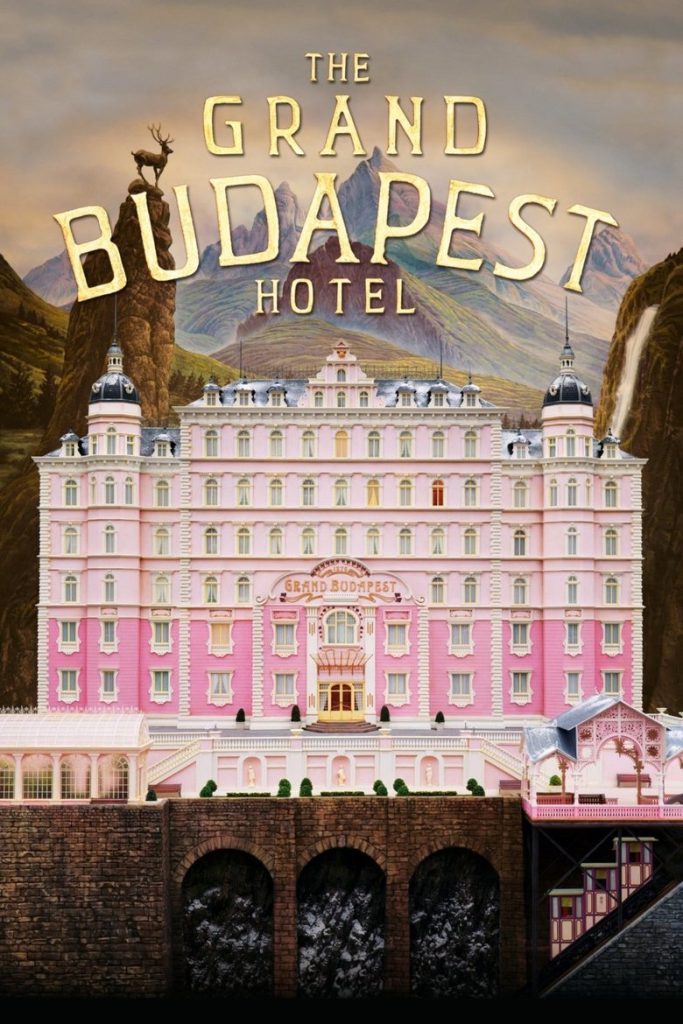
The Grand Budapest Hotel is a whimsical comedy-drama set in a luxurious European hotel between the world wars. It follows the adventures of a legendary concierge and his young protégé as they navigate a series of misadventures involving a stolen painting and a family fortune. The film uses its colorful, stylized setting to explore themes of friendship, loyalty, and the changing social landscape of early 20th-century Europe.
Parent Guide
A stylized comedy-drama with mature themes and content best suited for teens and adults.
Content breakdown
Stylized violence including fights, chases, and perilous situations presented in a cartoonish manner rather than realistic gore.
Some tense moments and peril, but generally presented with humor and stylized visuals that reduce scariness.
Some strong language and crude humor throughout the film.
Brief sexual references and innuendo, but no explicit nudity or sexual scenes.
Social drinking shown in hotel settings, consistent with the time period depicted.
Themes of loss, change, and loyalty create emotional depth, balanced by the film's humorous tone.
Parent tips
This film is rated R primarily for language, some violence, and brief sexual content. While visually charming and often humorous, it contains mature themes and scenes that may not be suitable for younger children. The stylized violence includes fights, chases, and some peril, though it's presented in a cartoonish manner rather than realistic gore. Parents should note the film's sophisticated humor and historical context may be better appreciated by older children and teens.
Parent chat guide
Parent follow-up questions
- What was your favorite colorful part of the movie?
- How did the characters help each other?
- What made you laugh in the movie?
- What hotel job would you like to try?
- How were the characters good friends?
- Why do you think the hotel was so important to the characters?
- How did the characters solve problems together?
- What made this movie different from other adventure stories?
- How did the movie show that friends can be like family?
- What parts of the movie seemed like a fairy tale to you?
- How did the film use humor to handle serious situations?
- What did the movie show about loyalty and responsibility?
- How did the visual style affect how you experienced the story?
- What historical changes did you notice in the background of the story?
- How did the characters grow or change through their adventures?
- How does the film's stylized approach comment on real historical events?
- What does the movie suggest about preserving beauty and tradition in changing times?
- How does the film balance whimsical comedy with darker themes?
- What commentary does the film offer on social classes and privilege?
- How does the narrative structure affect your understanding of the characters' relationships?
🎭 Story Kernel
The film is a Russian nesting doll of nostalgia, framed through the recollections of a writer who hears the story from Zero Moustafa, who in turn learned it from M. Gustave. At its core, it's about the preservation of a vanishing world of civility, honor, and beauty—embodied by Gustave's fastidious hotel operation—against the brutal, fascistic forces of the 20th century. The characters are driven by loyalty (Zero to Gustave, Gustave to his hotel and its guests) and a desperate, often comedic, attempt to maintain grace under the absurd pressure of a murder mystery and a family inheritance war. The real conflict isn't just over a painting, but over whether the delicate, ornate world Gustave represents can survive.
🎬 Visual Aesthetics
Wes Anderson crafts a meticulously artificial world. The film uses three distinct aspect ratios (1.37:1, 1.85:1, and 2.35:1) to visually separate its nested timelines—the square Academy ratio for the 1930s story, the widescreen for the 1960s, and an intermediate ratio for the 1980s frame. The color palette is a confection of pinks, purples, and pastels for the hotel's heyday, starkly contrasted with the grim, monochromatic grays and blues of the prison and the fascist 'Zubrowka' military. The camera moves with a theatrical, dollhouse precision—lateral tracking shots, symmetrical compositions, and sudden, almost cartoonish zooms—creating a storybook aesthetic that makes the sudden, real violence (like Willem Dafoe's character pushing a man off a roof) all the more shocking.
🔍 Details & Easter Eggs
💡 Behind the Scenes
Ralph Fiennes based his portrayal of M. Gustave partly on the real-life hotelier and author Sir Bernard Ashley. The film's fictional alpine republic of 'Zubrowka' was inspired by the pre-WWII elegance of Central Europe, with the hotel exterior being a detailed miniature model. Composer Alexandre Desplat used distinct regional instruments—like the balalaika and cimbalom—to create the film's unique, faux-Eastern European score. Many of the star-studded cameos (like Bill Murray's Ivan) were Anderson regulars who agreed to tiny roles for scale pay, a testament to their loyalty to his filmmaking family.
Where to watch
Choose region:
- Amazon Video
- Apple TV
- Google Play Movies
- YouTube
- Fandango At Home
Trailer
Trailer playback is unavailable in your region.