
The Grapes of Wrath (1940)
Story overview
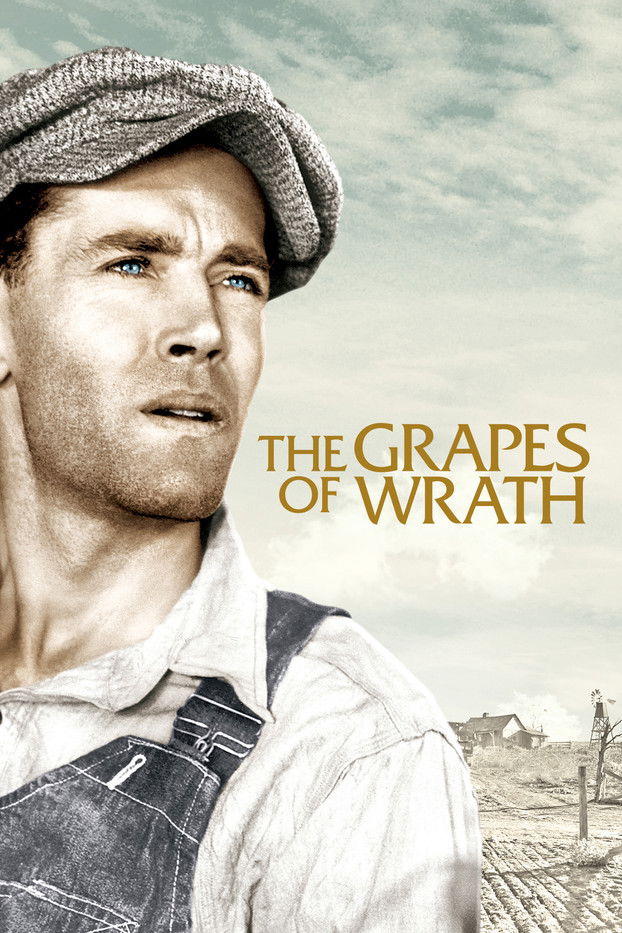
The Grapes of Wrath follows the Joad family as they are forced off their Oklahoma farm during the Great Depression. They travel to California in search of work and a better life, facing numerous hardships along the way. The film explores themes of poverty, injustice, and resilience through their journey.
Parent Guide
A historically significant drama about family resilience during the Great Depression, suitable for mature children who can handle emotional themes.
Content breakdown
Some tense situations and confrontations, but no graphic violence.
Depictions of poverty and hardship may be emotionally affecting.
No offensive language noted.
No sexual content or nudity.
No substance use depicted.
Themes of loss, injustice, and struggle create emotional weight throughout.
Parent tips
This classic film depicts the harsh realities of the Great Depression, including poverty, displacement, and social injustice. While there's no graphic violence or explicit content, the emotional weight and bleak situations may be intense for younger viewers. The film's historical context and themes of family perseverance provide valuable discussion opportunities for older children.
Parent chat guide
Parent follow-up questions
- How did the family travel to their new home?
- What was hard about moving to a new place?
- How did the family help each other?
- What would you bring if you had to move?
- How did the family feel when they had to leave their farm?
- Why did the family have to leave their farm?
- What challenges did they face on their journey?
- How did they work together as a family?
- What does this story teach us about helping others?
- How would you feel if you had to move far away from home?
- What historical events caused the family's situation?
- How does the film show social injustice?
- What does the story reveal about human resilience?
- How do the characters maintain hope in difficult times?
- What responsibilities do communities have toward people in need?
- How does the film critique economic systems and social structures?
- What parallels exist between the Great Depression and modern economic challenges?
- How does the film portray the American Dream during hard times?
- What ethical questions does the story raise about fairness and opportunity?
- How do the characters' experiences reflect broader social issues?
🎭 Story Kernel
The film is less about the Joad family's migration than about the systematic dismantling of human dignity by economic forces. It expresses how capitalism, when unmoored from morality, transforms people into disposable commodities. The characters are driven not by ambition but by desperation—the primal need to preserve their humanity against a system designed to strip it away. Tom Joad's journey from self-preservation to collective action reveals the film's core argument: individual survival is impossible without solidarity. The ending, where Rose of Sharon nurses a starving man, isn't just an act of charity but a radical redefinition of family and community beyond blood ties.
🎬 Visual Aesthetics
Gregg Toland's cinematography uses deep focus to keep both the Joads' weary faces and the vast, unforgiving landscapes in sharp relief, visually trapping them in their circumstances. The palette is dominated by dust-browns and washed-out grays, mirroring the emotional and physical depletion. Shots often frame characters through windows or doorways, emphasizing their status as outsiders looking in on a promised land that remains inaccessible. The camera lingers on hands—working, praying, clenching—making labor and suffering tactile. Symbolically, the recurring image of the road isn't one of freedom but of a relentless, grinding journey with no guaranteed destination.
🔍 Details & Easter Eggs
💡 Behind the Scenes
Director John Ford shot the film in sequence over just eight weeks, using many real Dust Bowl migrants as extras to capture authentic despair. Henry Fonda, playing Tom Joad, was so moved by the migrant camps he visited for research that he fought for a more politically charged ending. The famous 'I'll be there' speech was filmed in one take at Fonda's insistence. Much of the film was shot on location in the actual Oklahoma and California regions depicted, using stark, natural light to enhance the gritty realism, with Toland's cinematography later influencing film noir aesthetics.
Where to watch
Choose region:
- Amazon Video
- Apple TV Store
- Google Play Movies
- YouTube
- Fandango At Home
- Hoopla
- Fawesome
Trailer
Trailer playback is unavailable in your region.