
The Great Beauty (2013)
Story overview
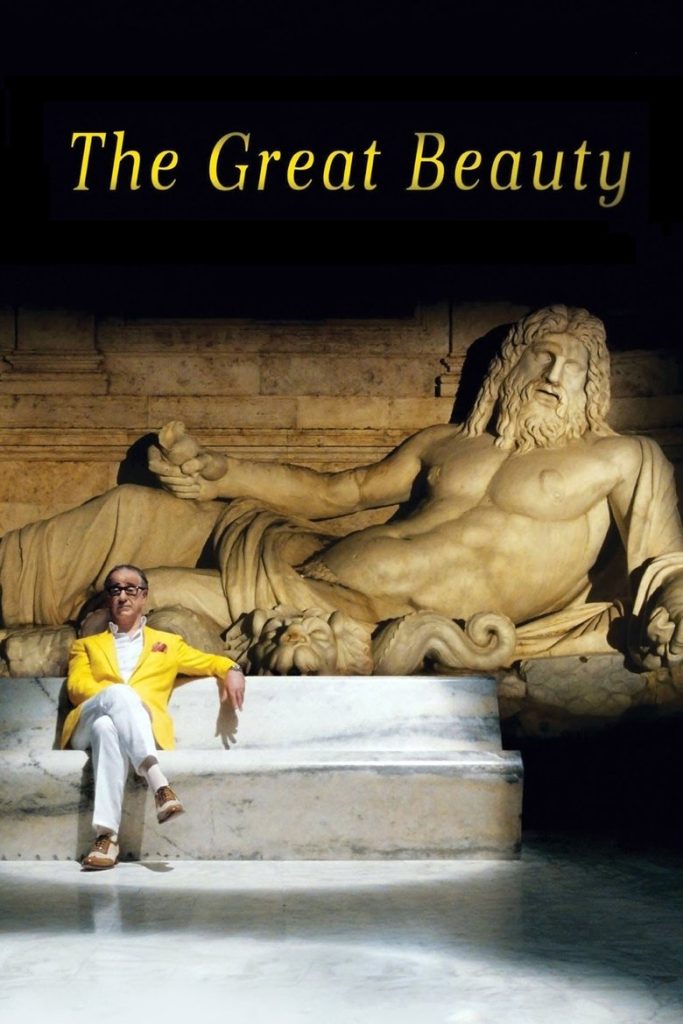
The Great Beauty is a 2013 Italian drama film that explores themes of aging, memory, and the search for meaning in life. It follows an aging writer reflecting on his past and the vibrant social scene of Rome. The film is known for its artistic cinematography and philosophical dialogue.
Parent Guide
Artistic drama with mature themes about aging and meaning; slow-paced and reflective rather than plot-driven.
Content breakdown
No violent or perilous content observed.
Some reflective moments about mortality and aging that might be somber for sensitive viewers.
General conversation with occasional mature themes.
Artistic scenes may include partial nudity or suggestive content typical of European art cinema.
Social drinking in party scenes.
Themes of nostalgia, regret, and existential questioning create reflective emotional tone.
Parent tips
This film is an artistic drama with mature themes that may not engage younger viewers. It contains reflective, slow-paced storytelling focused on adult experiences of nostalgia and existential questioning. Parents should consider the film's abstract nature and lack of traditional plot when deciding appropriateness for their family.
Parent chat guide
Parent follow-up questions
- What colors did you notice most in the movie?
- Did you see any animals or interesting places?
- What sounds did you hear in the movie?
- What did you think about how the movie looked?
- How did the characters seem to feel about their lives?
- What places in the movie seemed most interesting to you?
- What do you think the movie was trying to say about life?
- How did the camera work and music affect the story?
- What differences did you notice between younger and older characters?
- How does the film explore themes of memory and time?
- What commentary does the film make about art and society?
- How does the cinematography contribute to the film's themes?
🎭 Story Kernel
The film is not about Jep Gambardella's search for meaning, but his confrontation with its absence. Having achieved the hollow success of his novel and lavish lifestyle, he drifts through Roman high society—a world of performance art, empty parties, and spiritual charlatans. The death of his first love, Elisa, acts as the catalyst, forcing him to audit his 65 years. The core theme is the profound melancholy of recognizing that life's 'great beauty' is often just a dazzling distraction from the void, and that true depth might only be glimpsed in fleeting moments of quiet, like the final scene's breeze from the sea.
🎬 Visual Aesthetics
Sorrentino's camera is a restless, opulent voyeur. Rome isn't just a setting; it's a character, filmed with a lush, saturated palette of golds and deep blues that make decadence look divine. The camera glides through parties with a detached, operatic grace, often lingering on faces in close-up to capture profound emptiness behind social masks. Key visual motifs include framing characters against vast, ancient backdrops (the Colosseum, Tiber River) to emphasize their temporal smallness, and using reflective surfaces (water, mirrors) to literalize the theme of superficiality versus depth. The action is less about plot and more about curated, symbolic tableaux.
🔍 Details & Easter Eggs
💡 Behind the Scenes
Toni Servillo, who plays Jep, is Paolo Sorrentino's frequent collaborator, having starred in several of his films. The iconic opening party scene was filmed at the Palazzo Brancaccio. Many of the extravagant party guests and eccentric characters were not professional actors but real-life Roman socialites and personalities, lending an authentic, documentary-like texture to the satire. The film's title, 'La Grande Bellezza,' is a direct reference to the Italian phrase for Rome itself.
Where to watch
Choose region:
- HBO Max
- HBO Max Amazon Channel
- Criterion Channel
- Amazon Video
- Apple TV
- Google Play Movies
- YouTube
- Fandango At Home
Trailer
Trailer playback is unavailable in your region.