
The Great Dictator (1940)
Story overview
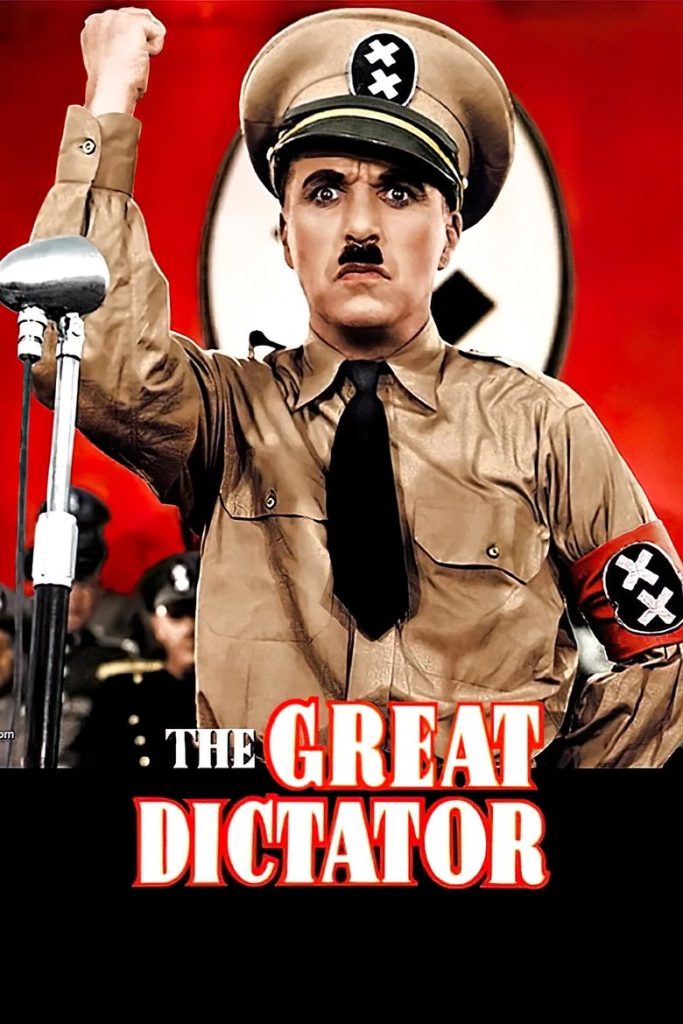
The Great Dictator is a satirical comedy set in a fictional country ruled by a dictator named Adenoid Hynkel. The film follows two lookalikes: the dictator himself and a poor Jewish barber who struggles under the regime's persecution. Through humor and parody, it critiques authoritarianism, prejudice, and the absurdity of war while championing themes of humanity and resistance. The story blends slapstick comedy with poignant moments, culminating in a famous speech advocating for peace and kindness.
Parent Guide
A classic satire that uses humor to address serious themes of dictatorship and prejudice, suitable for older children with guidance.
Content breakdown
Includes comedic slapstick, tense scenes of persecution, and implied threats without graphic violence.
Some scenes depict discrimination and authoritarian behavior that might be unsettling, but presented in a satirical, non-graphic manner.
No offensive language; dialogue is clean and appropriate for all ages.
No sexual content or nudity.
No depiction of substance use.
Emotional moments related to persecution and hope, balanced with comedy; the final speech is particularly poignant.
Parent tips
This film uses comedy to address serious themes like dictatorship, anti-Semitism, and war, which may require context for younger viewers. While rated G, its historical and political satire might be better understood by older children who can grasp the allegorical elements. The movie includes scenes of persecution and tension that could be unsettling, though presented with Chaplin's signature humor. Parents should be prepared to discuss the film's message about tolerance and the dangers of authoritarianism, especially given its release during World War II.
Parent chat guide
Parent follow-up questions
- Did you think the funny parts were silly?
- How did the barber and his friends help each other?
- What does it mean to be a good friend?
- Can you draw a picture of something happy from the movie?
- Why is it important to share and be nice?
- What made the dictator character seem silly or mean?
- How did the barber show bravery?
- What lessons about fairness did you learn?
- Why do you think the movie uses comedy to talk about serious things?
- How can we treat everyone with respect in real life?
- How does the film use satire to criticize dictatorship?
- What parallels can you see between the movie's themes and real history?
- Why is the barber's resistance important?
- How does humor help convey messages about prejudice?
- What does the ending speech say about hope and humanity?
- How does Chaplin use parody to comment on fascism and anti-Semitism?
- What is the significance of the film being made in 1940 during WWII?
- How do the dual roles highlight themes of identity and morality?
- In what ways does the film balance comedy with social commentary?
- How relevant are its messages about power and tolerance today?
🎭 Story Kernel
At its core, 'The Great Dictator' explores the terrifying fragility of identity and power through mistaken identity. The Jewish barber and Adenoid Hynkel are physically identical but morally opposite—one represents human dignity, the other its grotesque perversion. The film argues that fascism isn't about strength but about performative weakness, with Hynkel's childish tantrums and insecurity revealing tyranny as emotional immaturity weaponized. The famous final speech transcends the plot, becoming Chaplin breaking character to deliver humanity's collective plea against dehumanization. What drives the characters isn't political ideology but basic human needs: the barber seeks connection, Hynkel craves validation, and both are trapped by appearances.
🎬 Visual Aesthetics
Chaplin masterfully contrasts visual languages: Hynkel's world features grandiose, sterile sets with oppressive symmetry, shot with low angles to create false monumentality. The Jewish ghetto feels organic, with handheld intimacy and warm, earthy tones. The iconic globe ballet sequence uses graceful movement to expose the dictator's pathetic delusion—he literally dances with power as a fragile bubble. Notice how Chaplin frames doubles: the barber and dictator often occupy identical screen positions, visually arguing their interchangeability. The final speech abandons comedy entirely for stark close-ups, forcing direct eye contact with the audience as Chaplin sheds both characters.
🔍 Details & Easter Eggs
💡 Behind the Scenes
Chaplin financed the entire $2 million production himself after studios refused to touch such politically dangerous material. He wrote the final speech over six agonizing months, delivering it to an empty set first to overcome anxiety. The film premiered in 1940 while Britain was literally being bombed, making its anti-fascist message extraordinarily brave. Chaplin later said he wouldn't have made the film had he known the full extent of Holocaust horrors, believing comedy inadequate to address such evil. The 'Adenoid Hynkel' name came from combining medical terms for glands, suggesting Hitler's pathology was physiological.
Where to watch
Choose region:
- fuboTV
- HBO Max
- HBO Max Amazon Channel
- Criterion Channel
- TCM
- IndieFlix
- IndieFlix Shorts Amazon Channel
- Amazon Video
- Apple TV
- Fandango At Home
- Shout! Factory TV
- Amazon Prime Video Free with Ads
- Mometu
- Kanopy
- Plex
- Plex Channel
Trailer
Trailer playback is unavailable in your region.