
The Great Escape (1963)
Story overview
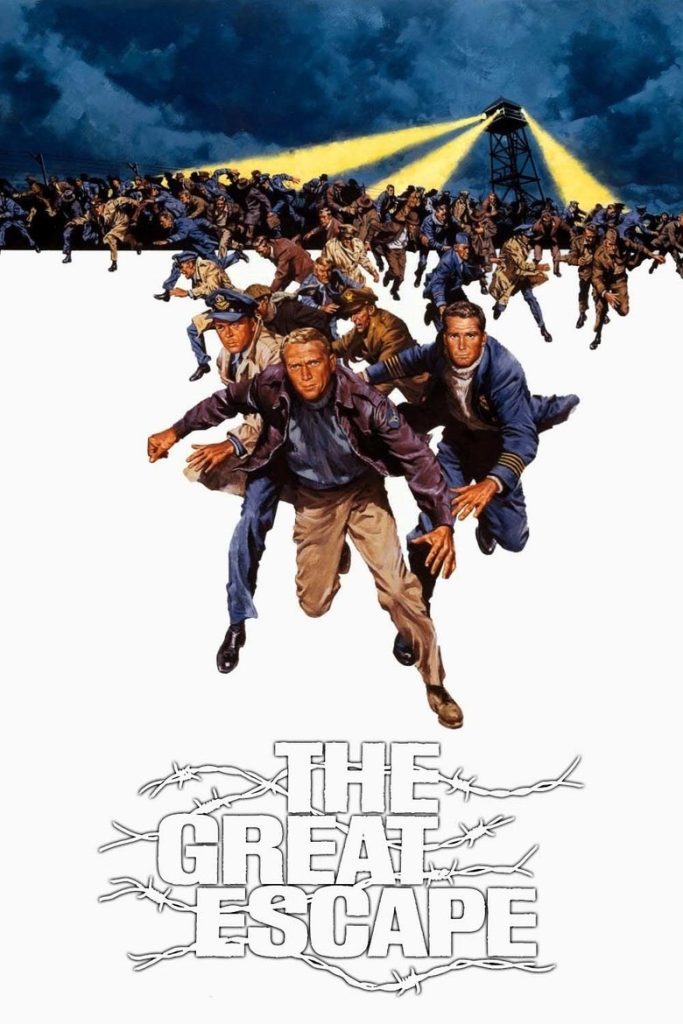
This classic war film depicts Allied prisoners of war in a German camp during WWII who meticulously plan a daring mass escape. The story focuses on their ingenuity, teamwork, and determination as they face constant surveillance and the threat of severe consequences. Based on true events, it portrays the resilience of the human spirit under oppressive conditions without graphic battlefield violence.
Parent Guide
A classic war adventure suitable for mature children with historical context discussion.
Content breakdown
War-related peril including capture, threats, and tense escape sequences with guards. Some characters face execution threats. No graphic combat violence.
Tense moments of pursuit and confinement. Oppressive atmosphere of prison camp. Some characters face serious consequences.
Period-appropriate military language and occasional mild expletives. No strong modern profanity.
No sexual content or nudity present.
Characters smoke cigarettes and pipes, reflecting the time period. No drunkenness or drug use.
Themes of confinement, oppression, and high-stakes escape planning. Characters face deprivation and constant surveillance.
Parent tips
This film contains moderate war-related peril including scenes of prisoners being captured, threatened, and facing potential execution. While not graphically violent, there are tense moments of pursuit and confrontation with guards. The nearly three-hour runtime and complex plot may challenge younger viewers' attention spans.
The film portrays smoking as common among adult characters, reflecting the time period. It also shows prisoners enduring harsh conditions like confinement and deprivation, which could be emotionally intense for sensitive children. The historical context of WWII and Nazi oppression provides important discussion opportunities about real-world conflicts.
Parent chat guide
During viewing, pause to explain military ranks, camp operations, or historical references as needed. Point out how the prisoners use clever problem-solving rather than violence to achieve their goals. Be prepared to comfort children during tense escape sequences or moments of confrontation.
Afterwards, discuss the themes of courage, cooperation, and resilience. Ask what strategies the prisoners used to work together and overcome obstacles. Connect the historical events to broader lessons about human rights and the importance of freedom.
Parent follow-up questions
- What did the prisoners want to do?
- How did they help each other?
- Were you worried when they tried to escape?
- What was your favorite part?
- How would you feel if you couldn't go home?
- Why were the prisoners kept in the camp?
- What clever ideas did they use to escape?
- How did they work as a team?
- What would you have done in their situation?
- Why is freedom important?
- What historical period does this film represent?
- How did the prisoners maintain hope in difficult conditions?
- What risks did they take for freedom?
- How does this true story differ from fictional war movies?
- What does this teach us about human resilience?
- How does this film portray the psychological effects of imprisonment?
- What ethical dilemmas do the prisoners face in their escape planning?
- How accurate do you think this depiction of WWII POW camps is?
- What does this story reveal about leadership under pressure?
- How do the themes relate to modern discussions of human rights?
🎭 Story Kernel
The Great Escape isn't about freedom—it's about the compulsion to resist, even when resistance is futile. The characters aren't driven by hope of success, but by the psychological necessity of defiance against dehumanization. Each escape attempt becomes a ritual of maintaining identity in a system designed to erase it. The film's true tension isn't whether they'll escape, but how long they can preserve their humanity while trapped. The famous motorcycle chase isn't an action sequence—it's the visual representation of that desperate, beautiful refusal to submit, even in the final moments before capture or death.
🎬 Visual Aesthetics
John Sturges employs a deliberate visual dichotomy: the claustrophobic, earth-toned prison camp versus the expansive, sun-drenched freedom scenes. Wide shots emphasize both the scale of their ambition and their ultimate vulnerability. The famous motorcycle chase uses dynamic tracking shots that make Steve McQueen's character seem to be chasing his own shadow—a perfect visual metaphor for their entire endeavor. Color becomes character development: notice how the prisoners' makeshift tools and disguises incorporate brighter colors as their plans progress, visually representing hope creeping into their gray existence.
🔍 Details & Easter Eggs
💡 Behind the Scenes
Steve McQueen performed most of his own motorcycle stunts except the famous fence jump, which was done by stunt rider Bud Ekins. The camp was built from scratch in a German field, with actual barbed wire and guard towers. Most actors lived in the barracks during filming to maintain authenticity. Charles Bronson's claustrophobia during tunnel scenes was genuine—he nearly quit the production multiple times. The baseball and mitt McQueen's character carries were his personal items from his teenage years.
Where to watch
Choose region:
- fuboTV
- MGM+ Amazon Channel
- MGM Plus Roku Premium Channel
- Philo
- Amazon Video
- Apple TV
- Google Play Movies
- YouTube
- Fandango At Home
- Plex
- Tubi TV
- Kanopy
- Hoopla
- Fawesome
Trailer
Trailer playback is unavailable in your region.