
The Great Mouse Detective (1986)
Story overview
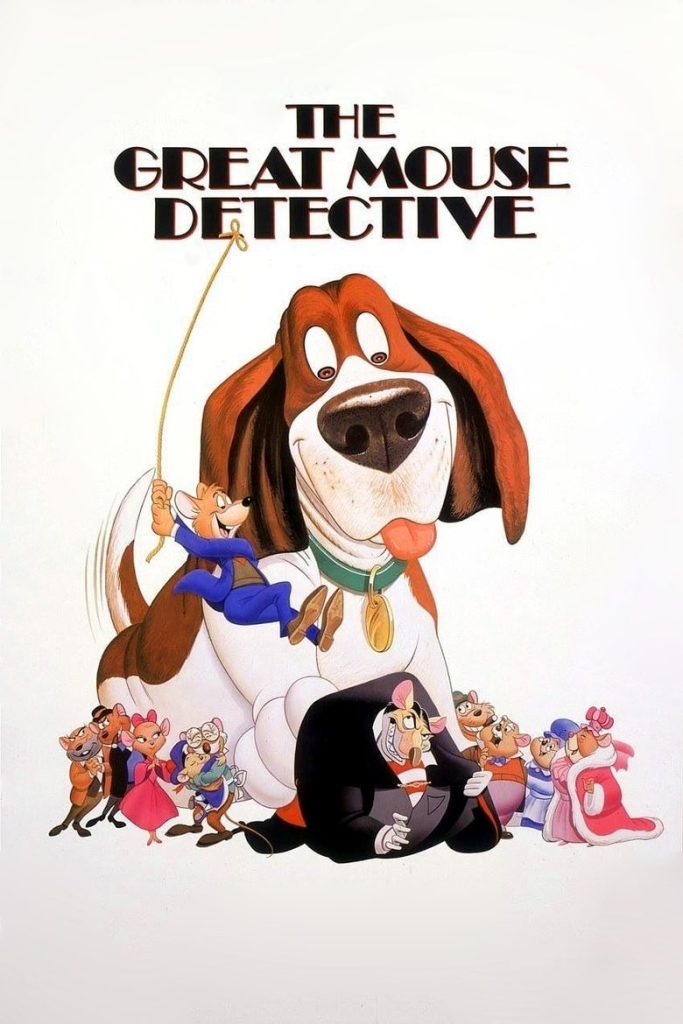
This animated adventure follows Basil, a brilliant mouse detective, and his loyal friend Dawson as they investigate the kidnapping of a toymaker by the villainous Professor Ratigan. Set in Victorian London, the story involves clever disguises, daring escapes, and a battle of wits between the hero and villain. The film combines mystery elements with family-friendly adventure as the characters work to prevent a criminal masterplan.
Parent Guide
A classic animated detective adventure with mild peril and positive messages about friendship and cleverness.
Content breakdown
Cartoonish action with chases, mild threats, and non-graphic confrontations. No blood or realistic violence.
The villain has an intimidating presence, and some scenes in dark settings might briefly unsettle very young children.
No offensive language; dialogue is family-appropriate throughout.
No sexual content or nudity.
No depiction of substance use.
Moderate suspense during mystery sequences and confrontations, balanced with humor and resolution.
Parent tips
This G-rated Disney film is generally appropriate for most children, featuring classic hero-villain dynamics with mild peril. The villain Ratigan can be intimidating with his grandiose personality and occasional threats, but the violence is cartoonish without graphic details. Some scenes in darker settings like sewers or during confrontations might briefly unsettle very young viewers, but the overall tone remains adventurous rather than truly frightening.
Parents should note that the story involves kidnapping, which could be concerning for sensitive children, though it's presented as a plot device rather than a realistic threat. The film includes some mild suspense during chase sequences and the climactic confrontation, but these moments are balanced with humor and positive messages about friendship and clever problem-solving.
Parent chat guide
For younger viewers, you might focus conversations on identifying the 'good guys' and 'bad guys' and how we can tell the difference through their actions. For older children, discussions could explore the detective methods used or how the story creates suspense without being overly scary. The film provides opportunities to talk about using one's wits rather than force to overcome obstacles.
Parent follow-up questions
- Which character did you like the most and why?
- What was your favorite part of the movie?
- How did the friends help each other in the story?
- What made the detective mouse clever?
- Was there any part that surprised you?
- What clues helped the detective solve the mystery?
- How did the characters show bravery in the story?
- What made the villain a challenging opponent?
- What would you have done differently if you were helping the detective?
- How did the setting of London add to the adventure?
- What detective techniques did you notice in the film?
- How did the story balance suspense with humor?
- What qualities made the main characters effective partners?
- How did the animation style contribute to the mood of different scenes?
- What messages about problem-solving did you take from the story?
- How does this film compare to other detective stories you've experienced?
- What elements of Victorian London did you notice in the setting and characters?
- How did the film establish the rivalry between hero and villain effectively?
- What aspects of the animation or voice acting stood out to you?
- How did the film handle the theme of intelligence versus brute force?
🎭 Story Kernel
At its core, 'The Great Mouse Detective' explores the tension between intellect and brute force, personified in the rivalry between Basil and Ratigan. Basil represents deductive reasoning and scientific progress, while Ratigan embodies chaotic ambition and the desire for power through fear. The film cleverly parallels human social hierarchies within the mouse world, showing how even in miniature societies, corruption and heroism follow similar patterns. The driving force isn't just solving a mystery—it's about proving that brains can triumph over brawn, and that even the smallest creatures can achieve greatness through wit and perseverance.
🎬 Visual Aesthetics
The film's visual language masterfully blends Victorian aesthetic with animated whimsy. The muted color palette of browns, grays, and sepia tones creates a gritty London atmosphere, while strategic pops of color highlight key characters and moments. The camera work during action sequences—particularly the climactic Big Ben confrontation—uses dramatic angles and rapid cuts to create genuine tension. Symbolism appears in the contrast between Basil's orderly, scientific flat and Ratigan's chaotic, opulent lair, visually representing their opposing worldviews. The detailed backgrounds and period-appropriate architecture ground the fantasy in a recognizable historical reality.
🔍 Details & Easter Eggs
💡 Behind the Scenes
Vincent Price's performance as Ratigan was so beloved that animators expanded his role during production. The famous Big Ben finale was one of Disney's earliest uses of computer animation, with the gear sequences created using CGI—a groundbreaking technique in 1986. The film was based on Eve Titus's 'Basil of Baker Street' book series, which itself was inspired by Sherlock Holmes stories. Barrie Ingham, who voiced Basil, reportedly studied Jeremy Brett's Sherlock Holmes performance to capture the proper detective mannerisms.
Where to watch
Choose region:
- Disney Plus
- Amazon Video
- Apple TV
- Google Play Movies
- YouTube
- Fandango At Home
Trailer
Trailer playback is unavailable in your region.