
The Greatest Game Ever Played (2005)
Story overview
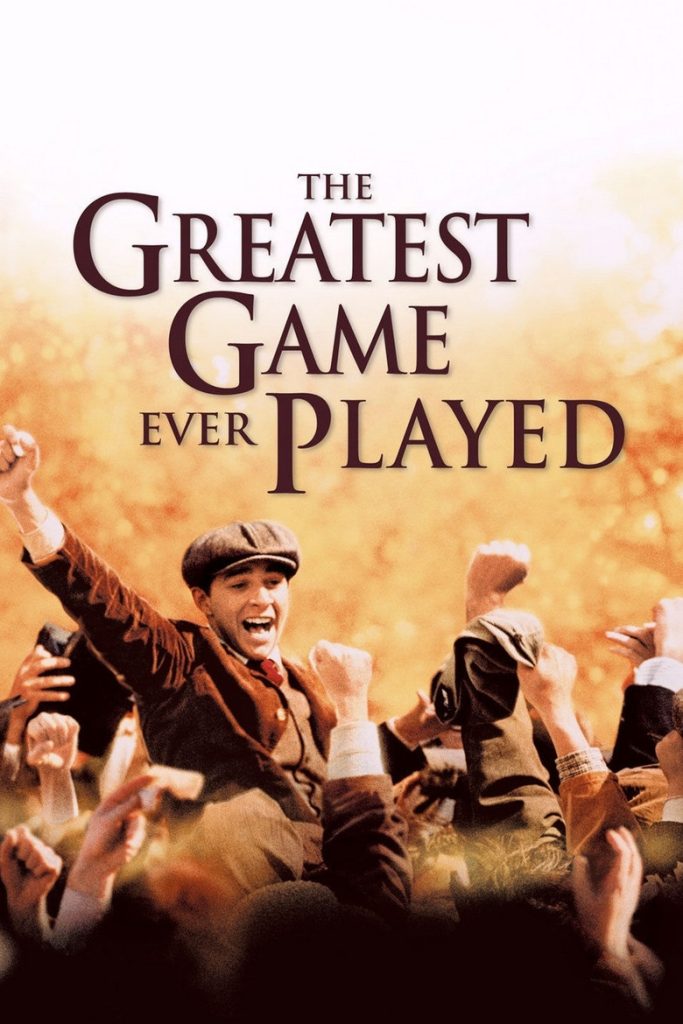
The Greatest Game Ever Played is a 2005 drama film based on the true story of Francis Ouimet, a young amateur golfer who defied the odds to compete in the 1913 U.S. Open. The movie follows his journey from a working-class background to challenging elite professional golfers, highlighting themes of perseverance, class barriers, and sportsmanship. It portrays the historic golf tournament that captivated the nation and changed the perception of the sport.
Parent Guide
A family-friendly sports drama with positive messages, suitable for most ages.
Content breakdown
No violence; includes mild competitive tension during golf scenes.
Nothing scary or disturbing; all content is mild and uplifting.
No offensive language; dialogue is clean and respectful.
No sexual content or nudity.
No depiction of substance use.
Mild emotional moments related to competition and personal struggles, handled gently.
Parent tips
This film is suitable for most children and families, focusing on positive themes like determination, humility, and overcoming social obstacles. Parents should be aware that it depicts some mild tension during competitive scenes and references to class differences, which might require brief explanations for younger viewers. The PG rating reflects its family-friendly nature with no concerning content, making it a good choice for discussions about hard work and fair play.
Parent chat guide
Parent follow-up questions
- What was your favorite part of the golf game?
- How did Francis feel when he was playing?
- Can you name something nice someone did in the movie?
- Why do you think Francis kept trying even when it was hard?
- What did you learn about being a good sport from this movie?
- How did the characters show kindness to each other?
- How does the movie show the difference between social classes in that time?
- What strategies did Francis use to stay focused during the competition?
- Why is this game considered 'great' in history?
- In what ways does the film critique or uphold traditional values of the era?
- How does the portrayal of competition reflect broader themes of ambition and integrity?
- What historical accuracy or creative liberties might the film have taken?
🎭 Story Kernel
The film is less about golf and more about dismantling class barriers through sheer excellence. Francis Ouimet isn't driven by a love of the sport alone; he's fueled by the quiet humiliation of being an outsider in his own country club. His caddy, Eddie Lowery, represents the next generation watching this social upheaval. The real antagonist isn't Harry Vardon, but the suffocating British aristocracy and its American imitators who believe excellence is inherited, not earned. The climax isn't the putt—it's the moment the crowd, once divided by class, unites behind the underdog, signaling a shift in the American dream.
🎬 Visual Aesthetics
Director Bill Paxton uses visual contrasts to emphasize class division. The affluent world is shot with static, composed frames and a warm, sepia-toned palette, suggesting entrenched tradition. Ouimet's working-class neighborhood is grittier, with cooler blues and handheld shots that feel more immediate. The golf sequences are kinetic, using extreme close-ups on faces and balls to build tension, making a static sport feel like a battlefield. Slow-motion is reserved for pivotal shots, not for spectacle, but to stretch the moment of societal judgment—will the establishment acknowledge this intrusion?
🔍 Details & Easter Eggs
💡 Behind the Scenes
Shia LaBeouf, who played Francis Ouimet, trained intensively with a golf pro to make his swing authentic, though some close-up shots used a double. The film was shot primarily in Montreal, standing in for early 1900s Massachusetts, requiring meticulous set dressing to recreate the era. Director Bill Paxton, an avid golfer himself, insisted on using period-accurate equipment, which made the actors' performances even more challenging, as vintage clubs are less forgiving than modern ones.
Where to watch
Choose region:
- Disney Plus
- Amazon Video
- Apple TV
- Google Play Movies
- YouTube
- Fandango At Home
Trailer
Trailer playback is unavailable in your region.