
The Greatest Showman (2017)
Story overview
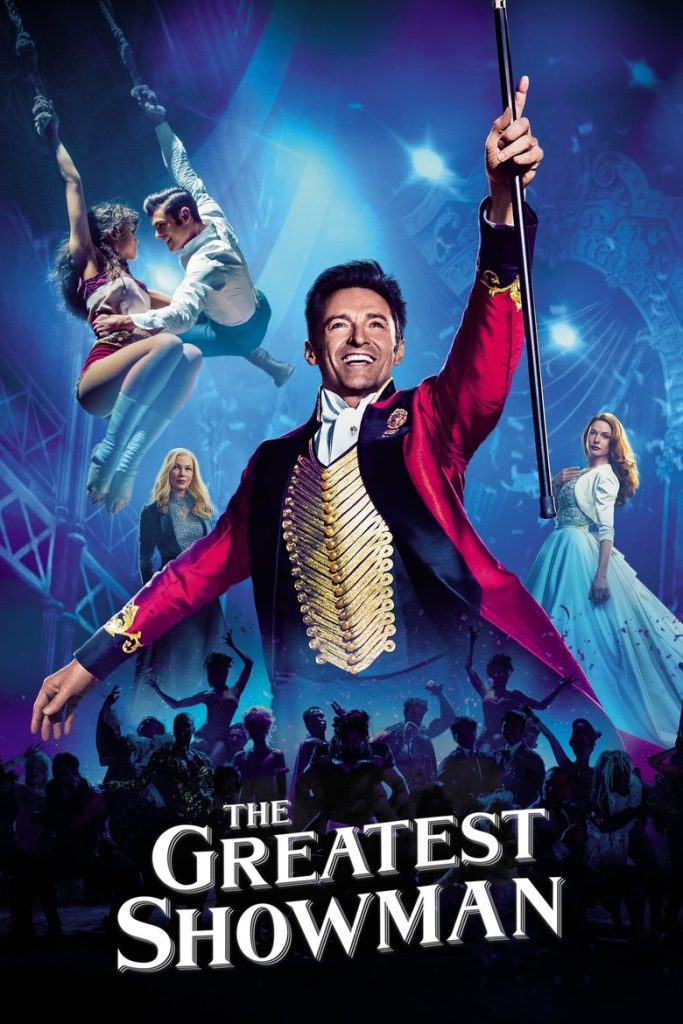
The Greatest Showman is a 2017 musical drama film inspired by the life of P.T. Barnum and the creation of his famous circus. It follows Barnum's journey from humble beginnings to building a spectacular entertainment empire that celebrates unique individuals and diverse talents. The film explores themes of ambition, acceptance, family, and the pursuit of dreams through vibrant musical numbers and emotional storytelling.
Parent Guide
A family-friendly musical with positive messages about acceptance and following dreams, suitable for most children with parental guidance for younger viewers.
Content breakdown
Brief scenes of tension and conflict between characters, including some pushing and shouting. A fire sequence creates peril but is not graphic.
Some emotional scenes involving rejection and financial hardship. The fire scene might be intense for very young children.
Occasional mild insults and heated exchanges between characters.
No sexual content or nudity. Some romantic themes and dancing.
No depiction of substance use.
Strong emotional themes including ambition, rejection, family struggles, and social acceptance. Several emotionally charged musical numbers.
Parent tips
This PG-rated musical offers positive messages about embracing differences and following your dreams, but contains some emotional moments and mild thematic elements. The film features several high-energy musical sequences with elaborate choreography that younger children might find exciting. Parents should be aware that the story includes themes of social rejection, financial struggles, and brief moments of tension between characters.
Parent chat guide
Parent follow-up questions
- Which song did you like dancing to the most?
- What was your favorite colorful costume in the movie?
- How did the characters make each other feel happy?
- Why do you think some people didn't accept the performers at first?
- What does it mean to 'be yourself' like the characters did?
- How did the characters work together as a team?
- What sacrifices did characters make for their dreams?
- How does the movie show that being different can be powerful?
- What responsibilities come with success and fame?
- How does the film balance historical inspiration with fictional storytelling?
- What commentary does the movie make about society's treatment of marginalized groups?
- How do the characters' ambitions affect their relationships?
🎭 Story Kernel
At its core, 'The Greatest Showman' is less about celebrating difference and more about the transactional nature of acceptance in a capitalist society. P.T. Barnum doesn't start his show out of altruism; he's a desperate man leveraging society's outcasts to buy his way into the world that rejected him. The film's true conflict isn't between 'freaks' and 'normal' society, but within Barnum himself—his hunger for validation versus his responsibility to the community he commodified. The characters are driven by a shared, aching desire to be seen, yet the film subtly questions whether being seen as a spectacle is the same as being seen as human. The emotional climax isn't the show's success, but Barnum realizing his 'wonderful' family was always there, waiting for him to look beyond his own reflection.
🎬 Visual Aesthetics
The film's visual language is a deliberate clash between gritty realism and theatrical fantasy. Early scenes use a muted, almost sepia palette in the poverty-stricken streets, with handheld camerawork emphasizing instability. Once the circus begins, the frame explodes in saturated jewel tones—deep reds, golds, and blues—under crisp, artificial lighting that feels both magical and manipulative. The choreography is key: large ensemble numbers use sweeping crane shots and rapid editing to create breathless spectacle, while intimate moments (like 'Tightrope') employ close-ups and slower movements, making the characters feel vulnerably human amidst the grandeur. The circus tent itself becomes a visual metaphor—vibrant and inviting on the inside, but just canvas and rope from the outside, mirroring Barnum's fabricated wonder.
🔍 Details & Easter Eggs
💡 Behind the Scenes
Hugh Jackman championed this project for over seven years, originally conceiving it as a traditional biopic before it evolved into a musical. The song 'This Is Me' was written in one day by the Oscar-winning duo Pasek and Paul. Zac Efron and Zendaya performed their own aerial silks work in 'Rewrite the Stars', requiring intensive training. Notably, the film uses almost no CGI for the musical numbers—the acrobatics, fire breathing, and crowd scenes were performed live, giving the spectacle a palpable, human energy that digital effects often lack. The entire soundtrack was recorded before filming began, so the actors lip-synced to their own final vocals on set, a rare approach for a movie musical.
Where to watch
Choose region:
- Disney Plus
- Amazon Video
- Apple TV
- Google Play Movies
- YouTube
- Fandango At Home
Trailer
Trailer playback is unavailable in your region.