The Handmaiden (2016)
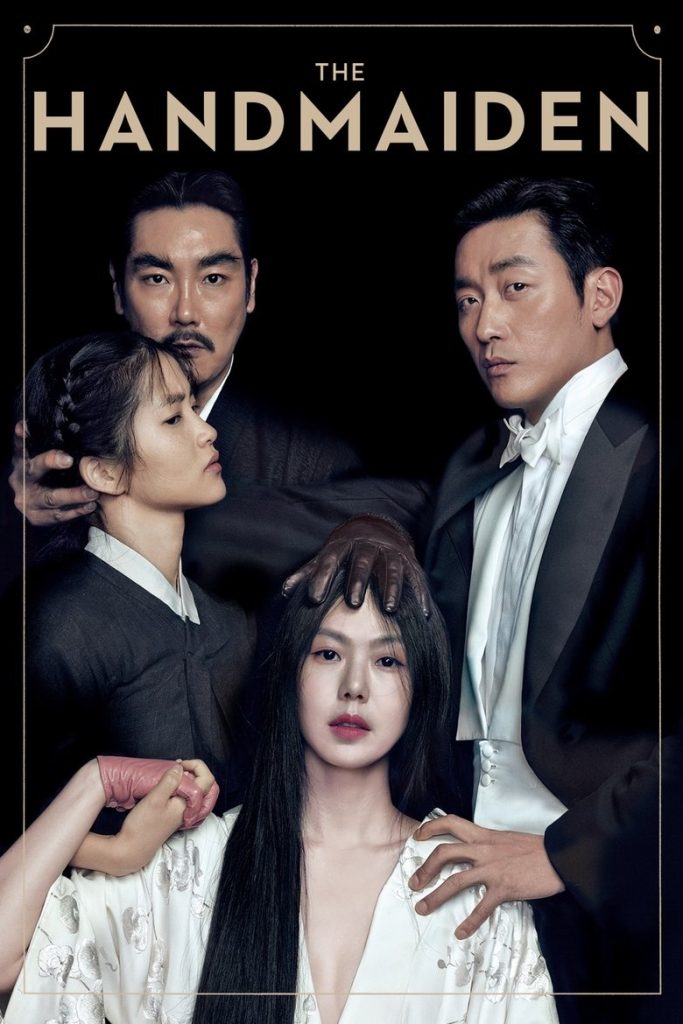
Story overview
Set in 1930s Korea under Japanese occupation, this psychological thriller follows a young woman hired as a handmaiden to a wealthy heiress living in isolation. The maid secretly collaborates with a con artist posing as a Japanese count to manipulate the heiress and steal her fortune. The film explores themes of deception, power dynamics, and unexpected relationships through intricate plot twists and shifting perspectives.
Parent Guide
A psychologically intense thriller with mature themes including explicit sexual content and complex manipulations, recommended for mature audiences only.
Content breakdown
Contains psychological manipulation, threats, and scenes of peril without graphic physical violence.
Features intense psychological tension, abusive relationships, and disturbing emotional situations.
Some strong language in subtitles, but not excessive.
Contains explicit sexual scenes, nudity, and sexual themes central to the plot.
Some social drinking and smoking consistent with the historical period.
High emotional intensity throughout with themes of betrayal, manipulation, and complex relationships.
Parent tips
This film contains mature themes including sexual content, psychological manipulation, and intense emotional situations that make it unsuitable for younger viewers. Parents should be aware of explicit sexual scenes, nudity, and depictions of abusive relationships that are central to the plot. The complex narrative structure with multiple betrayals and revelations may be confusing for viewers not prepared for sophisticated storytelling techniques.
Parent chat guide
Parent follow-up questions
- What did you notice about how the characters treated each other?
- How did the music make you feel during different parts?
- What colors or places did you remember most?
- Did any parts make you feel confused?
- What would you do if someone asked you to keep a secret?
- Why do you think characters kept secrets from each other?
- How did the setting of the big house affect the story?
- What made some characters change their plans?
- How did the characters show they cared about each other?
- What would you do if you discovered a friend wasn't being honest?
- How did power differences between characters affect their relationships?
- What historical elements did you notice about the time period?
- How did the film show that people aren't always what they seem?
- What consequences did deception have for different characters?
- How did the storytelling technique of showing different perspectives affect your understanding?
- How does the film explore themes of agency and manipulation within relationships?
- What commentary does the film make about colonialism and cultural dynamics?
- How are intimacy and power interconnected in the character relationships?
- What ethical questions does the film raise about deception and revenge?
- How does the film's structure enhance or complicate its thematic messages?
🎭 Story Kernel
At its core, 'The Handmaiden' is about the violent reclamation of narrative. Every character is an author or a forger—Uncle Kouzuki curates his library of stolen artifacts and women, Count Fujiwara scripts confidence schemes, and Sook-hee arrives with a thief's blueprint. But the film's true engine is the collaborative authorship between Sook-hee and Lady Hideko. Their romance becomes a conspiracy to burn the patriarchal script—literally and figuratively—and write their own escape. The driving force isn't greed or lust, but the desperate, shared need to stop being characters in someone else's story and become the authors of their own.
🎬 Visual Aesthetics
Park Chan-wook employs a visual language of ornate confinement. The mansion is a gilded cage, shot with precise, symmetrical compositions that mirror its rigid social order. The color palette is lush but oppressive—deep woods, rich velvets, and the pale, porcelain complexion of Hideko, all bathed in a painterly light. This formalism shatters during the erotic scenes, where the camera becomes fluid, intimate, and subjective. Key symbolism lies in objects: the forged books represent false narratives, the intricate knots in Hideko's clothing mirror her psychological binds, and the water in the final escape scene signifies a baptism into a self-determined life.
🔍 Details & Easter Eggs
💡 Behind the Scenes
The film is an adaptation of Sarah Waters' novel 'Fingersmith', but Park transposed the Victorian British setting to 1930s Korea under Japanese occupation, adding potent layers of cultural and colonial tension. Actress Kim Tae-ri underwent extensive training in dialect, posture, and etiquette to portray Sook-hee's rural background. The lavish library set, filled with rare books, was meticulously constructed. Notably, the explicit erotic scenes were choreographed and shot with an intimacy coordinator—a rarity in South Korean cinema at the time—to ensure the actors' comfort and the scenes' narrative integrity.
Where to watch
Choose region:
- Amazon Prime Video
- Fandango At Home
Trailer
Trailer playback is unavailable in your region.