
The Hidden Kingdoms of China (2020)
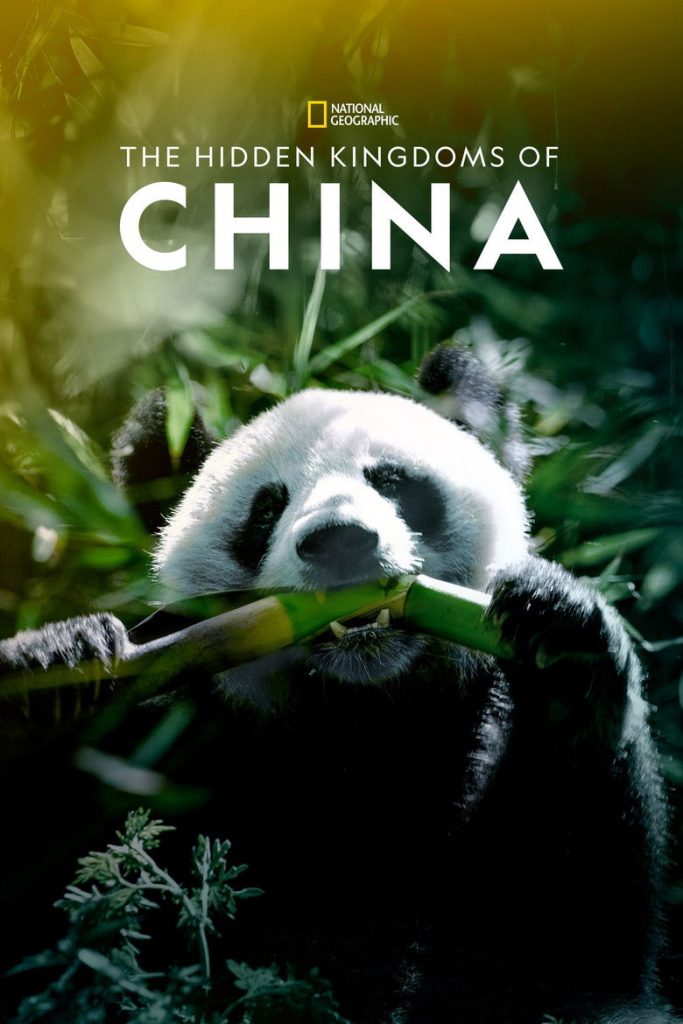
Story overview
This documentary explores the hidden natural wonders of China, showcasing diverse landscapes, wildlife, and ecosystems through stunning cinematography. Narrated by Michelle Yeoh, it provides educational insights into China's geography and biodiversity, making it suitable for family viewing with a focus on nature appreciation and cultural discovery.
Parent Guide
A family-friendly documentary with educational value and breathtaking visuals. No content concerns; suitable for all ages with parental guidance for very young children during intense natural scenes.
Content breakdown
Contains natural predator-prey scenes (e.g., birds hunting insects, larger animals stalking prey) without graphic violence. Some scenes might show animals in peril from natural elements like harsh weather, but nothing gory or prolonged.
Mildly intense moments include dramatic music during predator scenes, close-ups of insects or reptiles that might startle sensitive viewers, and scenes of storms or rugged terrain. No jump scares or horror elements.
No offensive or inappropriate language. The narration is educational and respectful.
No sexual content or nudity. Focus is entirely on nature and landscapes.
No depiction of alcohol, drugs, or smoking.
Emotional moments are limited to awe at natural beauty or concern for animals during perilous scenes. The tone is generally uplifting and educational.
Parent tips
This documentary is educational and visually captivating, ideal for children interested in nature, animals, or geography. It contains no concerning content, but younger viewers might find some scenes of predators hunting or dramatic natural events (like storms) mildly intense. Use it as a springboard for discussions about conservation, different cultures, or world geography.
Parent chat guide
Parent follow-up questions
- What was your favorite animal in the movie?
- Can you draw a picture of a beautiful place from the film?
- Which ecosystem (forest, mountain, desert) seemed most interesting and why?
- What did you learn about how animals survive in different places?
- How did the filmmakers make the scenes so dramatic or beautiful?
- What challenges might scientists face when studying these remote areas?
- How does this documentary portray China's relationship with its natural environment?
- What ethical considerations exist in filming wildlife in such remote locations?
🎭 Story Kernel
The film's true subject isn't merely the wildlife of China, but the fundamental physics of scale. It explores how the laws of existence—predation, shelter, reproduction—are utterly transformed when your world is a single bamboo stalk or a patch of moss. The narrative drive isn't character motivation in a human sense, but the relentless, unthinking imperative of biological programming: a pika's frantic summer harvest, a golden snub-nosed monkey's social navigation for warmth. It presents life as a series of elegant, desperate solutions to environmental equations, where a raindrop is a tidal wave and a hawk's shadow is an eclipse heralding the end of a world.
🎬 Visual Aesthetics
The cinematography is a masterclass in perspective manipulation. Macro lenses turn dewdrops into crystal planets and leaf litter into a primordial forest canopy. The color palette is intensely seasonal—the saturated, impossible green of a Sichuan summer gives way to the monochrome austerity of a Himalayan winter. Camera movement often adopts the frantic, jittery POV of the prey, or the slow, predatory glide of a soaring raptor. Slow-motion isn't used for drama but for revelation, allowing us to see the intricate ballet of a frog's tongue or the fractal geometry of a frost crystal forming on a butterfly's wing.
🔍 Details & Easter Eggs
💡 Behind the Scenes
Capturing this footage was a feat of patience and technology, taking over three years. Cinematographers used remotely operated cameras and hides for months to avoid disturbing subjects like the ultra-shy snow leopard. The stunning, slow-motion shot of a frog catching a fly in mid-air required a specially developed high-speed camera capable of thousands of frames per second. Much of the footage of smaller creatures, like the insects in the bamboo forest, was shot in controlled studio sets replicating their micro-habitats to achieve the necessary lighting and clarity, then seamlessly integrated with location footage.
Where to watch
Choose region:
- Disney Plus