
The Hobbit: The Desolation of Smaug (2013)
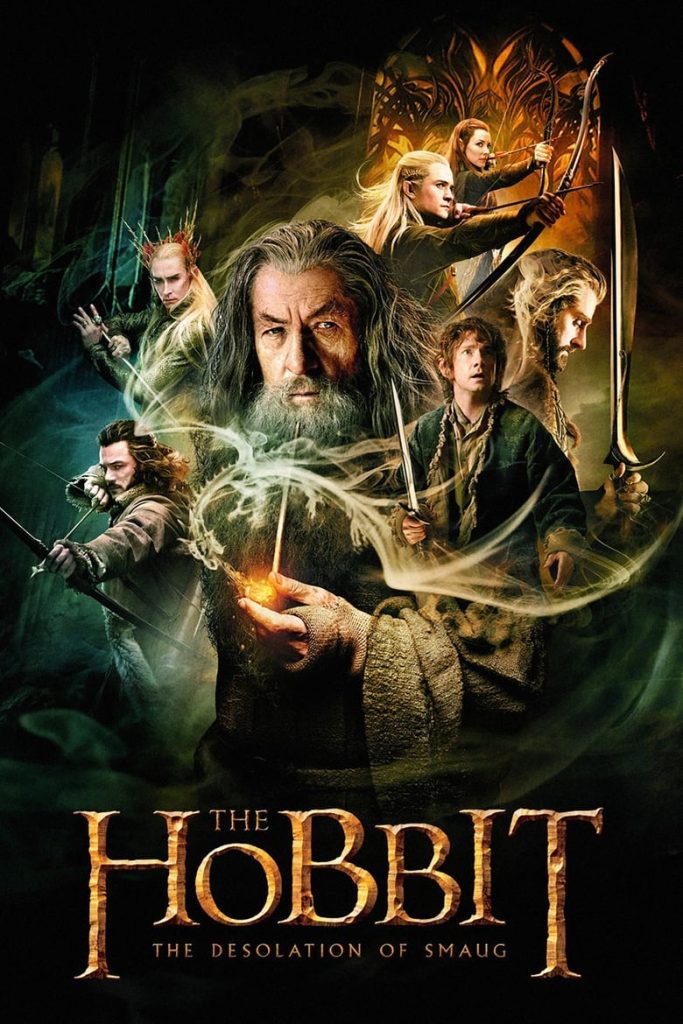
Story overview
The Hobbit: The Desolation of Smaug continues Bilbo Baggins' journey with Thorin Oakenshield and his company of dwarves as they travel to reclaim their homeland from the dragon Smaug. Along the way, they face dangerous creatures, hostile elves, and the growing threat of the Necromancer in Dol Guldur. The film culminates in a tense confrontation with the dragon Smaug inside the Lonely Mountain.
Parent Guide
Fantasy adventure with intense action sequences and frightening creatures. Suitable for older children and teens with parental guidance.
Content breakdown
Fantasy violence including sword fights, arrows, and magical combat. Characters face constant peril from creatures and enemies. No graphic injuries shown.
Menacing dragon, giant spiders, and dark supernatural elements. Some scenes are intense and could frighten younger viewers.
Mild fantasy insults and exclamations typical of the genre. No strong profanity.
No sexual content or nudity present.
Characters drink ale in tavern scenes, portrayed as part of fantasy culture.
Characters face life-threatening situations and emotional stakes. Some tense and suspenseful sequences.
Parent tips
This fantasy adventure film contains intense action sequences, perilous situations, and frightening creatures that may be too intense for younger children. The PG-13 rating reflects fantasy violence, some scary images, and sequences of intense action. Parents should be aware that the dragon Smaug is particularly menacing and could frighten sensitive viewers.
Consider watching this film with children ages 10 and up, as the action sequences and fantasy violence are more intense than in typical family films. The film's runtime is approximately 2 hours 41 minutes, so younger viewers may have difficulty maintaining attention through the entire story.
Parent chat guide
You might explore how the film portrays greed through different characters' motivations, and discuss the consequences of seeking treasure at great risk. Consider asking children what they would do in similar situations that require bravery and quick thinking.
Parent follow-up questions
- Which character did you like the most and why?
- What was your favorite part of the movie?
- How did the characters help each other?
- What would you do if you met a dragon?
- What colors did you see in the movie?
- Why do you think Bilbo decided to help the dwarves?
- How did the characters show bravery in the movie?
- What challenges did the group face on their journey?
- What makes a good friend, based on the characters?
- How would you solve a problem like the characters did?
- What do you think motivates Thorin to reclaim his homeland?
- How does Bilbo's character change throughout the journey?
- What are the different ways characters show leadership?
- How does the film show the consequences of greed?
- What would you have done differently in Bilbo's situation?
- How does the film explore themes of destiny versus choice?
- What commentary does the film make about power and corruption?
- How do the different races (dwarves, elves, humans) represent different values?
- What role does fear play in motivating the characters' actions?
- How does the film balance action with character development?
🎭 Story Kernel
The film's core tension isn't just about reclaiming a homeland, but the corrupting allure of the journey's end. Thorin's obsession with the Arkenstone and Erebor's gold becomes the real antagonist, foreshadowing his fall in the final act. The dwarves' quest shifts from noble reclamation to a dangerous addiction, mirrored in Bilbo's own growing dependence on the Ring. This internal corrosion of purpose is more compelling than the external dragon, asking what we sacrifice to reclaim what we've lost.
🎬 Visual Aesthetics
Jackson employs a stark visual dichotomy: the earthy, claustrophobic browns and greens of Mirkwood contrast violently with the sterile, gold-drenched cathedral of Erebor. The camera work follows suit—handheld chaos in the barrel escape sequence gives way to slow, reverential pans across Smaug's treasure hoard. The dragon himself is a masterpiece of scale and menace, his movement a fluid, predatory ballet. The relentless CGI spectacle, however, sometimes overwhelms the tactile, lived-in quality that grounded the original trilogy.
🔍 Details & Easter Eggs
💡 Behind the Scenes
Benedict Cumberbatch performed Smaug's motion capture himself, slithering on a warehouse floor covered in grey dots. The iconic 'barrel escape' sequence was filmed using real actors in real barrels on a massive water set in New Zealand, with extensive CGI adding the orcs and elvish acrobatics later. Lee Pace, as Thranduil, insisted on wearing his elaborate crown and costume even during rehearsals to fully inhabit the elf-king's rigid, regal posture.
Where to watch
Choose region:
- HBO Max
- HBO Max Amazon Channel
- Amazon Video
- Apple TV
- Google Play Movies
- YouTube
- Fandango At Home
- Plex
Trailer
Trailer playback is unavailable in your region.