
The Hunchback of Notre Dame (1996)
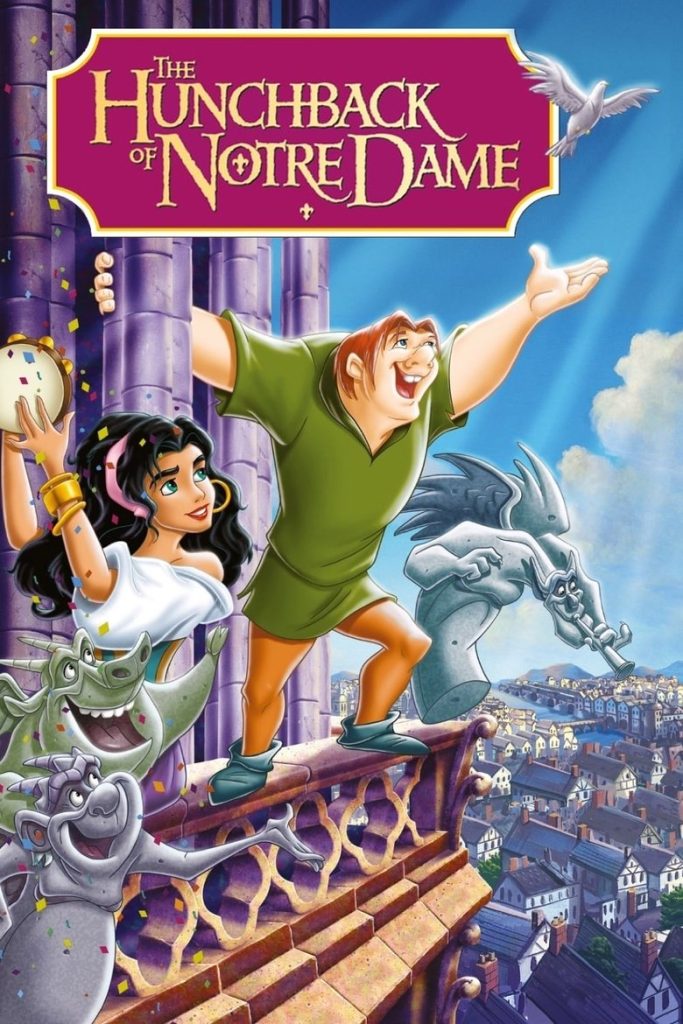
Story overview
This animated adaptation of Victor Hugo's classic novel tells the story of Quasimodo, a kind-hearted but isolated bell-ringer who lives in Notre Dame Cathedral under the strict control of Judge Frollo. When Quasimodo ventures into Paris for the first time, he meets Esmeralda, a courageous Romani woman who challenges Frollo's oppressive authority. The film explores themes of prejudice, acceptance, and finding one's place in the world through its dramatic musical storytelling.
Parent Guide
A dramatically intense animated musical with mature themes about prejudice and morality that may require parental guidance for younger viewers.
Content breakdown
Scenes of characters in peril, attempted violence including sword fights and threats, mob violence, and a climactic confrontation. No graphic injuries shown.
Dark imagery, intense villain with disturbing motivations, scenes of emotional manipulation, and frightening musical sequences with infernal imagery. Some characters face persecution and danger.
No offensive language present.
Mild romantic elements and a musical number with themes of lust and temptation presented through metaphorical imagery. No explicit content.
No substance use depicted.
Strong themes of prejudice, isolation, cruelty, and moral conflict. Characters experience rejection, fear, and emotional manipulation. Uplifting moments of friendship and courage balance the darker elements.
Parent tips
While rated G, this film contains mature themes and intense moments that may be challenging for younger viewers. The story deals with prejudice against Romani people, religious hypocrisy, and features a villain with disturbing motivations. Several scenes depict peril, emotional manipulation, and dark imagery that could frighten sensitive children.
Parents should know that the film includes scenes of attempted violence, characters in danger, and themes of obsession and cruelty. The musical number 'Hellfire' contains particularly intense imagery and themes of lust and damnation that may require explanation for younger viewers. Despite these elements, the film ultimately promotes messages of kindness, acceptance, and standing up against injustice.
Parent chat guide
After watching, focus conversations on the film's positive messages about accepting differences and standing up for what's right. Ask children how the characters showed courage and kindness despite facing prejudice. Discuss how Quasimodo learned to value himself and find friendship, and how Esmeralda stood up against unfair treatment.
Parent follow-up questions
- How did Quasimodo feel when he was alone in the tower?
- What made you feel happy or sad in the movie?
- How were the characters kind to each other?
- What did you think about the music and songs?
- Which character did you like best and why?
- Why do you think Quasimodo was kept hidden away?
- How did Esmeralda show bravery in the story?
- What lessons did Quasimodo learn about friendship?
- How did the characters help each other when they were in trouble?
- What does the movie teach us about treating people who are different?
- What prejudices did different characters face in the story?
- How did power and authority affect the characters' actions?
- What motivated the villain's behavior toward others?
- How did the setting of Notre Dame Cathedral contribute to the story?
- What messages about acceptance and belonging did you take from the film?
- How does the film explore themes of religious hypocrisy and moral corruption?
- What commentary does the story make about societal prejudices and scapegoating?
- How are themes of obsession and desire portrayed in the villain's character?
- What historical and social contexts influenced the original story and this adaptation?
- How does the film balance dark themes with its musical format and family-friendly presentation?
🎭 Story Kernel
At its core, 'The Hunchback of Notre Dame' explores the tension between institutional power and individual humanity. The film presents a stark critique of how religious and state authority can become corrupted when wielded by those like Judge Frollo, whose self-righteousness masks profound hypocrisy. Quasimodo's journey isn't just about finding acceptance but about recognizing that true monstrosity resides in those who claim moral superiority while committing atrocities. The film's central question becomes: who is truly deformed—the man with a twisted body or the society with a twisted soul? This theme resonates through every character's struggle for identity against rigid social structures.
🎬 Visual Aesthetics
The film's visual language masterfully contrasts Gothic grandeur with intimate human moments. Notre Dame Cathedral isn't just a setting but a character itself—its towering spires and stained glass windows create both sanctuary and prison. The color palette shifts dramatically between scenes: warm golds and reds during 'Out There' versus the cold blues and grays of Frollo's chambers. The 'Hellfire' sequence uses surreal, expressionistic animation to externalize Frollo's internal torment, with flames morphing into Esmeralda's silhouette. The camera often looks up at Quasimodo when he's vulnerable but down at him when society judges him, visually reinforcing his social position.
🔍 Details & Easter Eggs
💡 Behind the Scenes
This was Disney's first animated feature to directly incorporate religious themes and Gothic architecture on this scale. The animators studied Notre Dame Cathedral in Paris for months, creating over 1,000 background paintings to capture its grandeur. Tom Hulce (Quasimodo) and Tony Jay (Frollo) recorded their dialogue sessions separately but were later brought together for chemistry reads, creating fascinating vocal contrasts. The film's original cut was significantly darker—several scenes showing Frollo's backstory as a murderer were trimmed to maintain a PG rating, though his complexity remained intact.
Where to watch
Choose region:
- Disney Plus
- fuboTV
- Amazon Video
- Google Play Movies
- YouTube
- Fandango At Home
- Apple TV
Trailer
Trailer playback is unavailable in your region.