
The Hunt For Planet B (2021)
Story overview
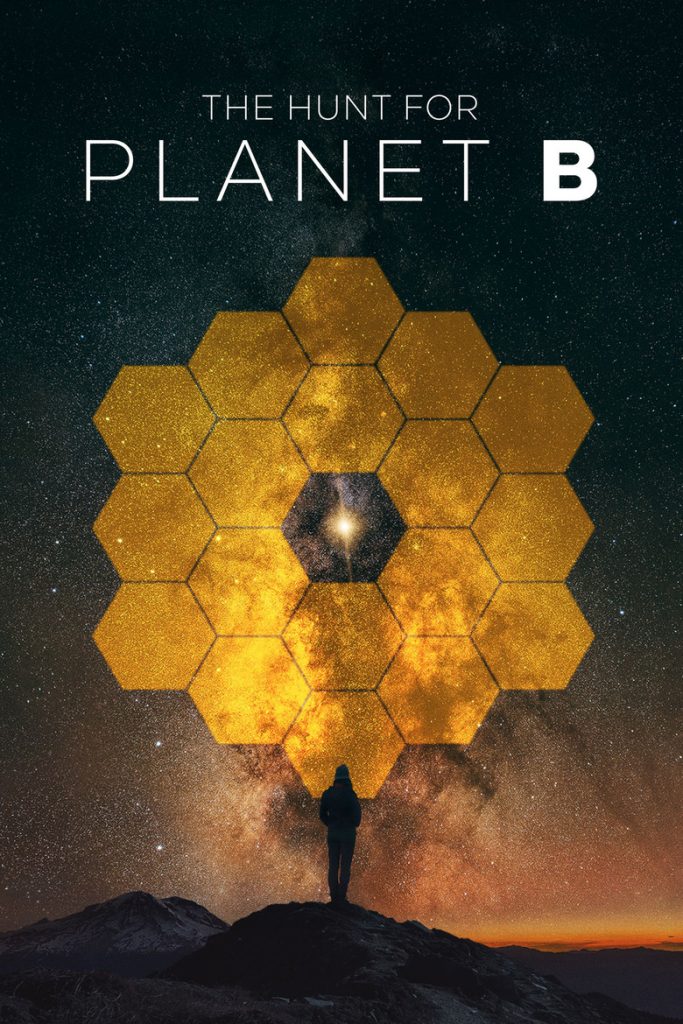
This 2021 documentary follows NASA scientists, many of them women, as they work on the James Webb Space Telescope with the goal of discovering potentially habitable exoplanets, offering an inspiring look at space exploration and scientific collaboration.
Parent Guide
Educational documentary about space exploration with no concerning content. Suitable for all ages with parental guidance for understanding scientific concepts.
Content breakdown
No violence or peril depicted. The film focuses on scientific work and space exploration.
No scary or disturbing content. The tone is educational and inspirational.
No offensive language. Professional scientific discussion throughout.
No sexual content or nudity.
No depiction of substance use.
Mild emotional intensity related to scientific discovery and the challenges of space exploration. Some scenes show scientists expressing excitement or concern about their work.
Parent tips
This documentary focuses on scientific discovery and teamwork, with no concerning content. It's educational and suitable for most ages, though younger children might find some scientific concepts challenging. Consider watching together to explain complex ideas.
Parent chat guide
Parent follow-up questions
- What was your favorite part of the movie?
- What do you think planets look like?
- Would you like to be a scientist when you grow up?
- What is the James Webb Space Telescope designed to do?
- Why are scientists looking for other planets like Earth?
- What did you learn about how scientists work together?
- What challenges did the scientists face in building the telescope?
- Why is the search for exoplanets important for our understanding of the universe?
- How does this documentary show the role of women in science?
- What are the scientific implications of finding an Earth-like exoplanet?
- How does this documentary address the intersection of technology, science, and human curiosity?
- What ethical considerations might arise from discovering life elsewhere in the universe?
🎭 Story Kernel
The film's true subject isn't the search for an Earth-like exoplanet, but the search for meaning in a vast, indifferent universe. It follows scientists at the James Webb Space Telescope project not as heroic explorers, but as deeply human figures wrestling with the weight of their quest. The core tension lies in the paradox they embody: using the most advanced technology ever built to answer the most ancient, philosophical questions—Are we alone? What makes a world 'alive'? The narrative drive comes from their personal reckonings with the scale of their endeavor, where success would simultaneously validate human curiosity and underscore our cosmic insignificance. It's less about finding Planet B and more about confronting why we feel we need one.
🎬 Visual Aesthetics
The cinematography masterfully employs scale and intimacy. Grand, awe-inspiring shots of the Webb telescope's golden mirrors and starfields are consistently juxtaposed with tight, handheld close-ups of scientists' faces in control rooms, their expressions illuminated by monitor glow. This visual language creates a dialogue between the cosmic and the personal. A muted, technical color palette of grays, blues, and sterile whites dominates the earthly scenes, making the eventual, digitally-rendered visualizations of exoplanet atmospheres—bursts of speculative color and light—feel like emotional releases. The camera often lingers on intricate machinery and data visualizations, treating them not as exposition but as characters in their own right, objects of both beauty and immense intellectual labor.
🔍 Details & Easter Eggs
💡 Behind the Scenes
The documentary gained remarkable access to NASA's James Webb Space Telescope team during its high-stakes commissioning and early science phases. Much of the footage of scientists in mission control is real, captured during actual data downloads from the telescope. Director Nathaniel Kahn filmed over several years, embedding with the team to capture the project's emotional arc. Notably, some of the scientists featured, like Dr. Natalie Batalha, are real-world leaders in the exoplanet search, adding a layer of authentic gravitas. The visualizations of exoplanets are not artistic guesswork but are based on actual spectroscopic data interpreted by the scientists shown, blurring the line between documentary footage and scientific illustration.
Where to watch
Choose region:
- HBO Max
- HBO Max Amazon Channel
- HBO Max CNN Amazon Channel
- Google Play Movies
- YouTube