The Imaginary (2023)
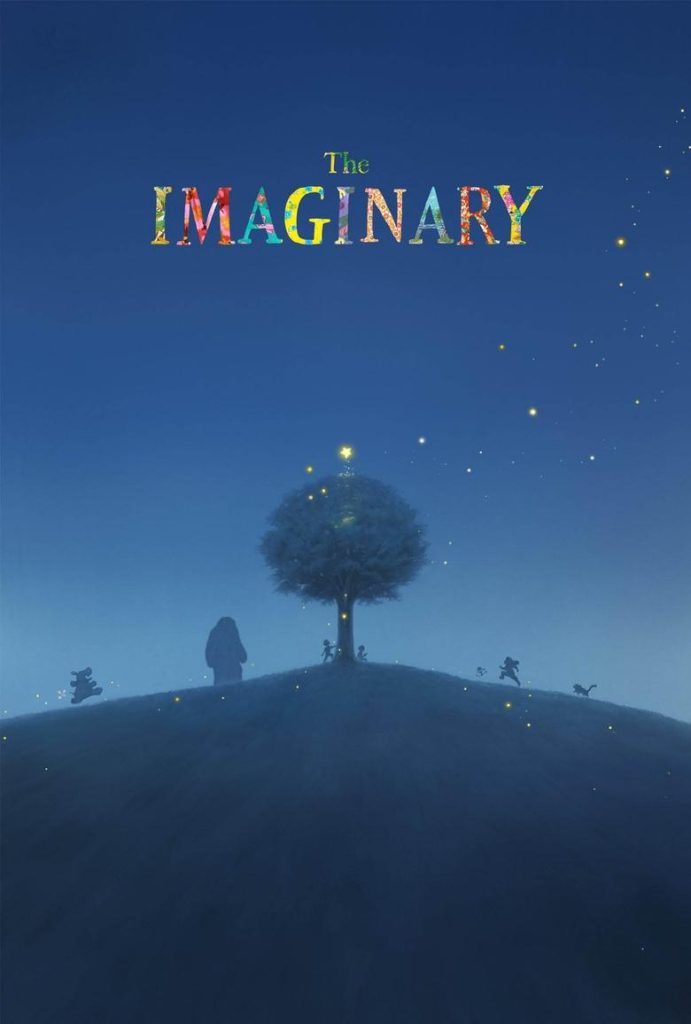
Story overview
The Imaginary follows Amanda and her imaginary companion Rudger as they embark on exciting adventures in their make-believe world. Their imaginative journeys take an unexpected turn when Rudger finds himself separated from Amanda and must navigate this new reality alone. He encounters mysterious challenges that test his resilience and determination in this heartfelt story about friendship, imagination, and facing the unknown.
Parent Guide
A family-friendly animated adventure about imagination and friendship with some moments of emotional intensity and mild peril.
Content breakdown
Contains fantasy peril as a character faces mysterious threats while alone. No physical violence depicted.
Some scenes may be unsettling for sensitive children, particularly those involving separation, uncertainty, or confronting unknown challenges.
No concerning language expected in this family-oriented animation.
No sexual content or nudity present.
No substance use depicted.
Contains emotional themes of separation, independence, and facing challenges alone that may resonate strongly with some viewers.
Parent tips
This animated fantasy film explores themes of imagination, friendship, and facing challenges independently. The PG rating suggests some content may be unsuitable for younger children, likely due to moments of peril or emotional intensity as Rudger confronts mysterious threats alone. Parents should be prepared for scenes where characters experience separation and uncertainty, which could be unsettling for sensitive viewers.
The film's imaginative premise provides opportunities to discuss creativity and problem-solving with children. While the overall tone appears family-friendly, the story involves a character navigating unfamiliar situations without their usual support system, which may resonate differently depending on a child's comfort with independence and change.
Parent chat guide
After the movie, focus conversations on how characters showed courage and creativity. Ask about times your child has faced something new or challenging, and how imagination might help in real-life situations. Emphasize that while change can be unsettling, it often leads to growth and discovery.
Parent follow-up questions
- What was your favorite adventure in the movie?
- How did Rudger feel when he was alone?
- What would you do with an imaginary friend?
- What makes a good friend?
- What did you like about the colors and pictures?
- Why do you think imagination is important?
- How did Rudger solve problems when he was alone?
- What does it mean to be brave?
- Have you ever had to try something new by yourself?
- What would you create in your own imaginary world?
- How does the movie show that change can be challenging but also helpful?
- What qualities help someone face uncertainty?
- How are real friendships different from imaginary ones?
- Why might stories about imagination appeal to people?
- What lessons about independence does the story share?
- How does the film explore the transition from childhood imagination to more complex realities?
- What metaphorical meanings might the 'mysterious threat' represent in personal growth?
- How do creative pursuits help people navigate life's challenges?
- In what ways do we all create 'imaginary' versions of our futures?
- How does the story balance fantasy elements with emotional authenticity?
🎭 Story Kernel
At its core, The Imaginary is a profound meditation on grief and the psychological mechanisms children employ to process loss. While ostensibly about the adventures of Rudger, the film is anchored in Amanda’s trauma following her father's death. Rudger represents more than just a playmate; he is a vessel for her unexpressed emotions and a safeguard against the crushing loneliness of her reality. The narrative explores the existential dread of being forgotten, framing the disappearance of Imaginaries not as a fantasy trope, but as a metaphor for the fading of childhood innocence and the necessity of moving forward. It balances the whimsy of creation with the predatory nature of Mr. Bunting, who symbolizes the cynical consumption of wonder. Ultimately, the film asserts that while we must eventually outgrow our imaginary anchors, the love that birthed them remains a permanent architecture of the soul.
🎬 Visual Aesthetics
Yoshiyuki Momose leverages his Ghibli lineage to craft a visual language that distinguishes between the tactile world of humans and the fluid, neon-soaked realms of the imagination. The film employs innovative digital painting techniques to simulate hand-drawn light and shadow, creating a depth rarely seen in traditional 2D animation. This is particularly evident in the Library sequences, where the lighting shifts to reflect the diverse origins of the resident Imaginaries. Symbolism is woven into the color palette: Amanda’s world is grounded in earthy, nostalgic tones, while the imaginary sequences explode with surrealist vibrancy, representing the limitless potential of a child's mind. The character design of Mr. Bunting, with his uncanny, slightly off-model appearance, serves as a visual manifestation of parasitic stagnation, contrasting sharply with Rudger’s clean, hopeful lines.
🔍 Details & Easter Eggs
💡 Behind the Scenes
The Imaginary marks Studio Ponoc’s second feature film, following Mary and the Witch's Flower. Director Yoshiyuki Momose, a long-time collaborator of Isao Takahata, brought a distinct cinematic sensibility influenced by his work on Grave of the Fireflies and The Tale of the Princess Kaguya. The film is an adaptation of the 2014 novel by A.F. Harrold, illustrated by Emily Gravett. To achieve its unique look, the studio collaborated with French artists from Les Films du Poisson Rouge to utilize specialized shading and lighting technology that allows 2D characters to interact realistically with complex light sources.
Where to watch
Choose region:
- Netflix
- Netflix Standard with Ads
Trailer
Trailer playback is unavailable in your region.