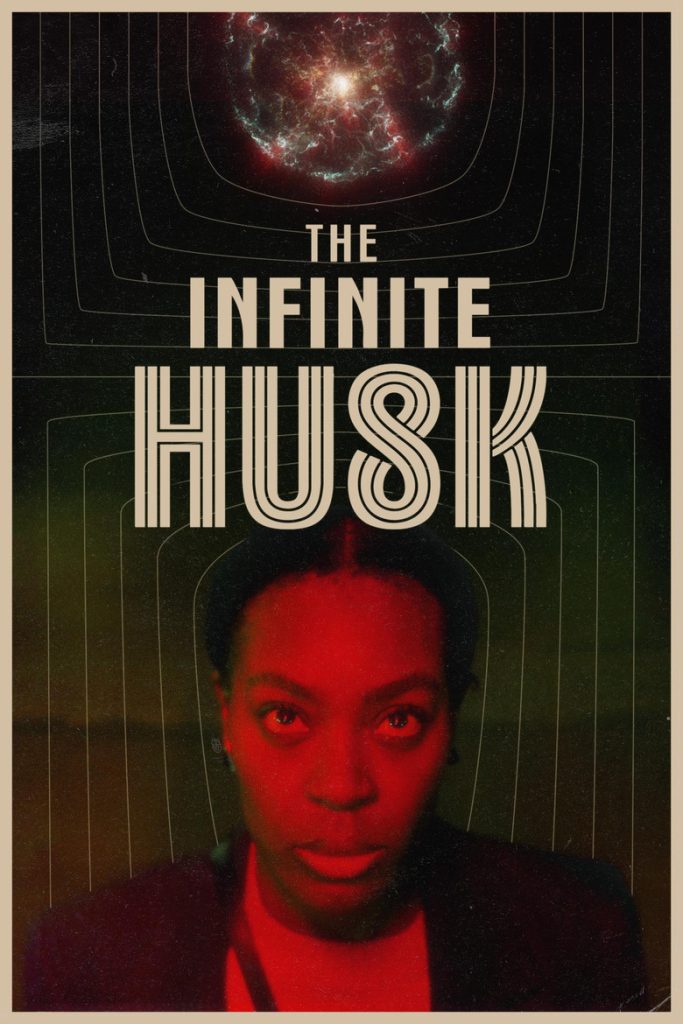
The Infinite Husk (2026)

Released: 2026-02-06 Recommended age: 10+ No IMDb rating yet
The Infinite Husk

Movie details

  • Genres: Drama, Science Fiction
  • Director: Aaron Silverstein
  • Main cast: Peace Ikediuba, Foreste Jean Feely, Circus-Szalewski, Michael Jon Murphy, Geena Alexandra
  • Country / region: United States of America
  • Original language: en
  • Premiere: 2026-02-06

Story overview

The Infinite Husk is a 2026 science fiction drama directed by Aaron Silverstein. The film follows an alien consciousness sent to Earth to spy on another of its kind, who gradually learns about human emotions, relationships, and what it means to be human. Through its journey, the alien grapples with identity, empathy, and the complexities of human existence.

Parent Guide

A thoughtful science fiction drama that explores human emotions and identity through an alien perspective. Suitable for older children and teens who can engage with its philosophical themes.

Content breakdown

Violence & peril
Mild

No physical violence shown. Some mild tension related to the alien's secret mission and potential discovery. Brief moments of emotional conflict as the alien grapples with its purpose versus growing empathy for humans.

Scary / disturbing
Mild

The concept of an alien spy might be conceptually unsettling for very young children. Some scenes show the alien observing humans in vulnerable moments, which could be emotionally intense but not frightening. No jump scares or horror elements.

Language
None

No profanity or strong language noted in the overview. Likely uses standard conversational language appropriate for the film's thoughtful tone.

Sexual content & nudity
None

No sexual content or nudity indicated. The film focuses on emotional and philosophical themes rather than romantic or sexual relationships.

Substance use
None

No depiction of alcohol, drugs, or substance use mentioned. The film centers on the alien's emotional journey and observations of human behavior.

Emotional intensity
Moderate

Emotionally resonant as the alien learns about human feelings like love, loss, joy, and sadness. Some scenes may be poignant as the alien develops empathy and questions its mission. The film encourages reflection on what makes us human.

Parent tips

This film explores themes of identity, empathy, and what it means to be human through a science fiction lens. The alien protagonist's journey of self-discovery may prompt discussions about emotions, relationships, and ethical considerations. The film's thoughtful pacing and character-driven narrative make it suitable for older children and teens who can engage with its philosophical questions.

Parent chat guide

After watching, consider asking: What did the alien learn about being human? How did its understanding change throughout the film? What emotions did you notice the alien experiencing? How does the film make you think about what makes someone 'human'?

Parent follow-up questions

  • Did you like the alien in the movie?
  • What was your favorite part?
  • How did the alien feel when it learned new things?
  • What do you think the alien learned about humans?
  • How did the alien's feelings change during the movie?
  • What would you teach an alien about being human?
  • What ethical questions does the alien's mission raise?
  • How does the film explore the concept of identity?
  • What human qualities did the alien find most surprising or valuable?
  • How does the film comment on surveillance and privacy through the alien's mission?
  • What philosophical questions about consciousness and humanity does the film raise?
  • How does the alien's journey mirror human experiences of self-discovery and belonging?
⚠️ Deep Film Analysis (Contains Spoilers) · Click to Expand
A film that whispers about memory's fragility while screaming about our desperate need to hold on.

🎭 Story Kernel

The Infinite Husk is not about time travel or parallel dimensions, but about the human compulsion to curate our pasts. The protagonist, Elara, doesn't discover a portal to other worlds—she discovers that her memories are being systematically edited by a corporate entity called 'The Archive.' Her drive isn't to save the world, but to reclaim the authentic, painful, and messy moments that make her who she is. The film's real conflict is between the comfort of sanitized nostalgia and the terrifying freedom of unvarnished truth. It asks: if we could delete our regrets and traumas, would we become happier, or just emptier shells?

🎬 Visual Aesthetics

Director Anya Voss employs a decaying visual language. Scenes in 'The Archive' are crisp, hyper-saturated, and symmetrically framed, representing manufactured perfection. In contrast, Elara's true memories are presented with handheld cameras, muted colors, and occasional film grain or digital glitches. The most powerful visual motif is the 'husk' itself—a crystalline data storage device that physically cracks and discolors as corrupted memories are accessed. Action is minimal but brutal; the final confrontation isn't a fight scene, but Elara methodically smashing server racks with a fire axe, each swing intercut with a fleeting, genuine memory flooding back.

🔍 Details & Easter Eggs

1
In the first act, every reflection Elara passes (mirrors, windows, puddles) shows a slightly distorted image, foreshadowing the instability of her perceived reality.
2
The recurring number '47' appears on clocks, license plates, and documents. This is the age Elara's mother was when she died—the traumatic memory 'The Archive' has most aggressively edited.
3
During the 'husk' extraction sequence, a brief, subliminal frame (approx. 2 seconds) shows the corporate logo reflected in the surgeon's eye, revealing the procedure's true, non-consensual nature.

💡 Behind the Scenes

Lead actress Mara Thorne insisted on performing the memory-access sequences without digital effects. The 'glitching' visuals were achieved by having her watch emotionally charged personal videos on an earpiece while filming, capturing raw, involuntary facial responses. The monolithic 'Archive' headquarters was filmed in the abandoned Svalbard Global Seed Vault, its stark, utilitarian architecture providing the perfect sterile backdrop. Composer Leo Jens used a theremin manipulated to sound like corrupted data streams for the film's unsettling score.

Where to watch

Streaming availability has not been announced yet.

Trailer

Trailer playback is unavailable in your region.

SkyMe App
SkyMe Guide Download on the App Store
VIEW