
The Intouchables (2011)
Story overview
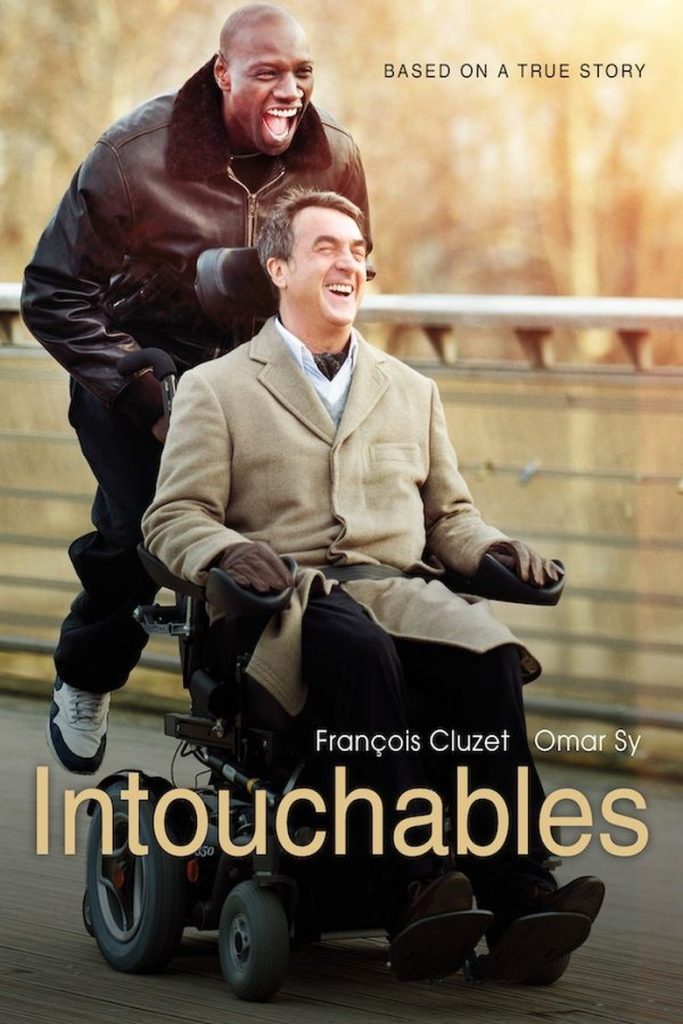
The Intouchables is a French drama-comedy based on a true story about an unlikely friendship between two men from very different worlds. It follows a wealthy quadriplegic man who hires a caregiver from a disadvantaged background, leading to a transformative relationship for both. The film explores themes of disability, social class, and human connection with both humor and heartfelt moments.
Parent Guide
A heartfelt film about friendship across social boundaries with mature content requiring parental guidance for teens.
Content breakdown
Brief references to past accidents and some tense moments, but no graphic violence.
Some emotional scenes involving disability and medical situations that might be intense for sensitive viewers.
Includes some strong language and crude humor typical of an R-rated film.
Contains sexual references, discussions of sexuality, and some suggestive content.
Some scenes include social drinking and brief drug references.
Deals with serious themes of disability, loss, and social inequality with emotional depth.
Parent tips
This R-rated film contains mature themes including strong language, discussions of sexuality, and some drug references that make it inappropriate for younger children. The movie deals with disability in a realistic yet uplifting way, showing both the challenges and joys of the characters' lives. Parents should be prepared to discuss topics like social inequality, personal responsibility, and how people from different backgrounds can form meaningful connections.
Parent chat guide
Parent follow-up questions
- What did you notice about how the two friends helped each other?
- How do you think it feels when someone can't move their body like you can?
- What ways did you see people being kind in the movie?
- What was your favorite happy moment in the story?
- How do friends make each other feel better?
- What did you learn about how people with disabilities live their lives?
- How did the two main characters become friends even though they were so different?
- What challenges did you see the characters facing and how did they handle them?
- What does this movie teach us about treating people with respect?
- How did humor help the characters in difficult situations?
- How does the movie show that friendship can change people's lives?
- What did you think about how the film portrayed social class differences?
- How did the characters grow and change throughout the story?
- What messages did you take away about overcoming personal limitations?
- How does the movie balance serious topics with comedy?
- What does this true story reveal about human resilience and connection?
- How does the film challenge stereotypes about disability and social class?
- What did you think about the portrayal of caregiver-patient relationships?
- How does the movie explore themes of freedom within limitations?
- What cultural differences did you notice in how the story is told compared to American films?
🎭 Story Kernel
At its core, 'The Intouchables' explores the transformative power of genuine human connection that defies social barriers. The film isn't about disability or poverty—it's about two men who liberate each other from their respective prisons. Philippe's physical paralysis mirrors Driss's emotional paralysis, both trapped by circumstances they didn't choose. Their relationship dismantles the patronizing pity often directed at disability, replacing it with irreverent honesty. The driving force isn't caregiving but mutual awakening: Driss reintroduces Philippe to life's messy vitality, while Philippe offers Driss stability and cultural exposure. Their bond reveals that true companionship requires seeing beyond labels to the person beneath.
🎬 Visual Aesthetics
The film's visual language masterfully contrasts Philippe's sterile, aristocratic world with Driss's vibrant, chaotic energy. Philippe's mansion is shot with symmetrical compositions and cool, muted tones—reflecting his controlled, isolated existence. When Driss enters, the camera becomes more dynamic, with handheld shots and warmer lighting. The Parisian skyline serves as a visual metaphor for freedom, appearing in key moments of connection. Notice how physical touch is framed: initially clinical, then increasingly natural as their friendship deepens. The film avoids sentimentalizing disability through its matter-of-fact portrayal of Philippe's daily routines, making their breakthroughs feel earned rather than inspirational.
🔍 Details & Easter Eggs
💡 Behind the Scenes
The film is based on the true story of Philippe Pozzo di Borgo and his caregiver Abdel Sellou, though names were changed. François Cluzet studied quadriplegics for months to master Philippe's physicality, while Omar Sy brought improvisational energy that directors embraced. The iconic paragliding scene required special rigging to film Cluzet safely. Interestingly, the real Driss character initially disliked the film for romanticizing poverty, though later appreciated its message. The production used Philippe's actual Paris mansion for authenticity, creating an unusual intimacy on set.
Where to watch
Choose region:
- Amazon Video
- Apple TV
- Google Play Movies
- YouTube
- Fandango At Home
- Fandango at Home Free
- Amazon Prime Video Free with Ads
- Tubi TV
- Kanopy
- Plex
- Plex Channel
Trailer
Trailer playback is unavailable in your region.