
The Invisible Thread (2022)
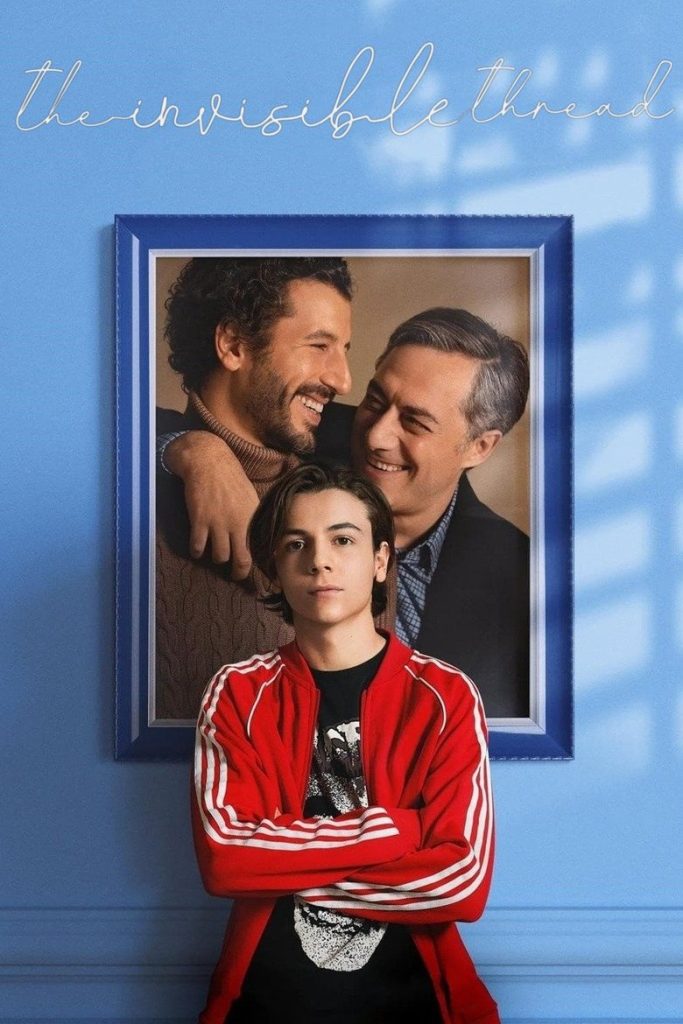
Story overview
The Invisible Thread is a 2022 Italian comedy-drama film directed by Marco S. Puccioni. It follows a teenage boy who decides to make a documentary about his two fathers, but his project takes an unexpected turn when a surprising real-life development unfolds within his family. The film explores themes of family dynamics, identity, and love through a heartwarming and humorous lens, blending family and romance elements in a story about modern parenthood.
Parent Guide
A family-friendly Italian comedy-drama that gently explores modern family dynamics through a teenager's documentary project. The film presents same-sex parenting positively and handles emotional family revelations with sensitivity and humor.
Content breakdown
No violence or physical peril depicted. The film focuses entirely on family relationships and emotional dynamics.
Some mild emotional tension related to family revelations, but nothing frightening or disturbing. The 'plot twist' is handled gently and leads to positive resolution.
Italian dialogue with possible mild expressions (subtitle dependent). No strong profanity or offensive language based on the family-oriented genre.
No sexual content or nudity. The romance elements are limited to affectionate family relationships and possibly mild romantic subplots appropriate for family viewing.
No depiction of alcohol, drugs, or tobacco use. The film maintains a clean, family-appropriate atmosphere throughout.
Moderate emotional moments related to family relationships and the documentary project's revelations. The emotional content is handled with warmth and resolution, suitable for family viewing.
Parent tips
This film offers a positive portrayal of a same-sex parent family and could serve as a conversation starter about diverse family structures. The teenage protagonist's documentary project might inspire creative expression in young viewers. Parents should be prepared to discuss the family dynamics presented, as the 'plot twist' involves emotional family revelations. The Italian cultural context provides an opportunity to talk about different family traditions and values.
Parent chat guide
Parent follow-up questions
- What was your favorite part of the movie?
- What colors did you see in the movie?
- Did you like the boy in the story?
- What did you learn about making movies from this film?
- How do you think the boy felt when his family surprise happened?
- What makes a family special in your opinion?
- What documentary would you make about your family?
- How does this film show that families can look different but still be loving?
- What challenges do you think the teenager faced while making his film?
- How does this film challenge traditional views of family structure?
- What cinematic techniques did you notice in the documentary-within-the-film?
- How does the Italian cultural context influence the family dynamics portrayed?
🎭 Story Kernel
The film's core isn't about a ghost haunting a house, but about two profoundly lonely people haunting each other into existence. Leo, the living protagonist, is driven by a desperate, almost pathological need to be seen and validated, which makes him the perfect audience for the ghost's silent performance. The ghost, Elisa, isn't driven by unfinished business in a traditional sense, but by the simple, devastating hunger for interaction that her invisible state denied her. The movie expresses how identity is co-created through witness; we become real to ourselves only when reflected in another's perception, even if that other is a specter. Their connection is the 'invisible thread'—a fragile tether of mutual need that gives form to both the formless and the forgotten.
🎬 Visual Aesthetics
The film's visual language is a masterclass in negative space and restraint. Director Luca Guadagnino uses a muted, almost desaturated color palette of greys, blues, and cold whites, making the rare warm tones—like the amber glow of a single lamp—feel like emotional events. The camera often lingers on empty doorways and still corridors, training the viewer to see absence as a character. Action is minimal and internal; the most tense sequences are built on silence and the agonizing wait for a sign. Symbolism is subtle: reflections in windows and mirrors are frequently blurred or fractured, visually representing the broken sense of self and the difficulty of perceiving the other. The ghost is never shown with cheap effects, but implied through disturbances in light, displaced objects, and the intense focus on Leo's reacting face.
🔍 Details & Easter Eggs
💡 Behind the Scenes
The lead actor, Timothée Chalamet, reportedly spent weeks in the empty apartment set alone to cultivate the profound loneliness required for his role. The apartment itself is not a set but a real, long-abandoned residence in Turin, Italy, chosen for its specific, palpable history and acoustics. The sound design team used specialized sub-harmonic frequencies, often felt more than heard, to create a physiological sense of unease in cinema audiences. Composer Ryuichi Sakamoto's score is notably sparse; the brief, cello-heavy themes were recorded in a single take to preserve a raw, vulnerable quality that mirrors the central relationship.
Where to watch
Choose region:
- Netflix
- Netflix Standard with Ads
Trailer
Trailer playback is unavailable in your region.