The Irishman (2019)
Story overview
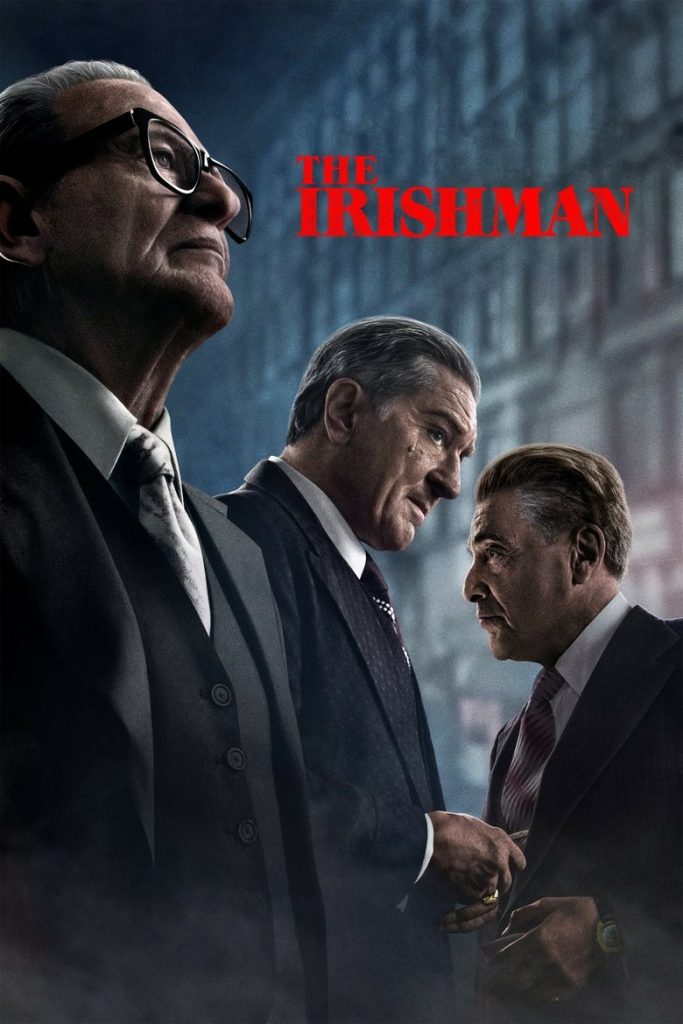
The Irishman is a 2019 crime drama that explores the life of Frank Sheeran, a truck driver who becomes involved with organized crime. Spanning decades, the film depicts his rise within the criminal underworld and his connections to powerful figures. It examines themes of loyalty, aging, and the consequences of a life of violence through a historical lens.
Parent Guide
A mature crime drama with strong violent content and adult themes, recommended for viewers 17+ with parental guidance.
Content breakdown
Frequent graphic violence including shootings, beatings, and mob-related executions.
Intense criminal situations and moral ambiguity may be disturbing.
Pervasive strong profanity and crude language throughout.
Brief sexual references and suggestive dialogue.
Depictions of alcohol consumption and smoking in social settings.
High emotional stakes involving betrayal, aging, and moral consequences.
Parent tips
This film is rated R for strong violence, pervasive language, and brief sexual references, making it unsuitable for children under 17 without parental guidance. Parents should be aware that it contains graphic depictions of mob violence, including shootings and beatings, alongside frequent strong profanity. The mature themes of crime, betrayal, and moral ambiguity require thoughtful discussion with older teens.
Parent chat guide
Parent follow-up questions
- What did you think about the people in the movie?
- Were there any parts that made you feel scared?
- What colors or sounds did you notice most?
- How did the characters show they were friends?
- What jobs did the people in the movie have?
- Why do you think the story took place over so many years?
- What choices did the main character make that changed his life?
- How does the movie show the difference between right and wrong?
- What did you learn about how people remember past events?
- How does the film explore themes of loyalty and betrayal?
- What commentary does the movie make about aging and regret?
- How does the historical setting influence the characters' actions and morality?
🎭 Story Kernel
The film's core is not about organized crime's spectacle, but about the slow, corrosive nature of transactional loyalty and the ultimate emptiness of a life built on it. Frank Sheeran is driven by a simple, devastating need: to belong, to be useful, to have a 'house'—first the army, then the mob. His relationship with Hoffa is the tragic heart; it's the one bond that approaches genuine affection, which makes his betrayal not an act of power, but of pathetic, programmed obedience. The movie expresses the quiet horror of a man who traded his soul for a seat at the table, only to find the table empty and himself utterly alone, his legacy reduced to a door left ajar for strangers.
🎬 Visual Aesthetics
Scorsese employs a deliberate, weary visual grammar. The de-aging technology, while noticeable, becomes part of the aesthetic—it creates a haunting, uncanny valley that mirrors the characters' disconnect from their younger selves and the falsity of their remembered glory. The color palette is muted, dominated by browns, greys, and beiges, draining the typical gangster film glamour. Action is brutally efficient and unheroic; hits are quick, messy, and devoid of cinematic flair. The camera often holds on Frank in still, wide shots, emphasizing his isolation. The final act's visual language shifts to nursing home blues and sterile whites, visually cementing the hollow payoff of his life of service.
🔍 Details & Easter Eggs
💡 Behind the Scenes
The de-aging process for De Niro, Pacino, and Pesci was a massive technical undertaking. Instead of traditional markers, VFX artists used a three-camera rig to capture nuanced performances, which were then painstakingly 'youthified' in post-production. Notably, Joe Pesci came out of retirement specifically for this role, and his performance as the quietly menacing Russell Bufalino is a masterclass in subdued power, a stark contrast to his volatile roles in earlier Scorsese films. Much of the film was shot on location in New York, including the famed Umberto's Clam House, adding a layer of authentic, weathered texture.
Where to watch
Choose region:
- Netflix
- Netflix Standard with Ads
Trailer
Trailer playback is unavailable in your region.