
The Irishman: In Conversation (2019)
Story overview
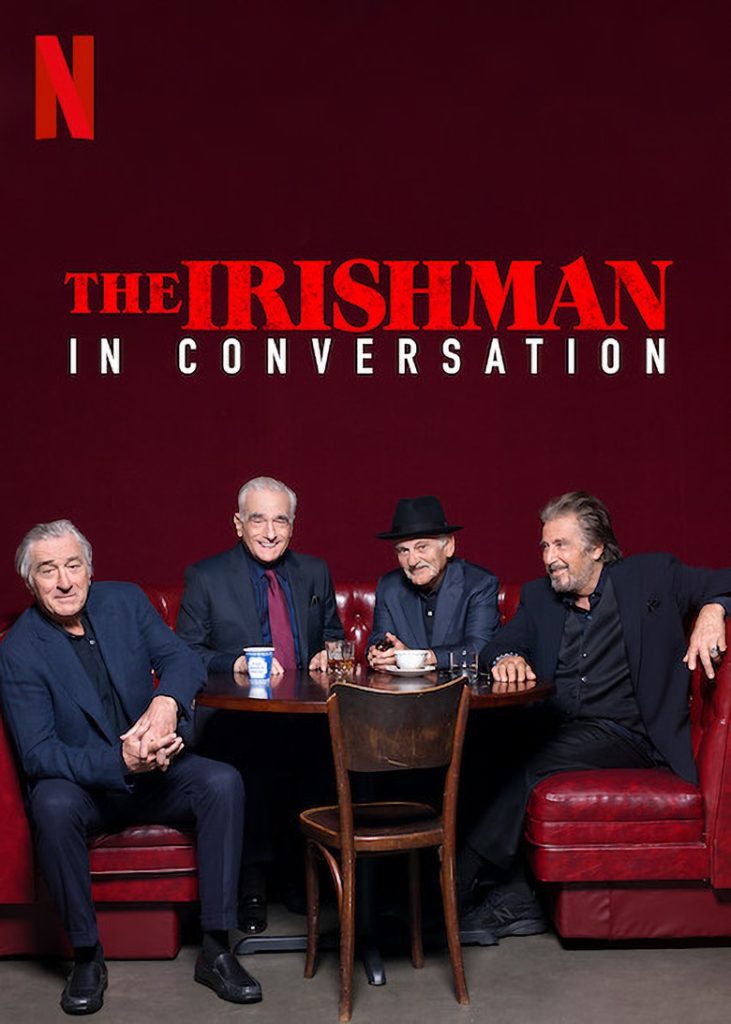
This 23-minute documentary features director Martin Scorsese and actors Robert De Niro, Joe Pesci, and Al Pacino discussing their film 'The Irishman.' The conversation focuses on the making of the movie, character development, and the actors' experiences working together, without showing scenes from the film itself.
Parent Guide
A calm, conversational documentary about filmmaking with no concerning content beyond occasional mild language. Educational for children interested in cinema.
Content breakdown
No violence or peril depicted; only discussion of a film that contains violence.
No scary or disturbing content; the tone is analytical and conversational.
Occasional mild language (e.g., 'hell,' 'damn') in casual conversation.
No sexual content or nudity.
No depiction or discussion of substance use.
Low emotional intensity; the discussion is thoughtful and reflective rather than dramatic.
Parent tips
This documentary is a behind-the-scenes discussion suitable for older children interested in filmmaking. It contains no violence, scary content, or sexual material, but includes occasional mild language. Best viewed with parental guidance for context about the film industry.
Parent chat guide
Parent follow-up questions
—
- What job would you want in making a movie?
- How do you think actors remember all their lines?
- What challenges might directors face when working with famous actors?
- How does discussing a character help an actor perform better?
- How does this conversation reveal the artistic choices behind 'The Irishman'?
- What does this documentary show about the evolution of these filmmakers' careers?
🎭 Story Kernel
The film's core is a meditation on time, legacy, and the slow, unglamorous erosion of a life built on violence. It's not about the rise and fall of a mobster, but about the long, hollow aftermath. Frank Sheeran's drive isn't ambition or power—it's a chilling, transactional loyalty that becomes his entire moral framework, rendering him a ghost long before his body fails. The real conflict is between the myth of the 'good soldier' and the devastating, lonely reality of outliving everyone you ever betrayed or loved, leaving only a confession to a disinterested priest as your epitaph.
🎬 Visual Aesthetics
Scorsese employs a deliberately muted, almost drained color palette of browns, greys, and sickly yellows, visually mirroring the protagonist's moral and physical decay. The camera is largely static and observational, refusing to glamorize violence. The infamous digital de-aging, while technically notable, creates an uncanny valley that thematically reinforces the film's preoccupation with time—we are constantly aware we're watching actors play versions of their younger selves, just as Frank is haunted by his past. The action is brutal, quick, and shockingly matter-of-fact, devoid of the operatic flair of 'Goodfellas.'
🔍 Details & Easter Eggs
💡 Behind the Scenes
The project languished for years due to its massive budget, largely necessitated by the extensive de-aging VFX. Robert De Niro, Al Pacino, and Joe Pesci had never all appeared in a Scorsese film together. Pesci came out of retirement for the role, reportedly turning down the part 50 times before accepting. Much of the film was shot on location in New York, including the famed Umberto's Clam House, the real site of Joey Gallo's murder depicted in the film.
Where to watch
Choose region:
- Netflix
- Netflix Standard with Ads