
The Jungle Book (1967)
Story overview
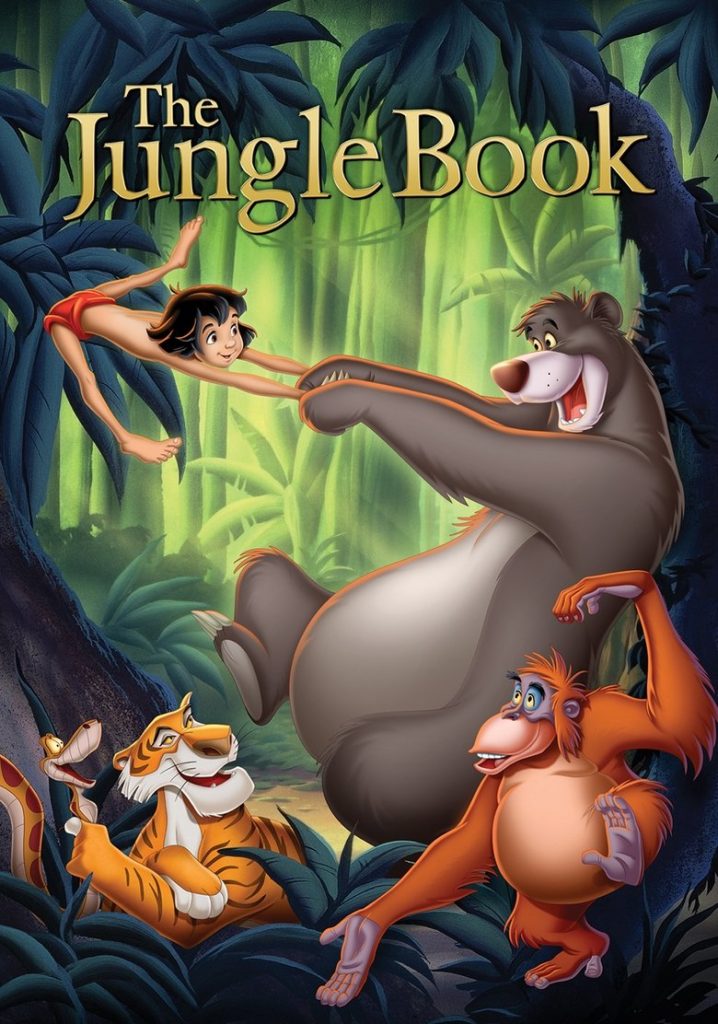
The Jungle Book follows Mowgli, a young boy raised by wolves in the jungle, as he journeys to the human village with his panther friend Bagheera. Along the way, he encounters various jungle animals including the fun-loving bear Baloo who teaches him about life's simple joys. The story explores themes of friendship, belonging, and finding one's place in the world through Mowgli's adventures and interactions with the animal characters.
Parent Guide
A classic animated adventure with mild peril and positive messages about friendship and finding one's place.
Content breakdown
Some chase scenes and confrontations with predatory animals; no graphic violence shown
A tiger presents a threat; hypnotic snake scene might be slightly intense for very young viewers
No offensive language; mild teasing between characters
No sexual content; characters wear minimal clothing appropriate to setting
No substance use depicted
Themes of separation and identity; generally positive resolution
Parent tips
This classic animated film is generally appropriate for most children, featuring colorful characters and memorable songs. Parents should be aware that some scenes involving the tiger Shere Khan might be slightly intense for very young viewers, as he presents a threat to Mowgli. The film includes themes of separation and finding one's identity that could prompt discussions about growing up and belonging.
The movie contains some mild peril when characters face dangerous situations in the jungle, though these are resolved positively. The musical numbers and animal friendships provide plenty of lighthearted moments that balance the more serious elements. Overall, this is a gentle introduction to adventure stories with positive messages about friendship and courage.
Parent chat guide
After the movie, consider talking about how Mowgli learned from different animals and what 'the bare necessities' might mean in your own family. You could discuss how characters showed courage when facing challenges and what it means to find where you belong. These conversations can help children process the film's themes in age-appropriate ways.
Parent follow-up questions
- Which animal was your favorite and why?
- What sounds do you think different jungle animals make?
- How did Baloo help Mowgli?
- What was your favorite song in the movie?
- How do you think Mowgli felt when meeting new animals?
- Why do you think Mowgli needed to go to the man-village?
- How did different animals teach Mowgli different things?
- What does 'the bare necessities' mean to you?
- How did characters show they were good friends?
- What would you do if you met a talking animal?
- What does this story say about belonging to different groups?
- How did Mowgli change from beginning to end?
- What responsibilities come with friendship according to the movie?
- How do the animals represent different aspects of growing up?
- What jungle rules would you create if you lived there?
- How does the film explore the tension between nature and civilization?
- What cultural perspectives might be embedded in this story?
- How do the animal characters represent different approaches to life?
- What does the journey symbolize in terms of personal growth?
- How might this story be different if told from another character's perspective?
🎭 Story Kernel
The film's core isn't about a boy finding his place, but about the performance of identity. Mowgli is an actor in the jungle's social drama, his 'man-cub' status a role he must either perfect or reject. Every character—from Bagheera's stern mentorship to Baloo's carefree hedonism—represents a different script for survival. Shere Khan isn't just a villain; he's the audience that refuses to suspend disbelief, seeing through Mowgli's animal costume to the human beneath. The climax isn't about defeating a tiger, but about Mowgli finally writing his own character—using human ingenuity (fire) not as a weapon of destruction, but as a prop in a performance that convinces the jungle he belongs on his own terms.
🎬 Visual Aesthetics
Favreau's visual language creates a hyper-realistic yet mythic jungle where every frame feels both documentary and dream. The camera often adopts animal perspectives—low angles through grass, sweeping canopy shots—making the jungle feel alive and watching. The color palette shifts with emotional tone: warm golds and greens during Baloo's scenes, cold blues and grays when Shere Khan prowls, and the terrifying orange glow of fire that visually bridges Mowgli's two worlds. Notice how water isn't just setting but character—the drought represents the jungle's fragility, the rainstorm its catharsis. The CGI animals avoid cartoonish expressions, their realism making their human-like social structures feel eerily plausible.
🔍 Details & Easter Eggs
💡 Behind the Scenes
The entire jungle was created digitally except for Mowgli himself—Neel Sethi acted alone on a soundstage with tennis balls and markers representing animals. Bill Murray ad-libbed much of Baloo's dialogue, including the 'Bear Necessities' scene's casual humor. The film used cutting-edge VR technology: Favreau would 'walk through' the CGI jungle during pre-production using a headset to plan shots. Interestingly, Christopher Walken's King Louie was modeled after Marlon Brando's Colonel Kurtz from 'Apocalypse Now,' explaining that oversized, throne-room performance.
Where to watch
Choose region:
- Disney Plus
- Amazon Video
- Apple TV
- Google Play Movies
- YouTube
- Fandango At Home
Trailer
Trailer playback is unavailable in your region.