
The Kids Are Back (2017)
Story overview
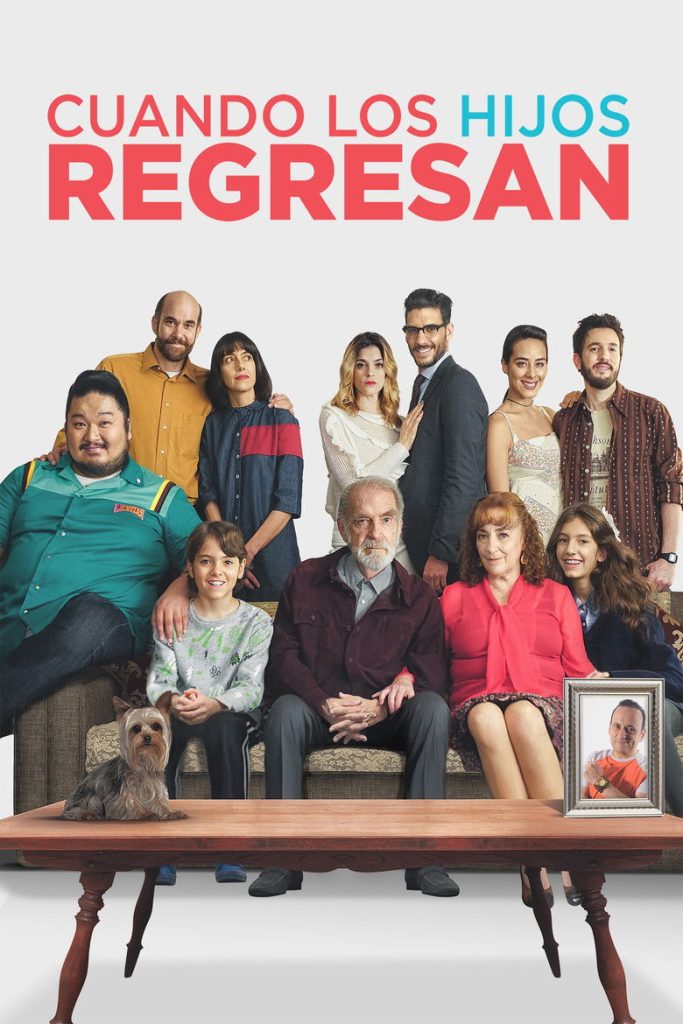
In this 2017 Mexican family comedy, a retired couple's peaceful life is turned upside down when their adult children unexpectedly move back home. The parents must navigate the challenges of re-establishing boundaries and dealing with the humorous conflicts that arise as different generations clash under one roof.
Parent Guide
A lighthearted family comedy about multigenerational living situations with minimal concerning content. The TV-MA rating likely reflects mature themes about adult family dynamics rather than explicit material.
Content breakdown
No physical violence or peril depicted. Conflict is verbal and situational, arising from family disagreements about living arrangements.
No scary or disturbing content. The tone is consistently comedic and lighthearted throughout.
May contain mild expressions of frustration typical in family disagreements. No strong profanity expected given the family comedy genre.
No sexual content or nudity. The focus is exclusively on family relationships and living situations.
No depiction of substance use. Characters may consume food and non-alcoholic beverages in social family settings.
Mild emotional tension from family disagreements, resolved comically. No intense emotional scenes that would be distressing for children.
Parent tips
This film focuses on family dynamics and generational differences with comedic elements. While rated TV-MA, it appears to be for mature themes related to adult children returning home rather than explicit content. The Spanish-language film offers cultural insights into Mexican family life. Consider watching with older children to discuss family relationships and responsibility.
Parent chat guide
Parent follow-up questions
- What was your favorite part of the movie?
- How do you think the grandparents felt when their kids came back?
- What makes a home feel happy?
- Why do you think the adult children moved back home?
- What are some ways families can share space respectfully?
- How did the grandparents try to solve their problem?
- What responsibilities should adult children have when living with parents?
- How do cultural expectations affect family relationships?
- What compromises did different family members make in the story?
- What does this film say about independence vs. family support systems?
- How do generational differences create both conflict and understanding?
- What economic or social factors might lead adult children to return home?
🎭 Story Kernel
The film explores the quiet desperation of middle-aged parents confronting their own arrested development through their children's return. It's not really about the kids—it's about parents who never fully grew up, now forced to parent themselves while pretending to guide their offspring. The characters are driven by unspoken regrets and the terrifying realization that their 'adult' lives were built on compromises they can no longer justify. Each parental figure grapples with the ghost of who they might have been, using their children's struggles as mirrors for their own unfulfilled dreams. The movie suggests that sometimes children don't come home to be parented—they come home to witness their parents finally growing up.
🎬 Visual Aesthetics
The cinematography employs a muted, desaturated palette that gradually warms as characters reconnect, mirroring their emotional thaw. Handheld shots dominate family conflicts, creating visceral intimacy, while static wide frames emphasize the characters' isolation within their own homes. Notice how the parents are often shot from low angles when with their children, visually reinforcing their diminished authority. The production design cleverly uses generational artifacts—vinyl records versus streaming devices, physical photo albums versus smartphone galleries—as visual metaphors for the communication gap. Natural lighting during daytime scenes contrasts with harsh artificial light at night, reflecting the characters' public facades versus private anxieties.
🔍 Details & Easter Eggs
💡 Behind the Scenes
Several scenes were improvised based on the actors' real experiences with adult children returning home. The suburban house used for the primary location was actually the director's childhood home, lending authentic texture to every creaking floorboard and familiar hallway. During filming, the cast lived together in a nearby rental property, which informed their naturalistic family dynamics. The script underwent significant revisions after test screenings revealed audiences connected more with the parents' perspectives than the children's, shifting the film's emotional center. Notably, the kitchen argument scene was shot in one continuous take requiring 27 attempts before capturing the raw emotional intensity seen in the final cut.
Where to watch
Choose region:
- Disney Plus
- Hulu
Trailer
Trailer playback is unavailable in your region.