
The Last Emperor (1987)
Story overview
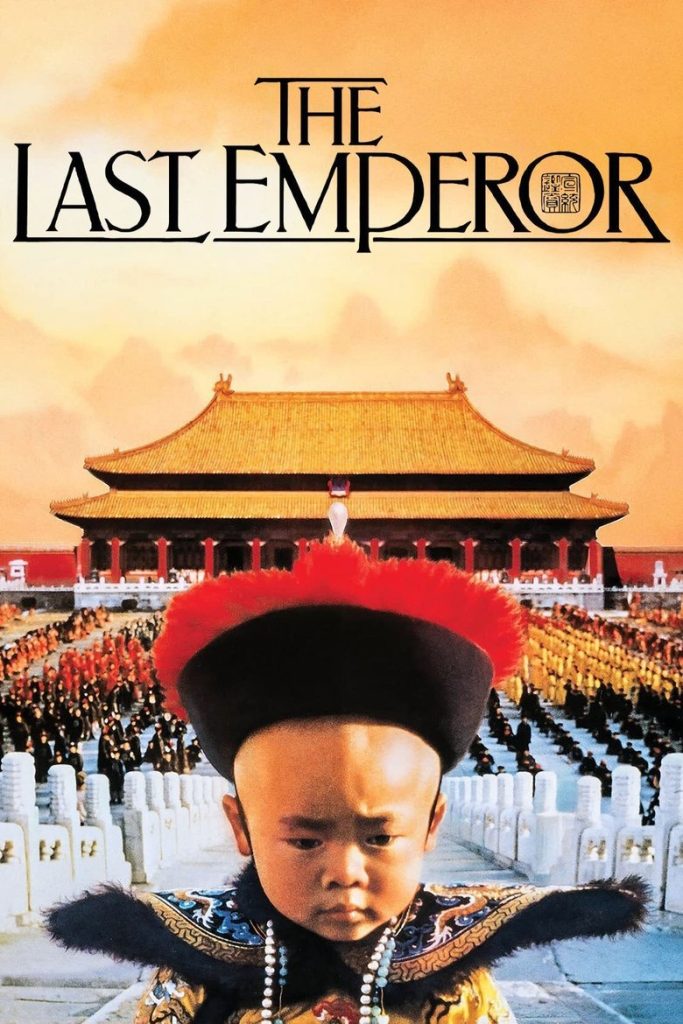
The Last Emperor (1987) is a historical drama directed by Bernardo Bertolucci that chronicles the life of Pu Yi, China's final emperor. The film follows his journey from childhood enthronement in the Forbidden City, through his abdication and subsequent exploitation by Japanese forces during World War II, to his eventual re-education as an ordinary citizen under Communist rule. Spanning decades of political upheaval, it explores themes of power, identity, loss, and adaptation through visually rich cinematography and a sweeping narrative.
Parent Guide
The Last Emperor is a sophisticated historical epic that deals with mature themes including political manipulation, loss of identity, and personal transformation. While visually stunning and historically significant, its content requires emotional maturity and historical context to appreciate fully. The PG-13 rating reflects moderate elements in several categories.
Content breakdown
Contains war imagery including bombings and military conflict during Japanese occupation scenes. Several execution scenes (mostly implied rather than graphically shown). Prisoner mistreatment and psychological manipulation. Some scenes of peril during political upheavals. Violence is historical context-appropriate but may be intense for sensitive viewers.
Disturbing themes of political imprisonment, forced re-education, and loss of freedom. Scenes of isolation and psychological manipulation. Historical atrocities are referenced. The overall atmosphere of decline and loss of power creates a somber tone. Some viewers may find the depiction of cultural destruction during political changes unsettling.
Minimal strong language. Occasional historical-appropriate derogatory terms in context of political conflict. No frequent or gratuitous profanity.
Several non-graphic sexual situations, including implied marital relations and consorts. Brief partial nudity in intimate scenes. Sexual content is contextual to relationships and historical setting rather than explicit. Most suggestive scenes are brief and not graphically depicted.
Social drinking in palace settings. Some scenes depict opium use in historical context (19th/early 20th century China). Substance use is shown as part of historical lifestyle rather than glorified.
High emotional intensity throughout due to themes of loss, identity crisis, and political manipulation. The protagonist experiences profound personal transformations from worshipped emperor to ordinary citizen. Scenes of separation from family, loss of status, and psychological struggle create sustained emotional weight. The film's length and somber tone contribute to cumulative emotional impact.
Parent tips
This PG-13 rated film is best suited for mature teens due to its complex historical themes and some intense scenes. At 163 minutes, it requires sustained attention. Parents should note: 1) The film contains brief but impactful scenes of violence (war imagery, executions) and peril. 2) There are non-graphic sexual situations and partial nudity. 3) Historical context involving war, imprisonment, and political manipulation may be disturbing. 4) The narrative structure jumps through time periods, which could confuse younger viewers. 5) Themes of loss of power and identity crisis are emotionally weighty. Consider watching with teens to discuss historical context and emotional responses.
Parent chat guide
Parent follow-up questions
—
—
—
- What did you find most surprising about Pu Yi's life story?
- How did the film make you feel about the idea of royalty and power?
- What moments in the film felt most emotionally intense to you, and why?
- How does the film show Pu Yi changing as he grows older?
- What questions do you have about the historical events shown in the movie?
🎭 Story Kernel
The film's core theme is the paradox of freedom within absolute power. Puyi's journey isn't about gaining or losing an empire, but about discovering that his 'divine right' was the ultimate prison. He's driven not by ambition but by a desperate search for identity—first as a god-emperor, then as a puppet, finally as a humble gardener. The real tragedy isn't his dethronement but his realization that his entire life was a performance for political masters, from the Qing court to the Japanese to the Communist Party. His final moments as a tourist in his own palace perfectly capture how history reduces even emperors to spectators of their own lives.
🎬 Visual Aesthetics
Bertolucci's visual language creates a stunning contrast between opulence and confinement. The Forbidden City is shot with wide, majestic angles emphasizing its scale, yet Puyi is consistently framed behind barriers—gates, screens, and windows—visually trapping him. The color palette shifts dramatically: rich golds and reds during imperial scenes drain to muted grays in prison, then to documentary-like realism in his final years. The famous 'running through curtains' sequence uses flowing fabric as both liberation and entanglement, while the transition from riding a bicycle in empty halls to being a bicycle repairman completes his visual journey from ruler to commoner.
🔍 Details & Easter Eggs
💡 Behind the Scenes
Bernardo Bertolucci became the first Western director granted permission to film inside Beijing's Forbidden City, shooting during six months with unprecedented access. John Lone (adult Puyi) learned Mandarin specifically for the role, though his childhood scenes use a different actor. The production employed 19,000 extras for the coronation scene alone, many from the People's Liberation Army. Cinematographer Vittorio Storaro won an Oscar for creating the distinctive color schemes that track Puyi's psychological states throughout different life periods.
Where to watch
Choose region:
- HBO Max
- HBO Max Amazon Channel
- Criterion Channel
- Cinemax Amazon Channel
- Cinemax Apple TV Channel
- Amazon Video
- Apple TV Store
- Fandango At Home
Trailer
Trailer playback is unavailable in your region.