
The Lion King (1994)
Story overview
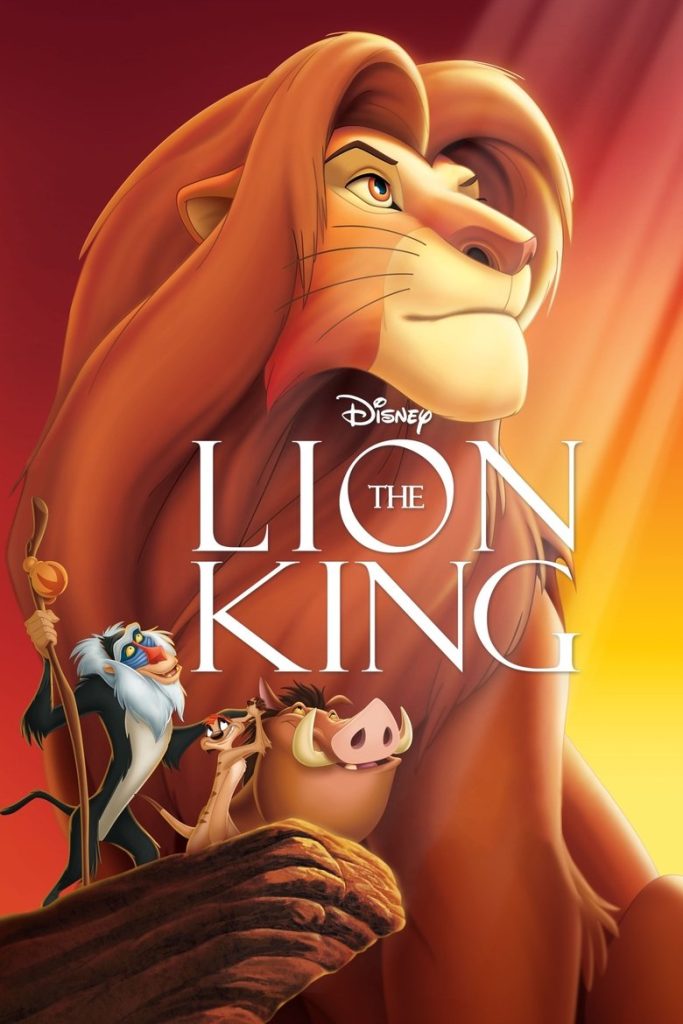
The Lion King follows the journey of a young lion prince named Simba who dreams of becoming king of his homeland. When tragedy strikes and he's forced into exile, Simba must overcome his fears and confront his past to reclaim his rightful place. This animated classic explores themes of responsibility, loss, and finding one's identity through a coming-of-age story set in the African savanna. The film balances joyful musical numbers with emotional depth as Simba learns about the circle of life.
Parent Guide
A classic animated film with emotional depth and valuable life lessons, best suited for children who can handle themes of loss and responsibility.
Content breakdown
Contains animal stampedes, confrontations between characters, and scenes where characters are in danger. No graphic violence shown.
Includes the death of a parent figure, intense emotional scenes, and moments of peril that may be frightening to sensitive viewers.
No offensive language or profanity present in the film.
No sexual content or nudity; all characters are animated animals.
No depiction of substance use or references to drugs or alcohol.
Contains strong emotional themes including loss, guilt, and responsibility that may resonate deeply with viewers.
Parent tips
The Lion King contains some intense emotional moments that may be challenging for younger viewers. The death of a parent figure occurs on screen, which could be upsetting for children who have experienced loss or separation anxiety. There are also scenes with mild peril involving animal stampedes and confrontations between characters.
Despite these intense moments, the film offers valuable lessons about facing fears, accepting responsibility, and the importance of family and community. The musical numbers are uplifting and memorable, providing balance to the more serious themes. Parents should be prepared to discuss the emotional aspects of the story with their children.
Parent chat guide
Focus conversations on how Simba grows throughout the story and what he learns about responsibility. You can also talk about the concept of 'the circle of life' and what that might mean in real life. Encourage children to share their feelings about the characters' choices and relationships.
Parent follow-up questions
- What was your favorite animal in the movie?
- How did Simba feel when he was playing with his friends?
- What sounds did the animals make?
- Which song did you like best?
- What colors did you see in the movie?
- Why was it important for Simba to remember who he was?
- How did Simba's friends help him when he was sad?
- What does 'the circle of life' mean to you?
- How did Simba show bravery in the movie?
- What did Simba learn from his father?
- What responsibilities come with being a leader like Simba?
- How did the characters deal with feelings of guilt or sadness?
- What does the movie teach about facing your past?
- How did the different animal characters work together?
- What choices did Simba make that showed he was growing up?
- How does the film explore themes of legacy and responsibility?
- What does the story suggest about overcoming trauma or loss?
- How are power dynamics portrayed between the characters?
- What cultural or philosophical ideas does 'the circle of life' represent?
- How does Simba's journey reflect common coming-of-age experiences?
🎭 Story Kernel
At its core, 'The Lion King' is less about the 'Circle of Life' and more about the burden of inherited trauma and the psychological weight of monarchy. Simba's journey isn't just about reclaiming a throne, but about overcoming survivor's guilt and the toxic narrative of responsibility instilled by his father. Scar's villainy stems from a profound, systemic envy—he is the eternal 'spare' to Mufasa's 'heir,' and his coup is a nihilistic rejection of the natural order he feels excluded from. The film explores how legacy can be both a guiding light and a crushing obligation, questioning whether one must become their parent to honor them.
🎬 Visual Aesthetics
The film's visual language is operatic, using the African savanna as a stage. The color palette shifts dramatically with the narrative: the golden, sun-drenched Pride Lands under Mufasa give way to the ashen, desaturated wasteland under Scar's rule. Key scenes use stark, theatrical framing—Simba seeing his father's ghost in the clouds is a masterclass in negative space and scale, making the spiritual feel tangible. The 'Circle of Life' opening is a single, unbroken crane shot that establishes the kingdom as a living, breathing ecosystem, while the wildebeest stampede uses chaotic, low-angle perspectives to immerse the viewer in Simba's terror.
🔍 Details & Easter Eggs
💡 Behind the Scenes
The film's initial concept was dubbed 'Bambi in Africa' and was one of Disney's riskier projects, being an original story, not a fairy tale. James Earl Jones (Mufasa) and Madge Sinclair (Sarabi) had previously voiced the king and queen of another African nation in 'Coming to America.' The iconic wildebeest stampede sequence was a technical marvel, using early CGI to create thousands of stampeding animals, a process so complex it required developing new software. Actor Jeremy Irons strained his vocal cords singing 'Be Prepared'; the lower, spoken verses were actually performed by Jim Cummings, the voice of Winnie the Pooh.
Where to watch
Choose region:
- Disney Plus
- Apple TV
- Google Play Movies
- YouTube
- Fandango At Home
- Amazon Video
Trailer
Trailer playback is unavailable in your region.