
The Little Matchgirl (2006)
Story overview
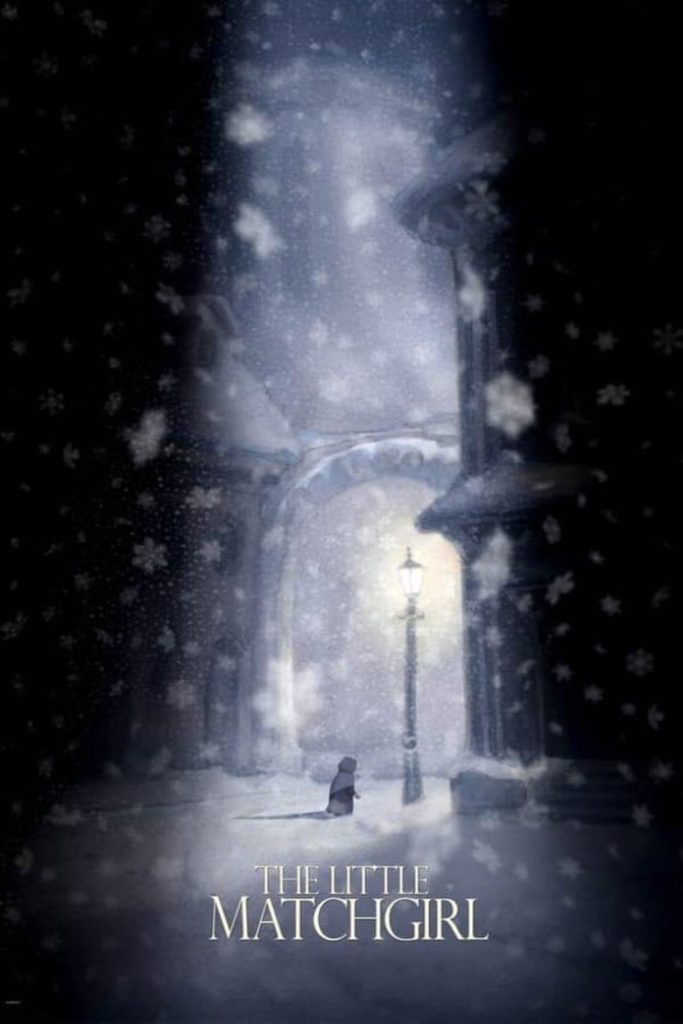
This animated short film adapts Hans Christian Andersen's classic tale about a poor young girl struggling to survive on the streets. To find warmth and comfort, she lights the matches she's supposed to sell, and in their flames she sees visions of a happier life with loving family, abundant food, and a safe home. The story explores themes of poverty, imagination, and the human need for connection and comfort during difficult times. At just seven minutes long, it presents a poignant, visually beautiful interpretation of this well-known literary work.
Parent Guide
A beautifully animated but emotionally poignant adaptation of Andersen's classic tale about poverty and imagination, suitable for children who can handle themes of hardship with parental guidance.
Content breakdown
No physical violence, but the main character faces peril from exposure to cold weather and hunger.
Themes of poverty, loneliness, and hardship may be emotionally disturbing to sensitive viewers, though presented artistically.
No inappropriate language.
No sexual content or nudity.
No substance use.
Strong emotional themes of poverty, loneliness, and yearning for comfort and connection; the contrast between harsh reality and beautiful visions creates poignant moments.
Parent tips
This film deals with mature themes of poverty, loneliness, and hardship that may be emotionally challenging for younger children. The main character experiences cold, hunger, and isolation, though the animation style softens some of the harsher realities. The G rating reflects the absence of any inappropriate content, but parents should be prepared for the story's sad elements and potentially upsetting subject matter.
While the film is brief, its emotional impact can be significant. The girl's visions provide moments of beauty and hope, but they contrast sharply with her difficult reality. This creates opportunities to discuss empathy, social awareness, and how imagination can provide comfort during hard times.
Consider your child's sensitivity to stories about characters in distress. The film's artistic approach makes it suitable for family viewing, but some children might find the themes unsettling without proper context and discussion.
Parent chat guide
During viewing, be available to answer questions about why the girl is alone and cold. You could point out how the animation shows her inner world through the match flames, and how her visions represent universal human desires for love, safety, and nourishment. If your child seems distressed, reassure them that stories help us understand different experiences.
After watching, focus on what the story teaches us about compassion and resilience. Discuss how we can help people in our community who might be struggling, and how imagination and hope can sustain us during hard times. Emphasize that while the story has sad elements, it also celebrates the human spirit's ability to find beauty even in challenging circumstances.
Parent follow-up questions
- How did the girl feel when she was cold?
- What nice things did she see in the matches?
- How can we help people who don't have warm homes?
- What makes you feel warm and happy inside?
- Why do you think the girl was alone?
- Why do you think the girl kept lighting matches even though she was supposed to sell them?
- How did her imagination help her feel better?
- What does this story teach us about people who have less than we do?
- How can we show kindness to others who might be struggling?
- What would you do if you met someone like the matchgirl?
- How does the film use visual storytelling to show the contrast between reality and imagination?
- What do you think the match flames symbolize in the story?
- How does this adaptation handle the difficult themes of the original tale?
- What responsibilities do communities have toward vulnerable members like the matchgirl?
- How can art and stories help us understand experiences different from our own?
- How does the film explore the relationship between poverty and imagination as coping mechanisms?
- What commentary might the story be making about social inequality and compassion?
- How effective is the animation style in conveying both harsh reality and beautiful fantasy?
- In what ways do the match visions represent universal human needs and desires?
- How does this short film adaptation compare to other interpretations of Andersen's work in terms of emotional impact?
🎭 Story Kernel
The film's core isn't just a tragic fairy tale adaptation—it's a raw examination of how society collectively fails its most vulnerable members. The matchgirl's desperate attempts to sell matches represent her futile struggle for basic human connection and economic survival in a world that actively ignores her. Her vivid hallucinations aren't escapism but rather the cruel contrast between what society could provide (warmth, nourishment, family) and what it actually delivers (neglect, hunger, death). The ending's brutal honesty—her frozen body discovered by indifferent passersby—forces viewers to confront their own complicity in such systems of neglect.
🎬 Visual Aesthetics
The animation employs a stark visual dichotomy: the real world is rendered in muted, cold blues and grays with harsh, angular lines, while the match-induced visions burst with warm, rounded forms and saturated colors. This contrast isn't merely aesthetic—it visually represents the divide between the girl's reality and her desperate imagination. The camera frequently positions viewers as passive observers, mirroring the crowd's detachment, until intimate close-ups during her visions create uncomfortable proximity to her suffering. The final shot's slow pull-back from her body to the uncaring street scene is a masterclass in visual storytelling through absence of sentimentality.
🔍 Details & Easter Eggs
💡 Behind the Scenes
This 2006 animated short marked Disney's return to hand-drawn animation after years of CGI dominance, with the team studying historical illustrations of Victorian London for authenticity. Composer Alexandre Desplat created the haunting score using period-appropriate instruments, while the absence of dialogue was a deliberate choice to emphasize visual storytelling. The film's inclusion in the 'Disney Princess' line sparked controversy due to its unflinching tragedy, making it the only entry where the protagonist dies—a testament to its artistic commitment over commercial considerations.
Where to watch
Choose region:
- Disney Plus
- Amazon Video
- Google Play Movies
- YouTube
- Fandango At Home