
The Little Mermaid (1989)
Story overview
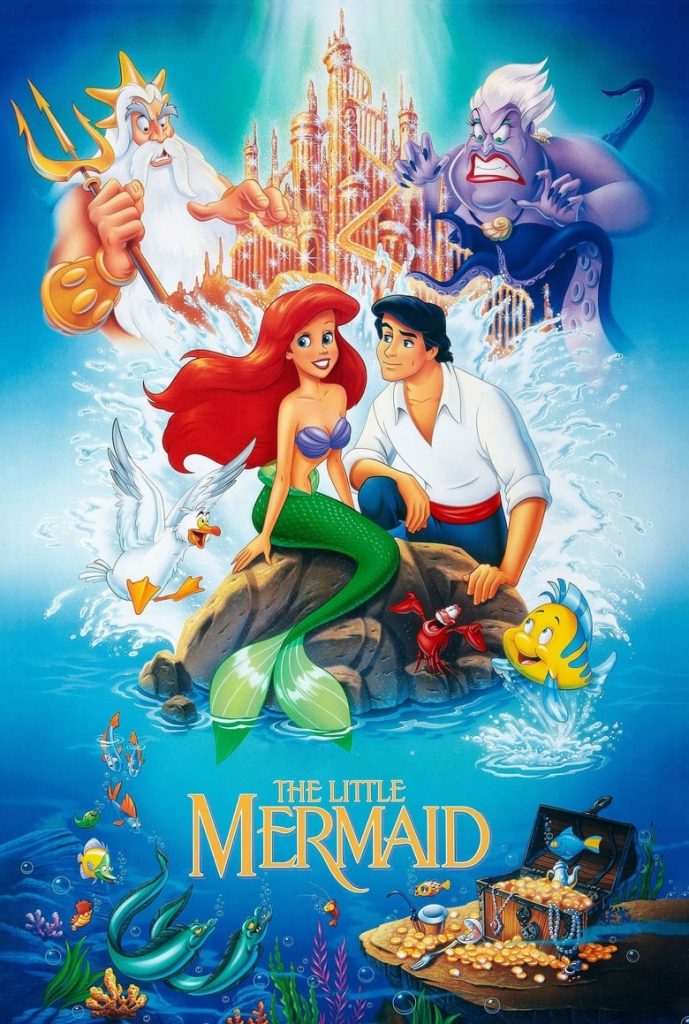
The Little Mermaid is a classic animated musical fantasy about Ariel, a curious mermaid princess who dreams of exploring the human world. Her fascination leads her to make a risky bargain with the villainous sea witch Ursula to become human and pursue her love for Prince Eric. The film features memorable songs and vibrant underwater scenes that capture themes of adventure, sacrifice, and following one's heart. It's a timeless story of transformation and courage set against a colorful oceanic backdrop.
Parent Guide
A classic animated musical with some intense villain scenes and themes of rebellion and risk-taking, best for children who can handle mild peril.
Content breakdown
Includes fantasy peril such as characters in dangerous situations, a climactic confrontation with a villain, and threats of harm, but no graphic violence.
The sea witch Ursula has a dramatic and sometimes intimidating appearance, and her manipulative actions might be unsettling for very young or sensitive viewers.
No offensive or inappropriate language is present.
No sexual content or nudity; characters are modestly dressed in typical animated fashion.
No depiction of substance use.
Features emotional moments related to family conflict, romantic longing, and risky decisions, which could resonate strongly with some children.
Parent tips
This G-rated film is generally suitable for most children, but parents should be aware of some potentially intense moments. The sea witch Ursula is a classic Disney villain who can be frightening with her dramatic appearance and manipulative behavior, which might unsettle very young viewers. The story involves themes of rebellion against parental authority and making risky decisions for love, which could prompt discussions about family communication and consequences. The underwater setting and musical numbers make it engaging, but the perilous situations and emotional stakes may require parental reassurance for sensitive children.
Parent chat guide
Parent follow-up questions
- What was your favorite song in the movie?
- How did Ariel feel when she saw things from the human world?
- What was something funny that happened underwater?
- Who was a kind character in the story?
- What color was your favorite part of the ocean?
- Why do you think Ariel wanted to explore the human world?
- How did the sea witch try to trick Ariel?
- What are some ways the characters helped each other?
- If you could visit an underwater place, what would you want to see?
- What lesson did Ariel learn about making promises?
- What risks did Ariel take to follow her dreams, and were they worth it?
- How did the movie show the importance of communication between parents and children?
- What made Ursula a powerful villain, and how was she defeated?
- How did the movie use music to tell the story?
- What does the story say about being true to yourself versus changing for others?
- How does the film portray the theme of sacrifice for love or dreams?
- What cultural or historical elements might influence the story's setting and characters?
- How does Ariel's rebellion against her father reflect common coming-of-age experiences?
- In what ways does the movie use fantasy to explore real-world emotions and conflicts?
- How might the story's messages about transformation and identity resonate with teenage viewers?
🎭 Story Kernel
At its core, 'The Little Mermaid' explores the brutal economics of desire and transformation. Ariel isn't just rebelling against her father—she's rejecting an entire ecosystem of power and tradition. Her obsession with the human world represents a fundamental dissatisfaction with her assigned place in the oceanic hierarchy. The film's central tragedy isn't the potential loss of her soul to Ursula, but the systematic erasure of her aquatic identity. Every step on land is a physical manifestation of cultural assimilation, while her silenced voice symbolizes how marginalized voices are literally taken in exchange for entry into dominant societies. The happy ending feels almost like a compromise—she gets the prince but remains severed from her original world.
🎬 Visual Aesthetics
Disney's animation establishes a stark visual dichotomy between realms. The underwater sequences employ flowing, organic movements and a cool blue-green palette that feels both lush and restrictive. Ariel's red hair becomes a visual rebellion against this monochrome world. The surface world, by contrast, is rendered in warm, solid colors with sharper lines and more rigid compositions. This isn't just aesthetic—it visualizes Ariel's transition from fluid possibility to fixed reality. The camera frequently frames Ariel looking upward, emphasizing her longing for escape, while Triton is often shot from low angles to accentuate his imposing authority. Even the transformation sequence uses painful, visceral imagery that undercuts its supposed romanticism.
🔍 Details & Easter Eggs
💡 Behind the Scenes
Jodi Benson recorded 'Part of Your World' in complete darkness to better embody Ariel's sense of longing and isolation. The voice of Ursula, Pat Carroll, was originally considered for the role of Aunt Entity in 'Mad Max Beyond Thunderdome.' Animators studied footage of sperm whales for reference when creating the underwater movements, particularly for Sebastian's more fluid scenes. Howard Ashman fought to keep 'Part of Your World' in the film when Disney executives wanted to cut it, believing children would be bored—it's now considered one of Disney's essential 'I Want' songs that defines the character's motivation.
Where to watch
Choose region:
- Disney Plus
- Amazon Video
- Apple TV
- Google Play Movies
- YouTube
- Fandango At Home
- Spectrum On Demand
Trailer
Trailer playback is unavailable in your region.