
The Little Mermaid: Ariel’s Beginning (2008)
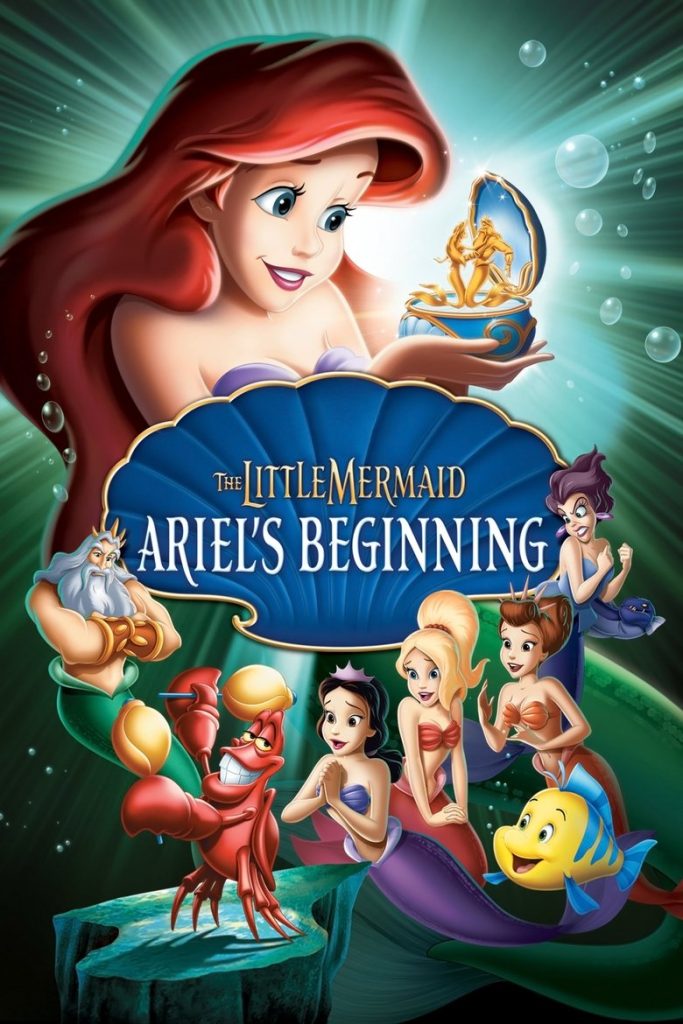
Story overview
This animated prequel to Disney's 'The Little Mermaid' explores Ariel's childhood in Atlantica before she met Prince Eric. The story focuses on family relationships, grief, and the power of music. After Queen Athena's tragic death, King Triton bans all music from the kingdom, leading Ariel and her friends to embark on a journey to restore joy and harmony to their underwater world.
Parent Guide
A gentle, musical prequel suitable for all ages. While dealing with mature themes of loss and grief, it presents them in an age-appropriate way with positive messages about healing and family bonds.
Content breakdown
Queen Athena's death occurs off-screen (killed by pirates). Some mild peril when characters face obstacles while trying to restore music. No physical violence shown.
The death of a parent is a central plot point and may be emotionally intense for sensitive children. Scenes showing King Triton's anger/grief could be momentarily unsettling. No visually frightening imagery.
No offensive language. All dialogue is family-friendly.
No sexual content or nudity. Characters wear typical Disney-style clothing/accessories.
No depiction of alcohol, drugs, or tobacco use.
Themes of parental loss and grief are central to the story. King Triton's emotional withdrawal and the kingdom's sadness may resonate with children who have experienced loss. Ultimately uplifting with themes of healing.
Parent tips
This G-rated film is appropriate for all ages but contains emotional themes that may require discussion with younger children. The death of Ariel's mother occurs off-screen but is central to the plot. The film explores grief, family conflict, and finding joy after loss. Positive messages about perseverance, friendship, and the healing power of music are prominent throughout.
Parent chat guide
Parent follow-up questions
- What was your favorite song in the movie?
- How did Ariel feel when she couldn't sing anymore?
- What colors did you see in the underwater world?
- Why do you think King Triton banned music after Queen Athena died?
- How did Ariel and her sisters help each other feel better?
- What would you do if something you loved was suddenly forbidden?
- How does the film show different ways people grieve?
- What does the movie suggest about balancing rules with personal expression?
- How might the story be different if told from King Triton's perspective?
- How does this prequel add depth to Ariel's character from the original film?
- What commentary does the film make about authoritarian responses to trauma?
- How effectively does the film handle themes of loss while maintaining its family-friendly tone?
🎭 Story Kernel
At its core, 'The Little Mermaid: Ariel's Beginning' is about the suppression of joy and individuality under authoritarian rule, specifically through the banning of music after Queen Athena's death. King Triton's grief manifests as control, outlawing the very thing that connected his family. The film examines how trauma can lead to oppressive systems, and how rebellion—led by Ariel—becomes necessary to restore emotional expression. It's less about Ariel's origin and more about how a society heals from collective loss by reclaiming its cultural soul.
🎬 Visual Aesthetics
The animation employs a muted, desaturated color palette in Atlantica's present to reflect the kingdom's joyless state under the music ban, contrasting sharply with flashbacks to Queen Athena's time that burst with vibrant blues and golds. Camera movements are often static during official scenes, mirroring the rigidity of Triton's rule, while becoming fluid and dynamic during secret musical gatherings. Symbolism is clear: instruments represent forbidden freedom, and the absence of music visually translates to a lifeless, gray undersea world.
🔍 Details & Easter Eggs
💡 Behind the Scenes
This was the first Disney direct-to-video prequel to explore a character's backstory so extensively, released in 2008. Jodi Benson reprised her role as Ariel, having voiced the character since the 1989 original. The film's director, Peggy Holmes, was a former professional dancer, which influenced the choreography-like movement in musical sequences. Interestingly, it was produced without the involvement of the original film's directors, Ron Clements and John Musker.
Where to watch
Choose region:
- Disney Plus
- Amazon Video
- Apple TV Store
- Google Play Movies
- YouTube
- Fandango At Home
Trailer
Trailer playback is unavailable in your region.