
The Lives of Others (2006)
Story overview
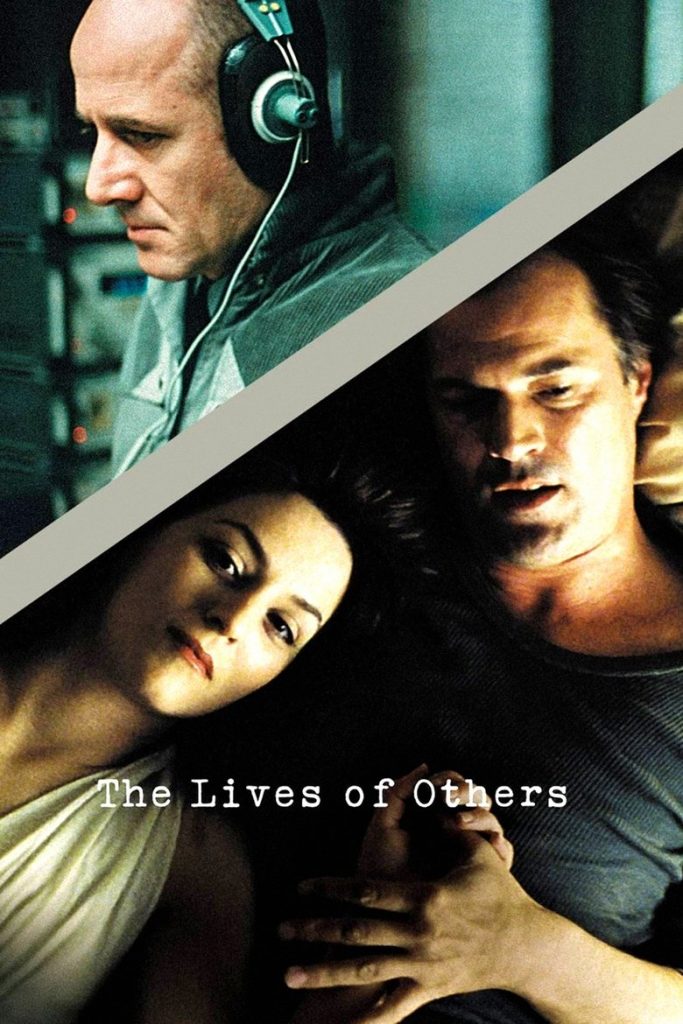
The Lives of Others is a 2006 German drama-thriller set in 1984 East Berlin during the Cold War. It follows a dedicated Stasi secret police officer who is assigned to spy on a playwright and his actress partner. As he monitors their lives, he becomes unexpectedly sympathetic to their situation, leading to internal conflict about his duties and loyalties. The film explores themes of surveillance, artistic freedom, and moral choices under an oppressive regime.
Parent Guide
A thoughtful, intense drama about surveillance and morality in Cold War East Germany, best suited for mature teenagers due to its complex themes and psychological tension.
Content breakdown
No physical violence shown, but there are tense situations, psychological pressure, and implied threats that create a sense of peril.
Psychological tension, surveillance themes, emotional manipulation, and the oppressive atmosphere of a police state could be disturbing to sensitive viewers.
Occasional mild language in subtitles, nothing strong or frequent.
Implied romantic relationships and brief non-explicit intimate moments, no nudity shown.
Social drinking in a few scenes, nothing excessive or glorified.
High emotional intensity throughout with themes of betrayal, moral conflict, and psychological pressure in an oppressive setting.
Parent tips
This film is rated R primarily for its mature themes and emotional intensity. It deals with government surveillance, oppression, and moral dilemmas in a historical context that may be difficult for younger viewers to understand. The psychological tension and depiction of a repressive society create a heavy atmosphere throughout.
Parents should note that while there's no graphic violence, strong language, or explicit sexual content, the film contains emotional manipulation, psychological pressure, and tense situations that could disturb sensitive viewers. The complex themes of betrayal, loyalty, and personal transformation require emotional maturity to process appropriately.
Parent chat guide
During viewing, pause if needed to explain why characters are behaving certain ways or to discuss the ethical questions raised. The slow-burn tension might require checking in with younger viewers about how they're feeling.
After watching, focus conversations on the film's themes: What does it mean to do the right thing in difficult circumstances? How does surveillance affect people's lives? How can art and personal connections provide hope in oppressive situations?
Parent follow-up questions
- What did you notice about how the people were feeling in the movie?
- What colors or sounds did you remember from the film?
- How did the music make you feel?
- What was your favorite part of watching the movie?
- Did any parts make you feel worried or curious?
- Why do you think the officer was watching the other people?
- How would you feel if someone was always watching you?
- What does it mean to be loyal to someone?
- What choices did the characters have to make in the story?
- How did the setting (time and place) affect what happened?
- What moral dilemmas did the main character face?
- How does surveillance change how people behave?
- What role does art play in the characters' lives?
- Why is it sometimes hard to do the right thing?
- How does the historical setting influence the story?
- How does the film explore the tension between duty and personal ethics?
- What commentary does the film make about oppressive political systems?
- How do the characters demonstrate courage in different ways?
- What does the film suggest about human connection under surveillance?
- How relevant are these themes to contemporary discussions about privacy and government power?
🎭 Story Kernel
The film explores how authoritarian systems dehumanize everyone—both the watched and the watchers—but suggests that art and empathy can corrode even the most rigid ideological structures. Captain Wiesler's transformation isn't about political conversion; it's about rediscovering his own humanity through witnessing authentic human connection. The Stasi's surveillance apparatus becomes a paradox: the very technology meant to control becomes the medium through which Wiesler develops compassion. The film's central question isn't whether individuals can resist the state, but whether the state can completely extinguish what makes us human.
🎬 Visual Aesthetics
Director Florian Henckel von Donnersmarck employs a deliberately muted color palette dominated by grays, greens, and browns that visually represents East Germany's emotional and political bleakness. The camera work is restrained and observational, mirroring Wiesler's surveillance perspective—often static shots through doorways or from elevated positions. Notable is the visual contrast between the sterile Stasi offices and Dreyman's warm, book-filled apartment, which becomes Wiesler's window into a world of genuine emotion. The film's most powerful visual moment occurs when Wiesler, alone in his attic surveillance post, silently cries while listening to Dreyman play 'Sonata for a Good Man.'
🔍 Details & Easter Eggs
💡 Behind the Scenes
Ulrich Mühe, who played Captain Wiesler, had personal experience with Stasi surveillance—his own wife had been informing on him for years, something he discovered after the Berlin Wall fell. The film's production designer searched for months to find authentic East German locations that hadn't been modernized, eventually shooting in former Stasi buildings that still contained original equipment. Director von Donnersmarck wrote the role of Wiesler specifically for Mühe after seeing his stage performance. The film's budget was only $2 million, yet it won the Academy Award for Best Foreign Language Film, beating higher-profile competitors.
Where to watch
Choose region:
- Amazon Video
- Apple TV
- Google Play Movies
- YouTube
- Fandango At Home
Trailer
Trailer playback is unavailable in your region.