
The Lorax (2012)
Story overview
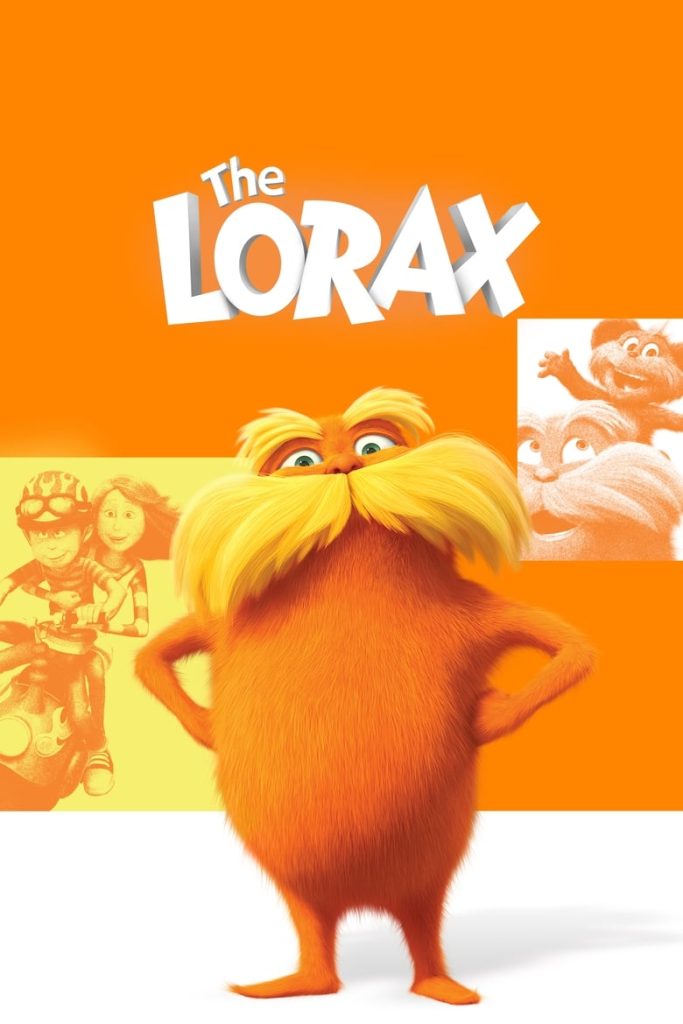
A 12-year-old boy named Ted lives in Thneedville, a completely artificial city where all nature has been replaced by plastic. To impress his crush Audrey, he embarks on a quest to find a real tree, which leads him to the Once-ler, a reclusive old man who tells him the story of the Lorax—a small, mustached creature who was the guardian of the forest. The film explores themes of environmentalism, corporate greed, and the importance of nature through vibrant animation and musical numbers.
Parent Guide
The Lorax is a family-friendly animated film with a positive environmental message. It contains mild action and peril, minimal language issues, and no sexual content. Best for ages 6 and up, as younger children might find some scenes emotionally intense or fast-paced.
Content breakdown
Includes cartoonish chase scenes (e.g., Ted being pursued by guards), a factory explosion with no injuries shown, and mild confrontations. The Once-ler's axes cutting down trees are depicted, but not graphically. Overall, the peril is non-threatening and typical for animated adventures.
Some scenes might be slightly unsettling for very young children: the barren, polluted landscape after the trees are gone; the Once-ler's isolation and regret; and the Lorax's disappearance. However, these are handled sensitively and resolved positively by the end.
No profanity or harsh language. There might be very mild name-calling like 'knucklehead' in a playful context. The dialogue is clean and age-appropriate.
No sexual content or nudity. There is a innocent crush between Ted and Audrey, portrayed through gestures like giving gifts and holding hands, with no romantic beyond a peck on the cheek.
No depiction of alcohol, drugs, or smoking. The Once-ler is shown drinking from a cup in one scene, but it's not emphasized or identified as alcoholic.
Moderate emotional moments related to environmental loss and the Once-ler's loneliness, which might evoke sadness or concern in sensitive viewers. However, the film ends on a hopeful note with themes of redemption and renewal.
Parent tips
The Lorax is a colorful, musical adaptation of Dr. Seuss's classic environmental tale. It's generally suitable for most children, but parents should note: the film includes some mild peril (e.g., characters in chase scenes, a factory explosion with no injuries) and emotional moments related to environmental destruction. The villain, Mr. O'Hare, is a greedy businessman portrayed in a comically exaggerated way. The movie encourages discussions about conservation, consumerism, and taking responsibility for the planet. It's fast-paced with lots of humor that appeals to kids, but younger viewers might find the Once-ler's backstory slightly sad.
Parent chat guide
Parent follow-up questions
- What was your favorite animal in the movie?
- Can you make a sound like the Bar-ba-loots?
- What color was the Lorax?
- Why was the Lorax angry with the Once-ler?
- What did Ted learn from his adventure?
- How did Audrey feel when she saw a real tree?
- What does 'Unless someone like you cares a whole awful lot, nothing is going to get better. It's not.' mean to you?
- How did the movie show the consequences of greed?
- Compare Thneedville to our world—what similarities do you see?
- Analyze the film's critique of consumerism and corporate responsibility.
- How does the animation style enhance the environmental message?
- Discuss the ethical dilemmas the Once-ler faced—could he have made different choices?
🎭 Story Kernel
At its core, 'The Lorax' critiques consumerism and environmental degradation through the lens of capitalism's insatiable appetite. The Once-ler's transformation from idealistic inventor to ruthless industrialist mirrors how good intentions become corrupted by greed and market pressures. What drives the characters isn't evil, but the seductive logic of profit—the Once-ler isn't a villain, but a man who rationalizes destruction as 'business.' The film's real tension lies in whether consumer demand (represented by Ted's town) can be redirected toward restoration rather than exploitation. It's less about saving trees than about questioning what we value and why.
🎬 Visual Aesthetics
The visual language creates a stark dichotomy between the vibrant, organic Truffula forest and the sterile, artificial Thneedville. The forest scenes employ flowing camera movements and warm, saturated colors that pulse with life, while Thneedville uses rigid geometric compositions and synthetic neon tones. The Lorax himself—with his bushy mustache and earthy orange fur—visually contrasts with the Once-ler's angular, monochromatic design. Most telling is how the barren landscape after deforestation isn't shown as dramatic destruction, but as a gradual graying-out, mirroring how environmental damage often happens incrementally, normalized by routine.
🔍 Details & Easter Eggs
💡 Behind the Scenes
Danny DeVito's casting as the Lorax was inspired by his resemblance to the character's original illustration—short, stout, and mustachioed. The film's production involved environmental consultants to ensure the deforestation sequences felt scientifically plausible. Ironically, despite its anti-consumerism message, the movie spawned significant merchandise, including plush Lorax toys and branded clothing, creating real-world tension with its themes. The voice cast recorded separately, with Ed Helms (the Once-ler) and Zac Efron (Ted) never meeting during production.
Where to watch
Choose region:
- Netflix
- Netflix Standard with Ads
- Amazon Video
- Apple TV Store
- Google Play Movies
- YouTube
- Fandango At Home
Trailer
Trailer playback is unavailable in your region.