
The Lord of the Rings: The Return of the King (2003)
Story overview
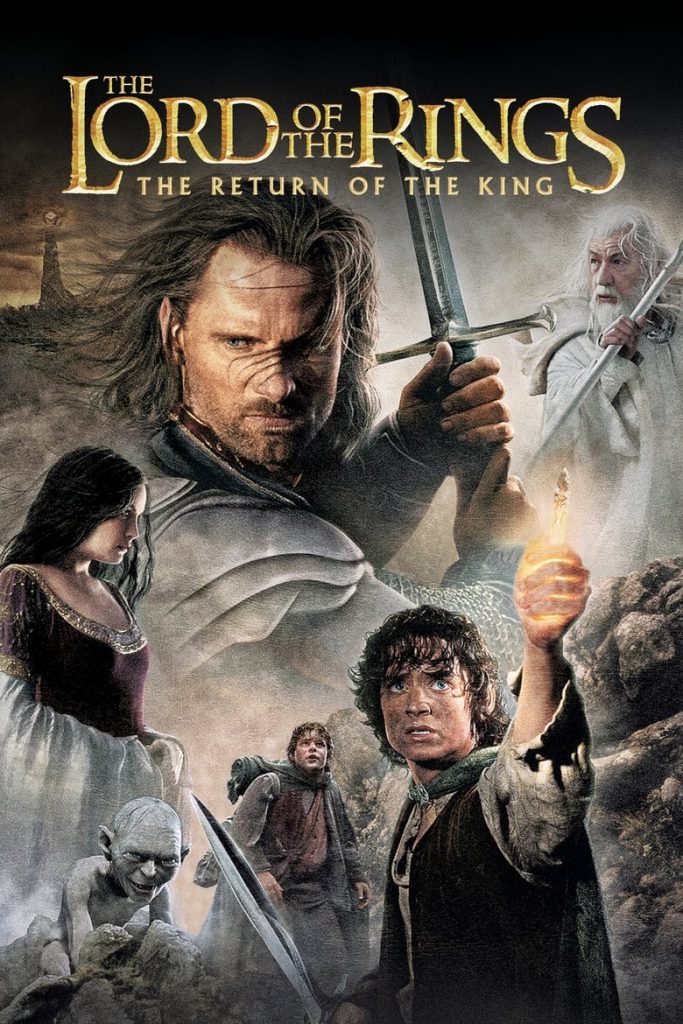
The Lord of the Rings: The Return of the King concludes the epic fantasy trilogy about the quest to destroy a powerful ring that threatens the world. As massive armies prepare for a final battle between forces of Light and Dark, a brave hobbit named Frodo continues his dangerous journey into enemy territory with his loyal companions. The film explores themes of friendship, courage, sacrifice, and the struggle between good and evil on a grand scale.
Parent Guide
Epic fantasy conclusion with intense battles, frightening creatures, and mature themes best suited for older children and teens.
Content breakdown
Extensive battle sequences with swords, arrows, and fantasy weapons; large-scale warfare with casualties; characters in frequent peril; some graphic but fantasy-based violence.
Frightening creatures and monsters; dark, ominous settings; a corrupted character with disturbing appearance and behavior; intense emotional moments.
Occasional mild fantasy-era exclamations and insults; no modern profanity.
No sexual content or nudity.
No substance use depicted.
High-stakes situations; themes of sacrifice, loss, and mortality; intense character emotions; lengthy runtime contributes to sustained tension.
Parent tips
This epic conclusion to the trilogy contains intense battle sequences, frightening creatures, and emotional moments that may be overwhelming for younger viewers. The film's three-hour runtime requires sustained attention, and the complex plot assumes familiarity with previous installments. While the story ultimately celebrates courage and friendship, it depicts significant peril and sacrifice throughout.
Parent chat guide
Parent follow-up questions
- Which characters were kind to each other?
- What made you feel scared or happy during the movie?
- Can you draw your favorite creature from the story?
- How did the friends help each other?
- What colors did you see in the different places?
- Why was the ring so important to destroy?
- How did the characters show bravery even when they were afraid?
- What made some characters choose to do good things and others choose bad things?
- How did friendship help the characters complete their mission?
- What would you have done differently if you were on the journey?
- What does the story show about the cost of doing what's right?
- How do the different characters handle power and temptation?
- What makes a good leader according to this story?
- How does the film show that even small people can make big differences?
- What themes about hope and perseverance did you notice?
- How does the film explore the nature of corruption and redemption?
- What commentary does the story make about war and sacrifice?
- How do the fantasy elements reflect real human struggles and choices?
- What does the ending suggest about the aftermath of great conflicts?
- How does the film balance epic spectacle with personal character journeys?
🎭 Story Kernel
At its core, 'The Return of the King' explores the paradox of power: true strength lies not in seizing control but in relinquishing it. Frodo's ultimate failure to destroy the Ring—requiring Gollum's intervention—brilliantly subverts the hero's journey, suggesting that evil can only be defeated through its own self-consuming nature. Meanwhile, Aragorn's path to kingship is defined by his willingness to serve, from healing the sick to walking the Paths of the Dead. The film argues that leadership isn't about dominion but stewardship, and victory comes through sacrifice rather than conquest. Every character's arc culminates in what they're willing to give up, not what they gain.
🎬 Visual Aesthetics
Peter Jackson employs a breathtaking visual language that shifts from intimate, handheld closeness during Frodo's Mount Doom struggle to sweeping, god-like crane shots over Minas Tirith's siege. The color palette tells its own story: Gondor's stone-gray despair gradually warms to golden light as hope returns, while Mordor remains a monochromatic hellscape of orange fire and ash. The 'lightning storm' visual effect during the Army of the Dead's arrival creates a supernatural texture distinct from Middle-earth's grounded reality. Most strikingly, the multiple false endings—each with its own visual tone—mirror the exhaustion of a war that doesn't end cleanly, making the final Hobbiton homecoming feel earned through visual contrast.
🔍 Details & Easter Eggs
💡 Behind the Scenes
Viggo Mortensen broke two toes kicking the Uruk-hai helmet in The Two Towers, and his scream of pain was genuine, kept in the final film. The massive Minas Tirith set took over a year to build and was the largest construction in the Southern Hemisphere at the time. Sean Astin's raw, bleeding feet in the Mount Doom scenes were real—he refused a prosthetic, walking on broken glass for authenticity. The film's 1,488 visual effects shots were unprecedented in 2003, with Weta Digital creating the first fully digital humanoid (Gollum) to perform alongside live actors convincingly.
Where to watch
Choose region:
- HBO Max
- Amazon Video
- Apple TV
- Google Play Movies
- YouTube
- Fandango At Home
- Spectrum On Demand
- Plex
Trailer
Trailer playback is unavailable in your region.