
The Lord of the Rings: The Two Towers (2002)
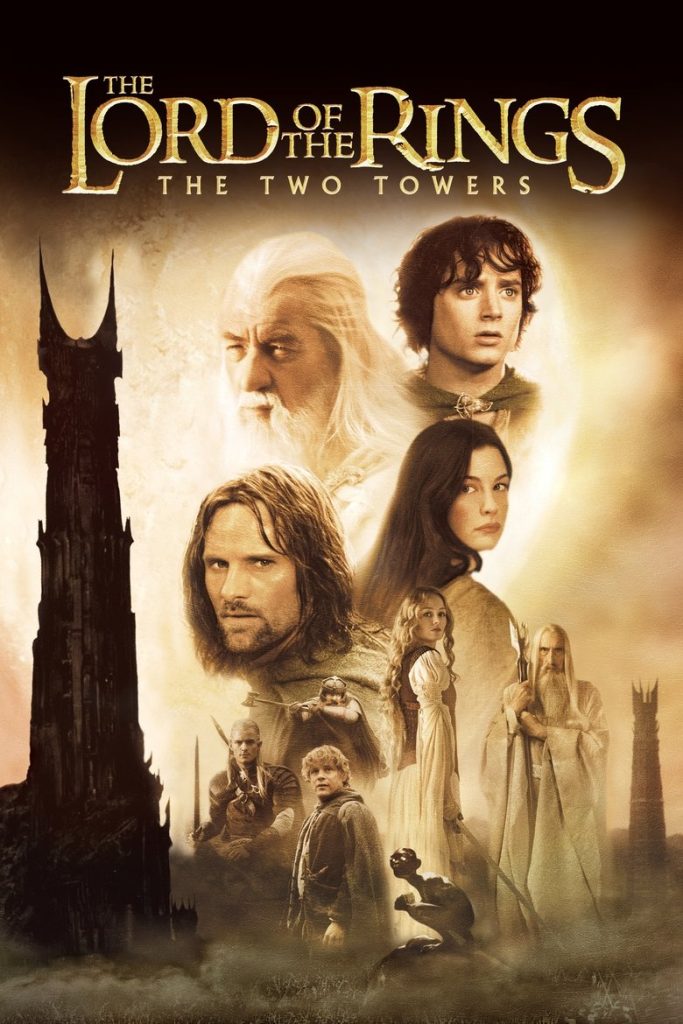
Story overview
The Lord of the Rings: The Two Towers continues the epic fantasy adventure where characters are on separate journeys in a dangerous world. Some characters search for captured friends while others carry a powerful object toward a dark land. The story involves battles against evil forces and explores themes of friendship, courage, and temptation.
Parent Guide
Epic fantasy adventure with intense battle sequences and frightening fantasy creatures, suitable for mature children who can handle sustained action violence.
Content breakdown
Extended battle sequences with fantasy violence including swords, arrows, and magical attacks. Characters face constant peril from evil creatures and dark forces. Some destruction of settlements and environments.
Frightening fantasy creatures including orcs, trolls, and other monstrous beings. Dark, ominous settings and themes of corruption. Some intense, suspenseful sequences.
No notable profanity or offensive language in the fantasy context.
No sexual content or nudity.
No depiction of substance use.
Sustained tension throughout the nearly 3-hour runtime. Themes of sacrifice, corruption, and darkness. Characters face difficult moral choices and separation from friends.
Parent tips
This fantasy adventure contains intense battle sequences with fantasy violence including sword fights, arrows, and magical attacks. There are frightening creatures like orcs and trolls, and some scenes show peril and destruction. The film's length (nearly 3 hours) may be challenging for younger viewers, and the complex plot with multiple storylines requires attention.
While there's no sexual content, strong language, or substance use, the emotional intensity is significant with themes of corruption, sacrifice, and darkness. The PG-13 rating reflects the sustained action violence and frightening images throughout the film. Parents should consider their child's sensitivity to fantasy violence and ability to follow intricate storytelling.
Parent chat guide
During viewing, pause if needed to check in about intense scenes, especially battle sequences or frightening creatures. You might ask simple questions like 'How do you think that character is feeling right now?' to help process emotional moments.
After watching, focus conversations on the characters' choices and relationships rather than the violence. Discuss how different characters showed courage, helped friends, or faced temptations. Relate these themes to everyday situations where we make choices about doing what's right.
Parent follow-up questions
- Which character did you like the most and why?
- What was your favorite part of the movie?
- How did the friends help each other in the story?
- What made you feel happy in the movie?
- What was something brave that happened?
- Why do you think some characters made different choices?
- How did the characters show they were good friends?
- What was the most exciting part for you?
- What would you do if you had to carry something important like the characters did?
- How did the music and sounds make you feel during different scenes?
- What do you think the story teaches about working together?
- How did different characters show courage in different ways?
- Why do you think some characters were tempted to do wrong things?
- What makes a good leader according to this story?
- How do fantasy stories like this help us think about real-life challenges?
- How does the film explore the theme of corruption and power?
- What moral dilemmas did different characters face, and how did they handle them?
- How does the fantasy setting allow the story to discuss universal human experiences?
- What did you think about how the film portrayed friendship and loyalty under pressure?
- How do the different storylines connect to create a larger message about good versus evil?
🎭 Story Kernel
The Two Towers interrogates the necessity of hope in a seemingly hopeless world. It's not about grand victories but about holding ground—both literally at Helm's Deep and spiritually within each character. Frodo's burden grows heavier as the Ring's corruption seeps into Sam's loyalty and Gollum's fractured psyche. Aragorn grapples with his lineage not as destiny but as duty, while Théoden's awakening from despair mirrors the film's central question: what do we fight for when all seems lost? The answer emerges in small acts—Sam carrying Frodo, Merry and Pippin mobilizing the Ents—proving that resistance itself becomes purpose when victory is uncertain.
🎬 Visual Aesthetics
Jackson employs a desaturated palette that drains color as darkness spreads, making the lush greens of Fangorn Forest feel like a fading memory. The camera often sits low during battle scenes, emphasizing the overwhelming scale of Saruman's forces against human fragility. Notice how Gollum is frequently shot with a distorted lens or through water, visually fragmenting his identity. The siege of Helm's Deep masterfully uses pouring rain and mud to amplify desperation, while the Oliphaunt sequence contrasts sweeping wide shots with intimate, chaotic close-ups of Legolas' acrobatic takedown—a perfect blend of epic scale and character moment.
🔍 Details & Easter Eggs
💡 Behind the Scenes
Andy Serkis based Gollum's voice on his cat coughing up hairballs. The actor playing Haldir (Craig Parker) nearly drowned during Helm's Deep filming when his Elven armor filled with water. Jackson shot the Battle of Helm's Deep over four months, mostly at night in freezing conditions, with the Uruk-hai makeup taking six hours to apply. Miranda Otto (Éowyn) performed all her own horse stunts, while Viggo Mortensen broke two toes kicking a helmet during the emotional scene after finding Merry and Pippin's 'remains'—the scream of pain is genuine.
Where to watch
Choose region:
- HBO Max
- HBO Max Amazon Channel
- Amazon Video
- Apple TV
- Google Play Movies
- YouTube
- Fandango At Home
- Plex
Trailer
Trailer playback is unavailable in your region.