
The Man Who Feels No Pain (2019)
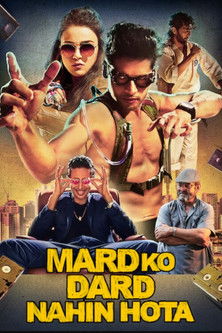
Story overview
The Man Who Feels No Pain is a 2019 Indian action-comedy film directed by Vasan Bala. The story follows Surya, a young man born with a rare condition called congenital insensitivity to pain, which means he cannot feel physical pain. Inspired by his martial arts hero, he trains to become a fighter, using his unique ability to withstand injuries that would incapacitate others. With the help of his friend Supri, he navigates challenges, faces villains, and embarks on a journey of self-discovery, blending humor with action-packed sequences in a vibrant, Bollywood-style narrative.
Parent Guide
The Man Who Feels No Pain is a family-friendly action-comedy with mild violence and comedic elements, suitable for children aged 8 and above. It offers positive messages about friendship and determination, with no significant content concerns. Parental guidance is advised to discuss the fictional portrayal of violence and the protagonist's unique condition.
Content breakdown
Features stylized martial arts fights with exaggerated, comedic action. Scenes include punches, kicks, and falls, but no blood, gore, or serious injuries depicted. The violence is cartoonish and non-graphic, often played for laughs. Peril is minimal, with no intense or realistic danger shown.
No scary or disturbing content. The film maintains a light-hearted, humorous tone throughout, with no frightening imagery, jump scares, or dark themes. Villains are portrayed in a comedic manner without menace.
No strong language, profanity, or offensive dialogue. The script uses clean, family-appropriate language typical of Bollywood comedies, with mild insults or exclamations that are not vulgar.
No sexual content, nudity, or romantic scenes beyond mild, innocent interactions. The focus is on action and comedy, with no suggestive themes or imagery.
No depiction of alcohol, drugs, tobacco, or substance use. The film avoids any references to such content, keeping it suitable for all ages.
Low emotional intensity with a cheerful, upbeat atmosphere. Moments of friendship and mild tension are brief and resolved positively. No sad, traumatic, or highly dramatic scenes that could upset younger viewers.
Parent tips
This film is suitable for children aged 8 and up, with parental guidance recommended for younger viewers due to action violence and mild thematic elements. It features comedic fight scenes with exaggerated martial arts, minimal scary content, and no strong language, sexual content, or substance use. Parents should note the protagonist's pain insensitivity, which might require explanation to avoid misconceptions about safety. The emotional tone is light-hearted, focusing on friendship and heroism. Watch together to discuss themes like resilience and the consequences of violence in a fun, fictional context.
Parent chat guide
Parent follow-up questions
- What was your favorite part of the movie?
- Did you like the funny fights? Why or why not?
- How did Surya and his friend help each other?
- Why do you think Surya wanted to be like his hero?
- What would you do if you couldn't feel pain like Surya?
- How did the movie make the action scenes funny instead of scary?
- How does Surya's condition affect his decisions in the story?
- What lessons about friendship did you learn from the film?
- Do you think the movie portrays violence in a responsible way? Why?
- Discuss the themes of disability and empowerment in the film.
- How does the comedy style influence the perception of action in Bollywood cinema?
- What are the ethical implications of using pain insensitivity as a plot device?
🎭 Story Kernel
At its core, 'The Man Who Feels No Pain' explores the paradox of invulnerability as both superpower and profound vulnerability. Surya's congenital insensitivity to pain isn't portrayed as a simple advantage—it's a condition that isolates him from fundamental human experiences while making him the ultimate action hero. The film cleverly inverts the disability narrative: what society views as a limitation becomes his greatest asset in pursuing his Bruce Lee-inspired dreams. His journey isn't about overcoming his condition but learning to weaponize it, while the villains represent those who would exploit such differences for profit. The emotional core lies in how Surya's 'superpower' creates distance from loved ones who must constantly protect him from self-destruction.
🎬 Visual Aesthetics
The film employs a hyper-saturated, comic book aesthetic that shifts between gritty Mumbai realism and exaggerated martial arts fantasy. Director Vasan Bala uses dynamic camera movements that mirror Surya's uninhibited physicality—long tracking shots during chase sequences, Dutch angles during confrontations, and slow-motion that highlights impacts he cannot feel. The color palette deliberately contrasts: warm golds and reds for Surya's heroic moments versus cold blues and sterile whites for the medical exploitation scenes. The action choreography pays homage to 70s Bollywood and Hong Kong cinema while maintaining a distinctly Indian flavor, with everyday objects becoming weapons in Mumbai's chaotic urban landscape.
🔍 Details & Easter Eggs
💡 Behind the Scenes
Lead actor Abhimanyu Dassani, making his debut, performed most of his own stunts despite having no formal martial arts training, learning fight choreography in six months. The film's antagonist, played by Gulshan Devaiah, studied rare neurological disorders to portray his character's obsession. Director Vasan Bala intentionally blended multiple Indian languages in dialogue to reflect Mumbai's linguistic diversity. The climactic fight on the construction site was shot over 12 nights using minimal CGI, with the production team building partial structures that could safely collapse. The film's title references both the medical condition and a line from Bruce Lee's philosophy about overcoming mental pain.
Where to watch
Choose region:
- Netflix
- Netflix Standard with Ads
- Apple TV Store
- Google Play Movies
- YouTube
Trailer
Trailer playback is unavailable in your region.