
The Man Who Invented Christmas (2017)
Story overview
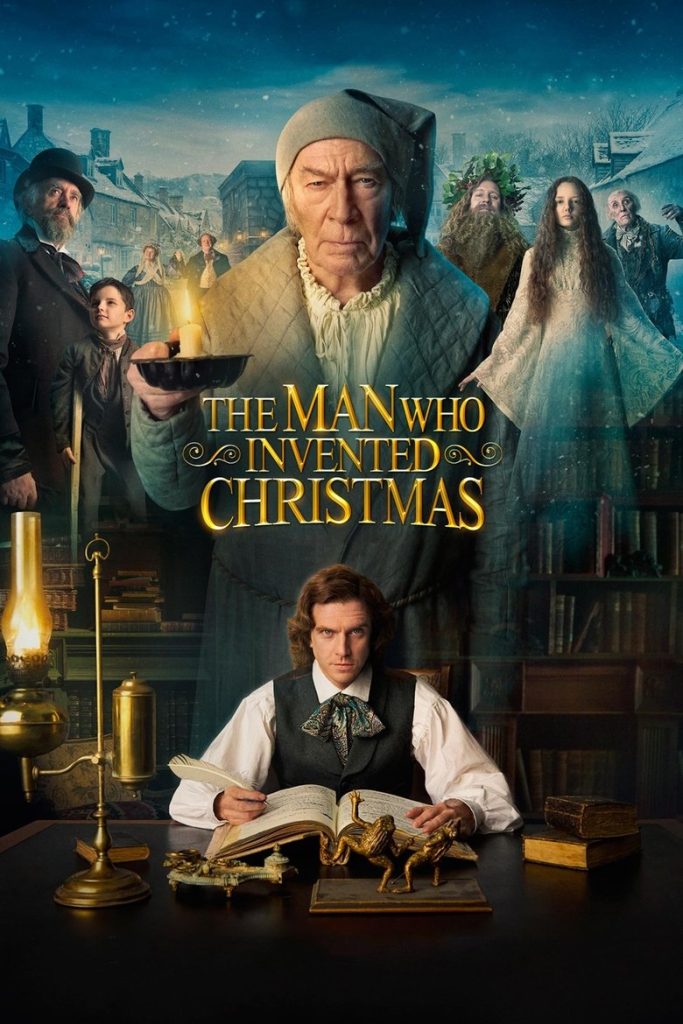
The Man Who Invented Christmas is a 2017 historical drama-comedy that follows author Charles Dickens in 1843 as he struggles to write a new book after his latest work fails. Facing financial pressure and creative block, Dickens draws inspiration from his own childhood memories and observations of Victorian London. Through his imagination, he creates the iconic character Ebenezer Scrooge and develops the classic story 'A Christmas Carol,' which ultimately transforms how Christmas is celebrated. The film blends reality with fantasy as Dickens interacts with his fictional characters while writing.
Parent Guide
Family-friendly historical drama about creativity and redemption with mild emotional intensity. Suitable for most children 8+ with parental guidance for younger viewers sensitive to themes of poverty and family conflict.
Content breakdown
No physical violence. Some tense scenes include: Dickens confronting financial pressures that threaten his family's stability; brief arguments between characters; implied peril in flashbacks to Dickens' difficult childhood working in a factory; fantasy sequences with ghostly apparitions that might startle but aren't truly scary.
Some potentially disturbing elements: Ghostly manifestations of Dickens' characters (Scrooge, Marley's ghost) appear suddenly but aren't frightening; flashbacks to young Dickens working in a blacking factory show child labor; themes of poverty and family separation; Dickens experiences creative anxiety and financial stress. Most children 8+ will handle these elements well.
No profanity or offensive language. Period-appropriate dialogue only.
No sexual content or nudity. One brief romantic subplot involves Dickens' marriage with mild affection shown.
Social drinking in period-appropriate contexts (wine with meals, pubs). No drunkenness or substance abuse depicted.
Moderate emotional themes include: Financial pressure and career anxiety; creative frustration; childhood trauma and family separation; class differences and poverty; redemption and personal transformation. Handled thoughtfully but could affect sensitive younger children. Positive resolution provides emotional balance.
Parent tips
This PG-rated film is suitable for most families but contains some emotional themes. The story deals with financial stress, creative frustration, and childhood trauma in a gentle, thoughtful way. Younger children might need explanations about Victorian-era poverty and Dickens' difficult childhood. The film's fantasy sequences where characters come to life could confuse very young viewers. Positive themes include redemption, creativity, compassion, and the transformative power of storytelling. Consider watching together to discuss how art can address social issues and personal healing.
Parent chat guide
Parent follow-up questions
- Did you like when the characters came to life? Which character was your favorite?
- What was your favorite part of the movie?
- How did Scrooge change at the end?
- Why was Dickens having trouble writing his new book?
- How did his memories help him create the story?
- What do you think Christmas means in this movie?
- How does the film show the connection between an author's life and their work?
- What historical details did you notice about 1843 London?
- Why do you think 'A Christmas Carol' became so popular?
- How does the film portray the creative process and artistic pressure?
- What commentary does the film make about class and poverty in Victorian society?
- How does the blending of reality and fantasy enhance the storytelling?
🎭 Story Kernel
The film is less about Dickens inventing Christmas and more about the brutal, messy process of artistic creation. It explores how inspiration isn't a divine spark but a desperate, often ugly, act of psychological archaeology. Dickens is driven by financial ruin and fading relevance, forcing him to dig into his own trauma—his father's debt, his childhood in the blacking factory—to birth Scrooge. The characters he 'invents' are manifestations of his subconscious: Scrooge is his fear of becoming his father, Marley is his guilt, and the ghosts are facets of his own memory and regret. The real conflict is Dickens wrestling his own demons onto the page before deadline.
🎬 Visual Aesthetics
The visual language masterfully blurs the line between Dickens's grim reality and his vibrant imagination. Victorian London is rendered in muted, desaturated browns and grays, all fog and financial worry. In stark contrast, the characters from his mind—Scrooge, Marley, the ghosts—appear in richer, slightly anachronistic colors, often lit from within, making them feel more 'real' than the real world. The camera often pushes in on Dan Stevens's face as ideas strike, creating a claustrophobic intimacy with his creative panic. Scenes transition seamlessly from his study to the streets of his story, visually arguing that for the artist, there is no separation between life and work.
🔍 Details & Easter Eggs
💡 Behind the Scenes
Dan Stevens prepared by studying Dickens's actual working notes and letters, capturing his frenetic energy. Christopher Plummer, at 87, brought a lifetime of stage presence to Scrooge, often improvising lines that felt authentically Dickensian. The film was shot in Ireland, with Dublin standing in for 1840s London. A charming detail: many of the background posters and newspapers in the film contain actual text from Dickens's journalism and advertisements of the era, creating a densely authentic world.
Where to watch
Choose region:
- HBO Max
- HBO Max Amazon Channel
- Amazon Video
- Apple TV Store
- Google Play Movies
- YouTube
- Fandango At Home
Trailer
Trailer playback is unavailable in your region.