The Man Who Loved UFOs (2024)
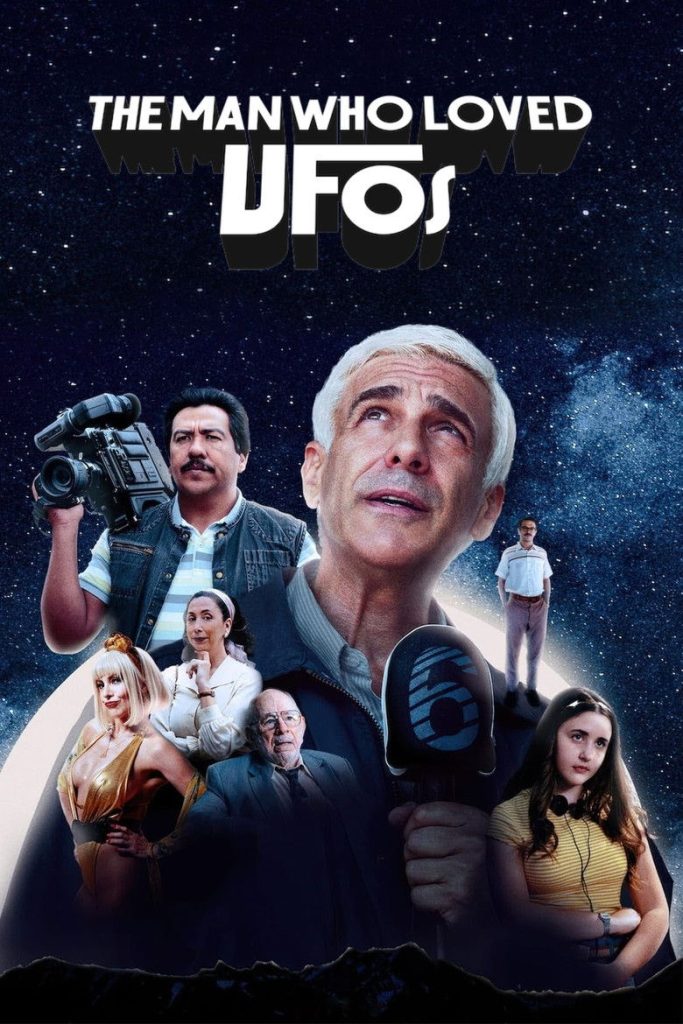
Story overview
In the late 1980s, Argentine journalist José de Zer becomes obsessed with proving the existence of extraterrestrial life. His quest leads him to fabricate evidence, sparking a bizarre and surreal media frenzy that blurs the lines between reality and fantasy in this dramatic comedy.
Parent Guide
A thought-provoking dramedy about media ethics and obsession, presented with surreal humor. Most appropriate for mature children 10+ who can grasp satirical elements.
Content breakdown
No physical violence or perilous situations. The conflict is primarily psychological and social.
Some surreal/fantasy elements might be mildly confusing but not frightening. The media circus atmosphere could feel overwhelming to sensitive viewers.
No offensive language noted in the description. Original Spanish dialogue may contain mild expressions.
No sexual content or nudity indicated in the film description.
No substance use mentioned in the provided information.
Moderate emotional intensity around themes of obsession, truth, and public scrutiny. The comedic tone helps balance serious themes.
Parent tips
This film explores themes of truth, obsession, and media manipulation through a humorous lens. It's suitable for older children and teens who can understand satire and the consequences of dishonesty. The surreal elements are more whimsical than frightening, but younger viewers might find the concept of faking evidence confusing.
Parent chat guide
Parent follow-up questions
- Did you see any funny aliens?
- What was your favorite part?
- Why do you think the journalist wanted to prove aliens exist?
- How did people react when they saw the fake evidence?
- What does this film say about truth and lies in the media?
- How does the movie use comedy to talk about serious topics?
- How does this film critique media sensationalism?
- What parallels can you draw between this 1980s story and modern misinformation?
🎭 Story Kernel
Set in 1986 Argentina, the film explores the thin line between investigative journalism and pure performance art. It follows José de Zer, a real-life television journalist who, alongside his cameraman Chango, transformed a mysterious burnt patch on a hillside into a national UFO phenomenon. Beyond the extraterrestrial hook, Lerman explores the collective psyche of a nation emerging from the shadows of a dictatorship, desperate for something—anything—to believe in. It’s a character study of a man who becomes consumed by his own fiction, illustrating how the pursuit of truth is often secondary to the power of a compelling narrative. The film critiques the birth of sensationalist media while empathizing with the human desire to find magic in a mundane, often harsh, reality, portraying the protagonist as a tragic visionary of the spectacle.
🎬 Visual Aesthetics
Lerman and cinematographer Wojciech Staron capture the 1980s with a textured, nostalgic palette that oscillates between the sterile, high-contrast glare of television studios and the expansive, dusty landscapes of the Sierras de Córdoba. The visual language mirrors De Zer’s internal state: frantic, handheld movements during 'sightings' create a sense of manufactured urgency, while wide, static shots of the mountains emphasize the silence that the protagonist is so desperate to fill with noise. The use of period-accurate grain and saturated colors evokes a sense of 'television truth'—where the quality of the image dictates its credibility. Symbolically, the recurring motif of the 'huella' (the mark) serves as a void that the characters and the audience project their own hopes and fears into, framed against the indifferent majesty of the Argentine wilderness.
🔍 Details & Easter Eggs
💡 Behind the Scenes
The film is a biopic of José de Zer, a legendary figure in Argentine journalism whose segments on the show 'Nuevediario' reached massive ratings in the late 1980s. Lead actor Leonardo Sbaraglia underwent a significant physical transformation to portray De Zer, capturing his idiosyncratic speech patterns and manic energy. Director Diego Lerman, known for more somber dramas like 'A Sort of Family,' pivots here to a tragicomic tone, blending historical recreation with a surrealist edge. The production filmed extensively in the Uritorco region, the actual site of the famous UFO 'sightings' that De Zer popularized.
Where to watch
Choose region:
- Netflix
- Netflix Standard with Ads