
The Marksman (2021)
Story overview
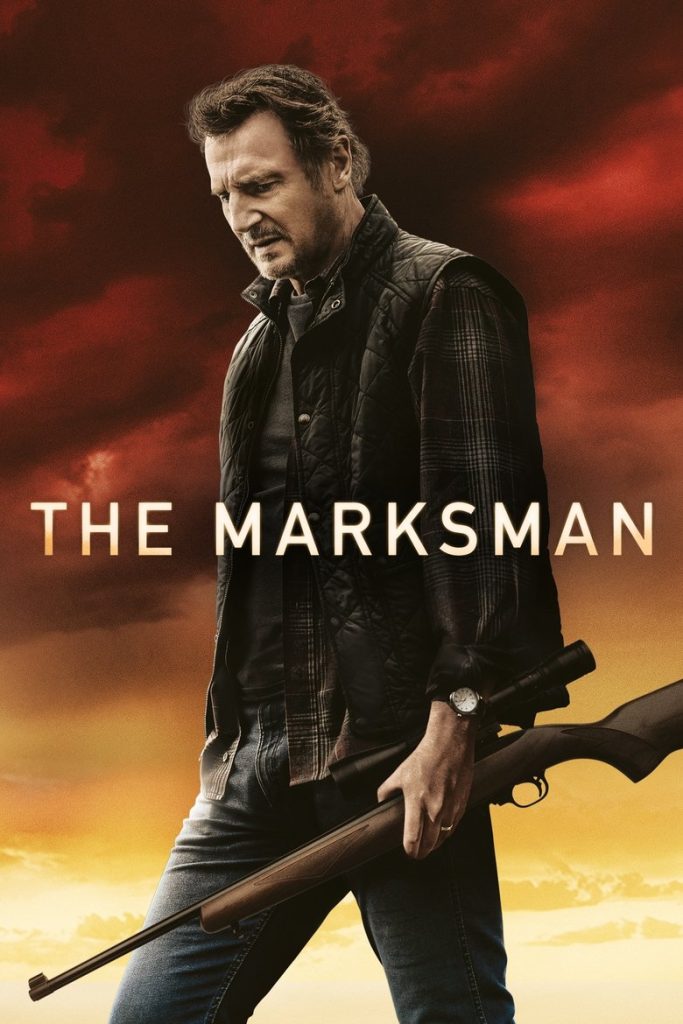
The Marksman follows Jim Hanson, a former Marine and rancher living a solitary life near the U.S.-Mexico border. His quiet existence is disrupted when he encounters Rosa and her 11-year-old son Miguel fleeing from a dangerous Mexican cartel. After Rosa is killed during a confrontation, Jim reluctantly becomes Miguel's protector. He promises to deliver the boy safely to his family in Chicago, embarking on a perilous cross-country journey while being pursued by relentless cartel assassins. The film explores themes of redemption, unexpected family bonds, and the moral complexities of border issues through an action-thriller lens.
Parent Guide
The Marksman is an action-thriller with moderate violence and intense peril centered around a child-in-danger scenario. While rated PG-13, the consistent threat of violence and several shootout sequences make it most appropriate for mature tweens and teens who can handle action movie intensity.
Content breakdown
Multiple shootouts with realistic gun violence; characters are shot and killed (some blood shown but not excessively graphic); intense chase sequences; threats against a child; cartel violence including intimidation and murder; tense standoffs and confrontations throughout
Child-in-peril scenario creates sustained tension; mother killed in front of her son; relentless pursuit by assassins; scenes of grief and loss; border crossing dangers; some jump-scare moments during chase sequences
Occasional mild profanity (hell, damn); no strong sexual language or racial slurs; some threatening dialogue from cartel members
No sexual content, nudity, or romantic relationships; completely focused on the protective relationship and action plot
Brief social drinking in bar scenes; Jim shown drinking beer alone in one scene; no drug use depicted
Strong themes of loss and grief; child separated from family; building of surrogate father-son relationship; moral dilemmas about breaking laws to do what's right; sustained tension from pursuit narrative
Parent tips
This PG-13 action thriller contains moderate violence and intense peril that may be too strong for younger viewers. The film features several shootouts with realistic gun violence, including characters being shot and killed. There are tense chase sequences and threats against a child. While the violence isn't gratuitously graphic, it's frequent and central to the plot. The emotional intensity comes from the child-in-peril scenario and themes of loss. Consider your child's sensitivity to violence and their ability to distinguish between movie action and real-world situations before viewing.
Parent chat guide
Parent follow-up questions
- Who was trying to keep the boy safe?
- Why were the bad people chasing them?
- What did Jim promise to do?
- What made Jim decide to help Miguel even though it was dangerous?
- How did Miguel feel about losing his mother?
- What are some ways Jim tried to keep Miguel safe during their journey?
- Why do you think the cartel was so determined to find Miguel?
- How does the film show the difference between legal and moral choices?
- What does the ending suggest about Jim and Miguel's relationship?
- How does the film use the action-thriller format to comment on immigration issues?
- Analyze Jim's character arc - what does his journey represent?
- How realistically does the film portray cartel violence and border security challenges?
🎭 Story Kernel
The film's core is less about border politics and more about the erosion of purpose. Jim's journey isn't just about delivering Miguel to Chicago; it's his final, desperate attempt to find a reason to exist after losing his farm, his wife, and his sense of self. His military precision and marksmanship, once tools of duty, become the only language he knows to protect a surrogate son. The cartel pursuers represent the relentless, impersonal forces that strip away a man's agency, making Jim's reclamation of it through sacrifice the central, tragic victory. It's a story of a man choosing how to end his story, rather than letting it fade away.
🎬 Visual Aesthetics
The cinematography employs a stark, desaturated palette for the Arizona desert, emphasizing Jim's emotional barrenness, which gradually warms as he moves east. Wide, static shots of empty landscapes contrast with tight, shaky close-ups during tense moments, visually isolating Jim. The action is brutally efficient, not stylized—each gunshot is a precise, clinical event mirroring Jim's mindset. Symbolism is direct: the decaying farm represents his past life, the open road a purgatory, and the final urban destination an uncertain future he won't inhabit. The visual language is one of loss and stark, uncompromising choices.
🔍 Details & Easter Eggs
💡 Behind the Scenes
Liam Neeson performed many of his own driving stunts in the truck, drawing on skills from his previous action roles. The film was shot on location in New Mexico, standing in for Arizona and the Midwest, to utilize specific tax incentives. Director Robert Lorenz, a longtime Clint Eastwood collaborator, brings a similar lean, no-nonsense aesthetic to the production, favoring practical effects and natural lighting to ground the often-gritty action sequences.
Where to watch
Choose region:
- Netflix
- fuboTV
- Netflix Standard with Ads
- Shout! Factory Amazon Channel
- The Roku Channel
- Tubi TV
- Amazon Video
- Apple TV Store
- Google Play Movies
- Fandango At Home
Trailer
Trailer playback is unavailable in your region.