The Missing (2023)
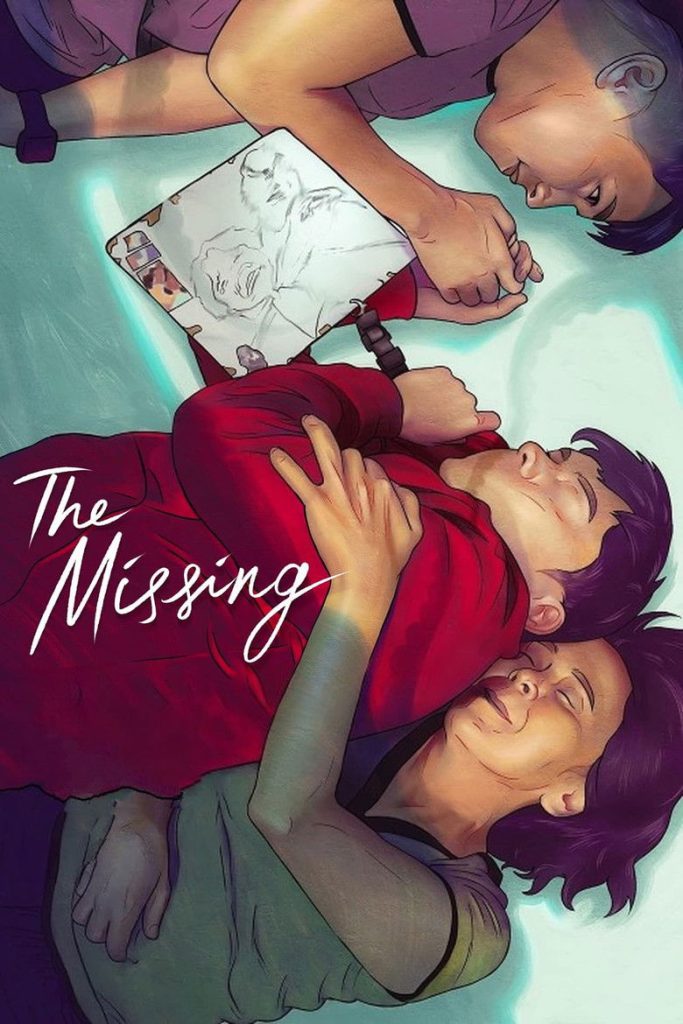
Story overview
The Missing is an animated science fiction drama about a mouthless young man whose life becomes complicated when an alien returns to take him away. As the story unfolds, his memories begin to unravel, revealing deeper truths about his existence. The film explores themes of identity, memory, and connection through its unique visual style and emotional narrative.
Parent Guide
An animated film with psychological depth and science fiction elements that explores memory and identity through emotional storytelling.
Content breakdown
Some tense moments involving alien encounters and emotional peril, but no physical violence depicted.
The mouthless character design and memory distortion themes could be unsettling. Alien elements and emotional intensity may disturb sensitive viewers.
No concerning language expected in this animated drama.
No sexual content or nudity in this animated film.
No substance use depicted.
Themes of memory loss, identity confusion, and alien encounters create emotional complexity that requires maturity to process.
Parent tips
This animated film deals with mature themes like memory loss, identity confusion, and alien encounters that might be confusing or unsettling for younger viewers. The main character's mouthless appearance could be visually striking or potentially disturbing to some children. Parents should be aware that the science fiction elements involve emotional intensity around separation and self-discovery.
While the animation format might appeal to children, the psychological and dramatic elements make it more suitable for older kids who can process abstract concepts. The film's exploration of memory and identity could spark meaningful conversations about what makes us who we are.
Parent chat guide
Encourage children to express what they found most interesting or confusing about the story. Ask open-ended questions about how the characters might feel in different situations. This approach helps children process the film's emotional content while maintaining a safe viewing experience.
Parent follow-up questions
- What was your favorite part of the movie?
- How did the characters show they cared about each other?
- What colors did you see in the movie?
- Was there anything that made you feel happy?
- What sounds did you hear in the movie?
- What do you think the alien wanted?
- How would you feel if your memories were mixed up?
- Why do you think the main character looked different?
- What was the most exciting part for you?
- How did the characters solve their problems?
- What do you think the movie says about memories and identity?
- How did the animation style help tell the story?
- What would you do if you met an alien like in the movie?
- Why do you think the director chose to make the main character mouthless?
- What emotions did you notice the characters experiencing?
- How does the film explore themes of belonging and alienation?
- What artistic choices stood out to you in the animation?
- How does the memory theme connect to real-life experiences?
- What cultural elements did you notice in this Filipino-Thai production?
- How does the science fiction aspect serve the dramatic story?
🎭 Story Kernel
The film is a profound exploration of suppressed childhood trauma, using the lens of a mouthless protagonist, Eric, to illustrate the suffocating nature of silence. It masterfully employs the sci-fi trope of alien abduction as a psychological defense mechanism—a narrative shroud Eric uses to mask the reality of sexual abuse. As Eric navigates his adult life as an animator and develops a relationship with his colleague Carlo, the death of his uncle triggers the collapse of these mental barriers. The story is less about the mystery of the 'missing' and more about the reclamation of a stolen voice. It examines how the mind fractures to survive, transforming a literal lack of speech into a powerful metaphor for the isolation and shame that accompany deep-seated emotional wounds, ultimately focusing on the grueling but necessary path toward confrontation and healing.
🎬 Visual Aesthetics
Carl Joseph E. Papa utilizes rotoscoping to bridge the gap between visceral human performance and the surreal fluidity of memory. By hand-drawing over live-action footage of actors like Carlo Aquino and Dolly de Leon, the film creates an 'uncanny' aesthetic that perfectly mirrors Eric’s detachment from his own physical form. The most striking visual element is Eric’s lack of a mouth, a literal manifestation of his inability to articulate his past. The cinematography distinguishes between the grounded, often muted reality of Manila and the vibrant, cosmic saturation of the alien sequences. These visual shifts represent the protagonist's internal struggle, where the fantastical elements serve as a protective, albeit fragile, layer over a jagged truth. The animation allows for symbolic transitions that live-action could not achieve, making the internal psychological landscape as tangible as the external world.
🔍 Details & Easter Eggs
💡 Behind the Scenes
The Missing (Iti Mapukpukaw) made history as the first-ever animated feature to win the Best Film award at the Cinemalaya Philippine Independent Film Festival. Following its domestic success, it was selected as the Philippines' official entry for the Best International Feature Film category at the 96th Academy Awards. Director Carl Joseph E. Papa, a veteran in blending animation with heavy social themes, spent months on the painstaking rotoscoping process to ensure that the emotional nuances of the lead actors were preserved. The film features a high-profile cast, including Golden Globe nominee Dolly de Leon and acclaimed actor Carlo Aquino.
Where to watch
Choose region:
- Netflix
Trailer
Trailer playback is unavailable in your region.