
The Mission (2023)
Story overview
This documentary examines the 2018 death of American missionary John Chau, who was killed while attempting to contact and convert the isolated Sentinelese people on North Sentinel Island. Through interviews and archival footage, the film explores complex themes of religious faith, colonialism, cultural preservation, and ethical boundaries in exploration.
Parent Guide
A thought-provoking documentary suitable for mature teens and adults that examines complex ethical questions about faith, culture, and exploration. The film handles sensitive material with journalistic integrity but requires emotional maturity to process.
Content breakdown
The film discusses a real murder and includes some reenactments of dangerous situations. While not graphically violent, the subject matter involves death and perilous missionary attempts.
Themes of death, cultural conflict, and religious extremism may be disturbing. The documentary discusses the murder of the missionary and the ethical dilemmas surrounding his actions.
Occasional mild language may be present in interviews or archival footage, but nothing excessive or gratuitous.
No sexual content or nudity is present in this documentary.
No substance use is depicted or discussed.
The film deals with heavy themes including death, cultural loss, and ethical conflicts. The emotional weight comes from the real-life tragedy and complex moral questions rather than dramatic presentation.
Parent tips
This documentary deals with mature themes including death, cultural conflict, and religious extremism. The content is presented thoughtfully but may be emotionally challenging for younger viewers. Parents should be prepared to discuss the ethical questions raised about missionary work, indigenous rights, and cultural preservation.
Parent chat guide
Parent follow-up questions
—
- What does it mean to respect someone's home and privacy?
- Why do you think some people live differently than we do?
- What are some reasons people might want to share their beliefs with others?
- How can we balance curiosity about other cultures with respect for their choices?
- What responsibilities do explorers have when visiting new places?
- Where do you draw the line between religious conviction and cultural imposition?
- How does colonialism continue to affect indigenous communities today?
- What ethical considerations should guide anthropological research?
- How should governments balance religious freedom with cultural preservation?
🎭 Story Kernel
The film explores the tragic intersection of faith, colonialism, and obsession through the lens of John Allen Chau’s fatal journey to North Sentinel Island. It doesn't merely recount the events; it dissects the 'missionary mythos' that fueled Chau's conviction. By examining his journals and interviewing those who knew him, Moss and McBaine probe the psychological architecture of a young man convinced he was a protagonist in a divine epic. The narrative grapples with the ethics of contact and the hubris of believing one can 'save' a civilization that has explicitly rejected the outside world. It serves as a sobering meditation on how religious idealism can morph into a dangerous, self-delusional narrative, ultimately questioning the morality of proselytization in an era that is increasingly aware of the devastating historical consequences of such cultural intrusions.
🎬 Visual Aesthetics
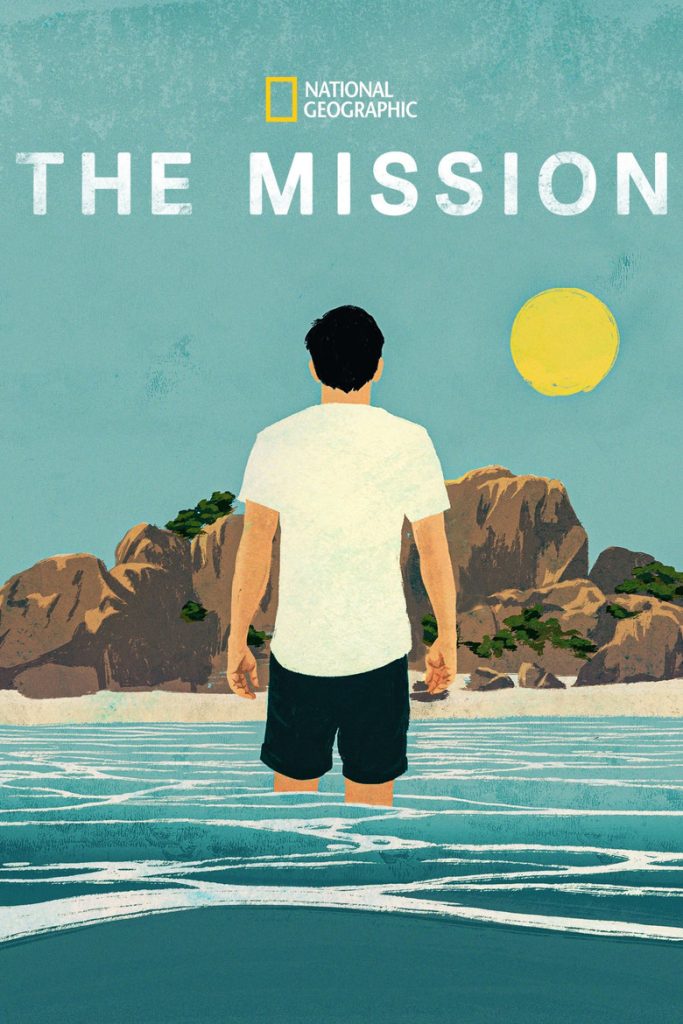
The documentary employs a striking blend of archival footage, social media posts, and evocative animation to reconstruct Chau’s internal world. Since there is no footage of the final encounter, the directors use hand-drawn, slightly surreal animation to illustrate Chau’s fantasies and the island’s forbidden allure. This stylistic choice mirrors the romanticized, adventure-novel perspective Chau held of his own life. The cinematography of the surrounding Andaman Islands provides a lush but foreboding backdrop, contrasting the vibrant beauty of the landscape with the grim reality of the mission. The visual language effectively bridges the gap between the digital footprint Chau left behind—vlogs and Instagram posts—and the ancient, untouched reality of North Sentinel Island, highlighting the jarring disconnect between 21st-century connectivity and prehistoric isolation.
🔍 Details & Easter Eggs
💡 Behind the Scenes
Produced by National Geographic Documentary Films, the project reunited directors Jesse Moss and Amanda McBaine, who previously won the Sundance Grand Jury Prize for Boys State. The filmmakers spent years gaining the trust of Chau’s inner circle and his father to access private journals and letters. To maintain ethical standards, they consulted with anthropologists and experts on the Sentinelese to ensure the tribe was not further exploited by the narrative. The film intentionally avoids showing the Sentinelese people in detail, respecting their isolation and focusing instead on the external forces and ideologies that led to the tragic encounter.
Where to watch
Choose region:
- Disney Plus
Trailer
Trailer playback is unavailable in your region.