
The New Neighbor (1953)
Story overview
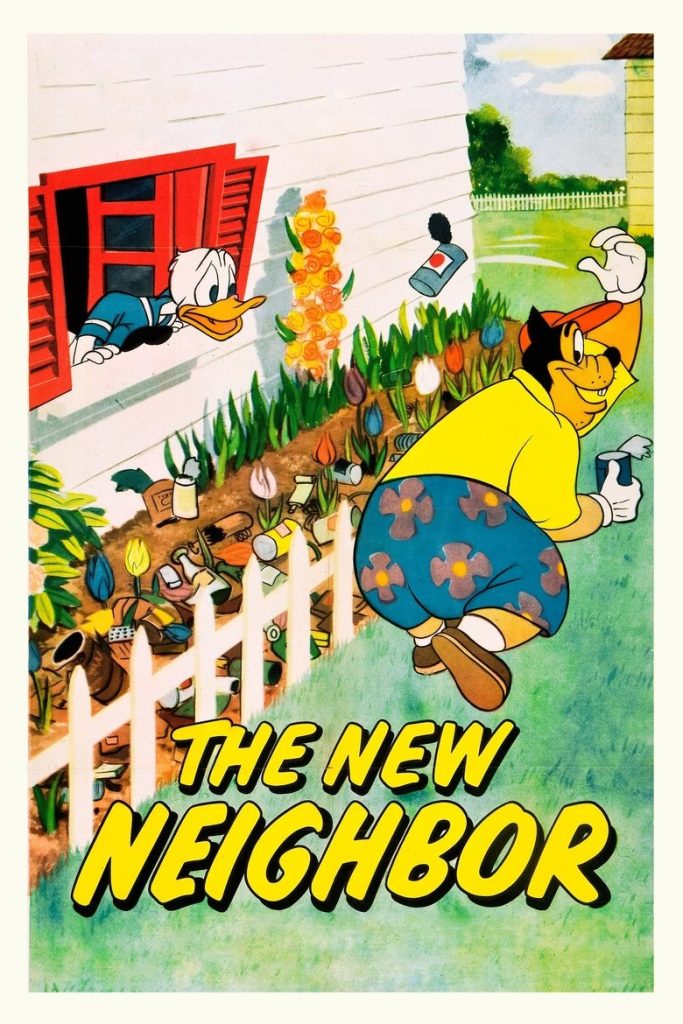
This 1953 animated short features Donald Duck moving into a new home and dealing with a problematic neighbor. The neighbor is messy, takes advantage of Donald, and has a dog that causes damage to Donald's property. The conflict escalates into a comedic battle that draws public attention with crowds and TV coverage.
Parent Guide
A classic cartoon with slapstick humor and exaggerated neighbor conflict suitable for most children.
Content breakdown
Cartoon slapstick violence including property damage and comedic fighting.
No frightening or disturbing content beyond typical cartoon antics.
No inappropriate language.
No sexual content or nudity.
No substance use depicted.
Mild frustration and conflict between characters, resolved humorously.
Parent tips
This classic cartoon contains slapstick comedy and exaggerated conflicts that are typical of vintage animation. The escalating neighbor dispute is portrayed humorously with cartoon violence and property damage. Parents should note that the film presents conflict resolution through competitive retaliation rather than communication or compromise.
Parent chat guide
Parent follow-up questions
- How did Donald feel when his neighbor bothered him?
- What funny things happened in the cartoon?
- What could Donald have done differently?
- How do you think the neighbor felt?
- What makes a good neighbor?
- Why did the conflict between Donald and his neighbor get worse?
- What were some consequences of their actions?
- How could they have solved their problem better?
- What does the cartoon show about getting along with others?
- Why do you think people in the cartoon were cheering?
- What does this cartoon suggest about how people handle conflicts?
- How does the media coverage in the story affect the situation?
- What real-life neighbor issues might this be exaggerating?
- What are healthier ways to resolve neighbor disputes?
- How does the cartoon use humor to show conflict?
- What social commentary might this cartoon be making about neighbor relations?
- How does the media portrayal within the story reflect on conflict escalation?
- What does this say about public entertainment from conflict?
- How might this cartoon reflect 1950s attitudes toward property and community?
- What are the ethical implications of how the characters handle their dispute?
🎭 Story Kernel
At its core, 'The New Neighbor' explores the fragility of suburban social contracts and how easily they can be weaponized. The film isn't about a mysterious outsider, but about how the existing community's unspoken rules—maintaining appearances, avoiding confrontation, performing neighborliness—create the perfect vacuum for manipulation. The protagonist, Mark, isn't driven by curiosity but by a deep-seated fear of social exclusion that his new neighbor, Leo, expertly exploits. The real horror isn't Leo's potential danger, but the community's collective choice to ignore obvious red flags in favor of peaceful facades, revealing how complicity is born from conformity.
🎬 Visual Aesthetics
The film employs a deceptively bright, saturated color palette of suburban blues, greens, and yellows, creating an aesthetic of artificial cheer that slowly curdles. Director Ana Cruz uses static, symmetrical wide shots of identical houses to establish oppressive uniformity, then disrupts it with sudden, shaky handheld close-ups during moments of tension, visually breaking the perfect facade. The most powerful visual motif is the recurring use of windows and screens—from living room bay windows to smartphone displays—framing characters as both observers and prisoners in their own homes, emphasizing the theme of performative domesticity and voyeuristic anxiety.
🔍 Details & Easter Eggs
💡 Behind the Scenes
The entire film was shot on location in a single actual suburban development in Austin, Texas, with homeowners compensated to use their unaltered houses. Lead actor Michael Stahlberg, who plays Leo, stayed in character off-camera for the entire six-week shoot, never interacting with the cast as himself, which created genuine unease that translates to screen. The now-iconic 'hedge trimming' confrontation scene was largely improvised after the original scripted dialogue felt too theatrical, with the director instructing the actors to argue about the most mundane suburban grievance they could invent.
Where to watch
Choose region:
- Disney Plus