
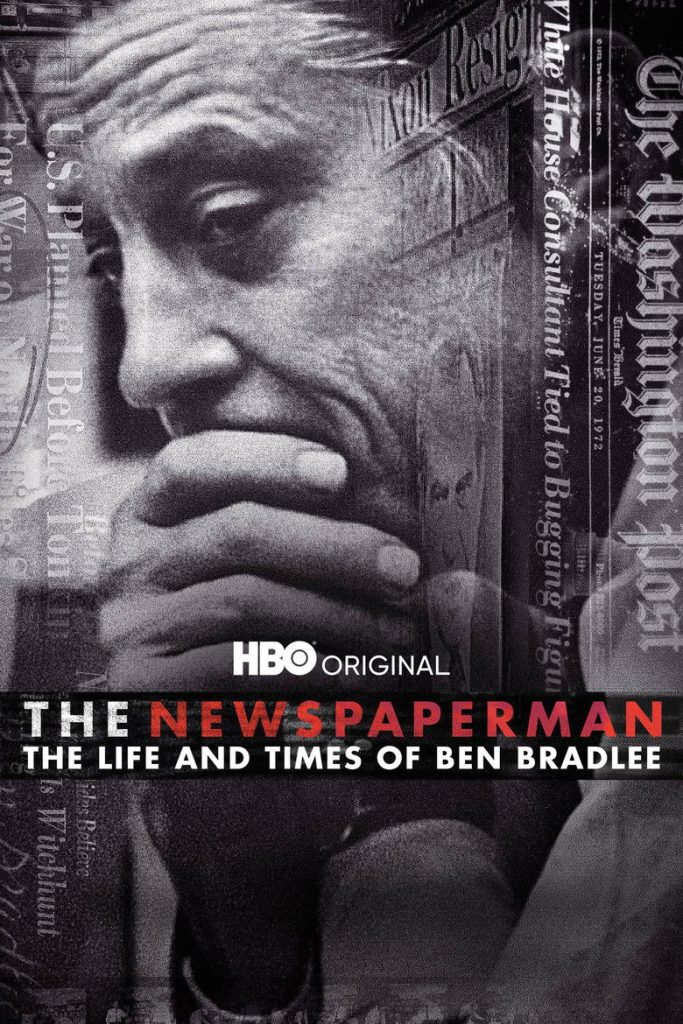
The Newspaperman: The Life and Times of Ben Bradlee (2017)
Story overview
This documentary explores the life of Ben Bradlee, the influential Washington Post editor who played a key role in American journalism during pivotal moments like the Pentagon Papers and Watergate. It follows his personal journey from childhood polio to becoming a media icon, featuring interviews with journalists and colleagues.
Parent Guide
A documentary about journalistic history and personal resilience, with minimal concerning content. Best for older children and teens interested in history or media.
Content breakdown
No depictions of violence or peril; focuses on historical events and interviews.
Nothing scary or disturbing; includes discussion of political scandals but in a factual, non-sensational manner.
May include occasional mild language related to historical contexts, but no strong profanity.
No sexual content or nudity.
No depiction or discussion of substance use.
Mild emotional moments related to Bradlee's personal struggles or historical significance, but not intense.
Parent tips
This documentary is suitable for most families with children ages 8 and up. It focuses on historical journalism and personal biography without intense content. Parents of younger viewers might want to watch together to explain historical context like Watergate or the Pentagon Papers. The TV-14 rating reflects some discussion of political scandals and adult themes, but there's no graphic material.
Parent chat guide
Parent follow-up questions
—
- What did Ben Bradlee do as a journalist?
- How did he help people learn the truth?
- What is a newspaper editor?
- Why was the Washington Post important during Watergate?
- How did Bradlee's childhood with polio shape him?
- What does it mean to be ethical in journalism?
- How did Bradlee's leadership influence modern media?
- What are the risks and rewards of investigative journalism?
- How do historical events like the Pentagon Papers relate to press freedom today?
🎭 Story Kernel
The film is less a biography and more an autopsy of institutional power. It positions Ben Bradlee not as a hero, but as the chief surgeon operating on the rotting corpse of American political trust during Watergate. His drive isn't purely journalistic integrity; it's the intoxicating, high-stakes game of holding the most powerful office accountable, revealing a man whose ego and ambition were as essential to the victory as his principles. The core tension explores whether the Fourth Estate's greatest triumph required a certain moral flexibility in its champion, making the story a complex study of ends, means, and the messy humanity required to topple a giant.
🎬 Visual Aesthetics
The visual language is deliberately archival and tactile, contrasting grainy, vérité-style newsroom footage with crisp, contemporary interviews. The color palette often desaturates into the muted browns and greys of 1970s newsprint, visually rooting us in the era. Key symbolism emerges through the relentless close-ups on typewriters, teletype machines, and, most powerfully, the physical stacks of paper—the 'smoking gun' evidence wasn't digital, but tangible, heavy, and real. The camera lingers on documents and faces with equal weight, suggesting that in this battle, human conviction and material proof were inseparable weapons.
🔍 Details & Easter Eggs
💡 Behind the Scenes
The documentary, directed by John Maggio, benefited from unprecedented access to The Washington Post's archives and the Bradlee family's personal collections. Much of the vintage newsroom footage was sourced from the post's own internal film reels, some unused for decades. A notable production challenge was clearing the rights to the extensive period audio of Nixon's White House tapes, which required negotiations with the National Archives. Actor Tom Hanks, a noted admirer of Bradlee, served as an executive producer on the project, helping to secure its platform on HBO.
Where to watch
Choose region:
- HBO Max
- HBO Max Amazon Channel
- Amazon Video
- Apple TV Store
- Google Play Movies
- YouTube
- Fandango At Home
Trailer
Trailer playback is unavailable in your region.