
The Other Side of the Wind (2018)
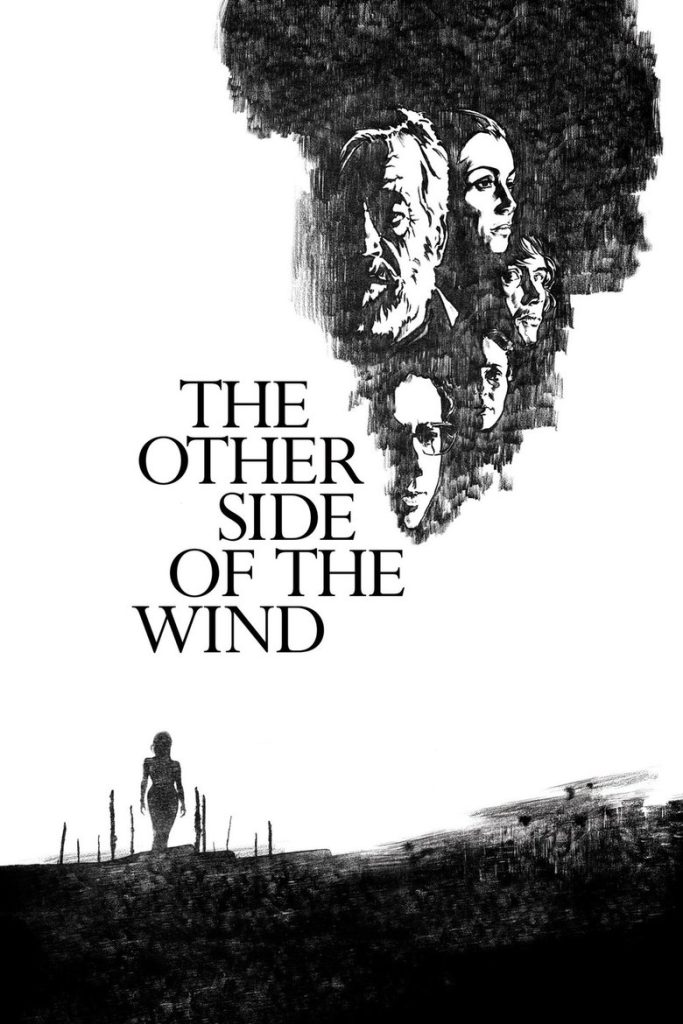
Story overview
This film follows aging director J.J. 'Jake' Hannaford as he returns to Hollywood after years in Europe, navigating a changed film industry while trying to complete his comeback project. The movie itself has a unique history—started by Orson Welles in 1970 but only completed and released posthumously in 2018. It blends documentary-style footage with fictional narrative elements, exploring themes of artistic integrity, aging, and the changing nature of cinema.
Parent Guide
This artistic drama explores mature themes of artistic integrity, aging, and the film industry through complex narrative techniques. While not graphically violent or sexually explicit, its sophisticated content and occasional strong language make it most appropriate for older teens and adults.
Content breakdown
No physical violence depicted. Some tense moments in conversations and creative conflicts. A car accident is discussed but not shown graphically.
Some psychologically intense scenes involving creative frustration and personal conflicts. The film's unconventional structure and meta-commentary might be confusing or unsettling for some viewers.
Occasional strong language including f-words and other profanity. Not constant but present in several scenes, particularly during tense creative discussions.
Some sexual references and innuendo in dialogue. Brief suggestive scenes but no explicit nudity or sexual acts shown.
Characters frequently drink alcohol (wine, cocktails) in social and professional settings. Some smoking depicted. No illicit drug use shown.
Strong themes of artistic frustration, aging, and professional obsolescence. The main character's struggle with creative relevance and industry changes creates emotional weight. The film's incomplete production history adds a layer of melancholy.
Parent tips
This R-rated drama is intended for mature audiences due to its complex themes and occasional strong language. The film's nonlinear structure and meta-commentary on filmmaking may be challenging for younger viewers. Parents should note this is more an artistic character study than traditional narrative entertainment.
Parent chat guide
Parent follow-up questions
—
—
—
- What did you think about the way the film was structured with documentary and fictional elements mixed together?
- How does this movie comment on the film industry and artistic creation?
- What themes about aging and relevance did you notice in the main character's journey?
- How does the incomplete history of the film's production affect how you view it?
🎭 Story Kernel
The film is a scathing, self-lacerating autopsy of the aging artist in a world that has moved on. It's not really about Jake Hannaford completing his film; it's about the impossibility of completion when the creator's relevance has evaporated. Hannaford's desperate, chaotic party—filled with sycophants, critics, and hustlers—becomes a funeral for his artistic potency. His obsession with the young actor Oja Kodar is less about desire and more about vampirically trying to siphon her vitality and modernity to fuel his dying vision. The driving force is the terror of obsolescence, masked by bluster and bourbon.
🎬 Visual Aesthetics
Welles constructs a dizzying, fragmented collage. The party scenes are a vérité nightmare—grainy, handheld, black-and-white 16mm, capturing chaotic, overlapping dialogues that feel like a decaying newsreel. This clashes violently with the lush, saturated color and slow-motion fetishism of Hannaford's 'film within the film,' a parody of European art-house pretension. The camera is never stable, mirroring Hannaford's crumbling psyche. The final car crash isn't shown directly; we see its aftermath through a static, distant shot, emphasizing his death as a mere postscript, already being consumed by the media vultures.
🔍 Details & Easter Eggs
💡 Behind the Scenes
The film was shot sporadically between 1970 and 1976, with Welles funding it himself and using a revolving door of crew and actors as money and favors allowed. Key scenes were filmed at the home of director Gary Graver. The chaotic party footage was largely improvised, with Welles directing guests via hidden earphones. It remained unfinished and entangled in legal battles for decades after Welles' death in 1985, finally being completed by others using his notes in 2018, making its very existence a meta-commentary on the themes of fragmentation and posthumous assembly.
Where to watch
Choose region:
- Netflix
- Netflix Standard with Ads
Trailer
Trailer playback is unavailable in your region.