
The Pee-wee Herman Show on Broadway (2011)
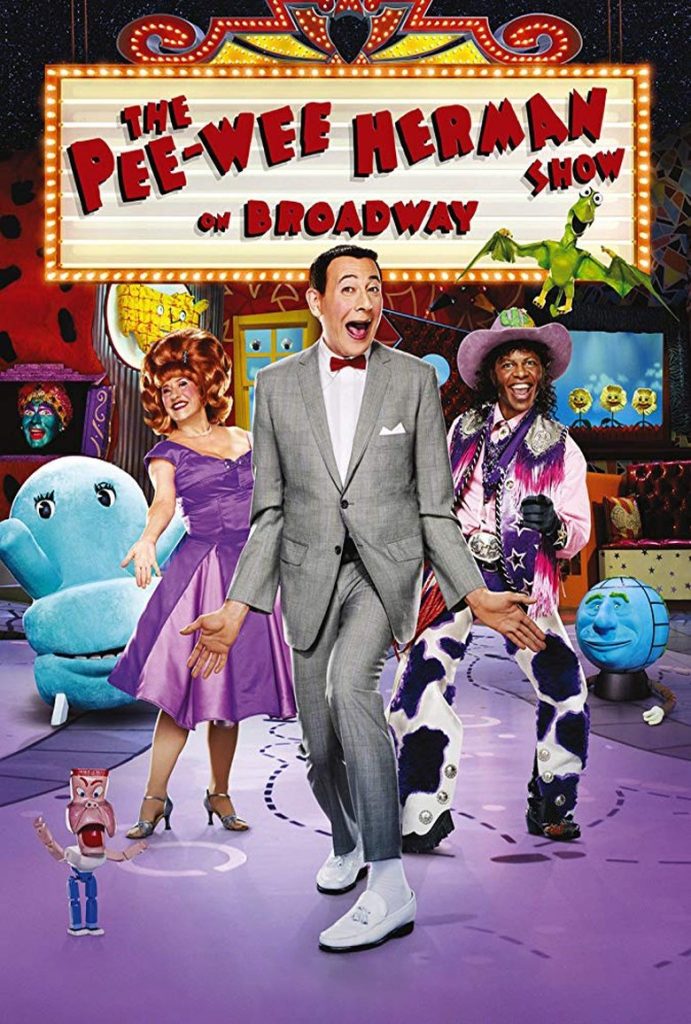
Story overview
Pee-wee Herman, a childlike man with boundless enthusiasm, is thrilled when Jambi the genie grants him a wish. He chooses to fly, but his joy turns to disappointment when he spots his friends Captain Carl and Miss Yvonne on a romantic date together, leading to comedic misunderstandings and lighthearted adventures in his whimsical world.
Parent Guide
A gentle, whimsical comedy with minimal concerns, ideal for elementary-aged children who enjoy physical humor and imaginative play.
Content breakdown
No violence or peril; only cartoonish, harmless antics like pratfalls and exaggerated reactions.
Nothing scary or disturbing; all content is bright, cheerful, and comedic.
No offensive language; dialogue is clean and playful, with made-up words or mild exclamations like 'golly.'
No sexual content or nudity; romantic elements are limited to innocent crushes or dates shown in a G-rated manner.
No substance use; characters may drink fictional beverages like 'glug' in a silly context.
Low emotional intensity; brief moments of jealousy or disappointment are resolved quickly with humor and positivity.
Parent tips
This Broadway adaptation of Pee-wee Herman's classic show is a nostalgic, family-friendly comedy with slapstick humor and colorful characters. It's suitable for most children but may be too silly for some teens. Watch together to explain any dated references or exaggerated emotions.
Parent chat guide
Parent follow-up questions
- What was your favorite silly part?
- Can you pretend to fly like Pee-wee?
- How did Pee-wee feel when he saw his friends?
- Why do you think Pee-wee got upset about the date?
- What would you wish for from a genie?
- How do the characters show they care about each other?
- Is Pee-wee's behavior childish or charming? Why?
- How does the show use humor to deal with emotions?
- What makes this comedy different from modern kids' shows?
- How does this reflect 1980s/90s children's entertainment?
- Is Pee-wee's character relatable or too exaggerated?
- What themes about adulthood vs. childhood does it explore?
🎭 Story Kernel
The show isn't about Pee-wee's quest for his stolen bike—that's just the MacGuffin. The real story is about the preservation of innocence in a world that demands conformity. Pee-wee's universe operates on childlike logic where imagination solves problems, adults are either benevolent (like Miss Yvonne) or silly obstacles, and rules exist only to be playfully subverted. His refusal to 'grow up' isn't immaturity but a deliberate philosophical stance against the mundane. Every character in the Playhouse represents an aspect of childhood wonder that society tries to suppress, and their collective adventures are a manifesto for finding joy in simple, absurd creation.
🎬 Visual Aesthetics
The Broadway staging deliberately mimics the low-budget aesthetic of the original 1980s TV set, creating a nostalgic diorama rather than a slick production. The camera (when adapted for film) uses static, proscenium-style shots that make viewers feel like they're peeking into a dollhouse. Primary colors dominate—reds, yellows, blues—in saturated blocks that feel both cheerful and artificially heightened. The handmade quality of props (like Pterri the pterodactyl and Chairry) emphasizes tactile creativity over digital effects. This isn't cinematic realism; it's the visual language of Saturday morning cartoons made three-dimensional, where every object has potential for magic.
🔍 Details & Easter Eggs
💡 Behind the Scenes
Paul Reubens revived Pee-wee Herman specifically for this Broadway show after a 20-year hiatus, rewriting much of the original TV scripts himself. The production used actual props from the 1980s CBS series stored in Reubens' personal archive. Notably, the show was filmed over multiple live performances and edited together, explaining slight costume variations in the final cut. Original voice actor John Paragon returned to puppeteer Jambi, while Lynne Marie Stewart reprised her role as Miss Yvonne—making it a reunion of the core creative team decades later.
Where to watch
Choose region:
- HBO Max
- HBO Max Amazon Channel
Trailer
Trailer playback is unavailable in your region.