
The Piano Teacher (2001)
Story overview
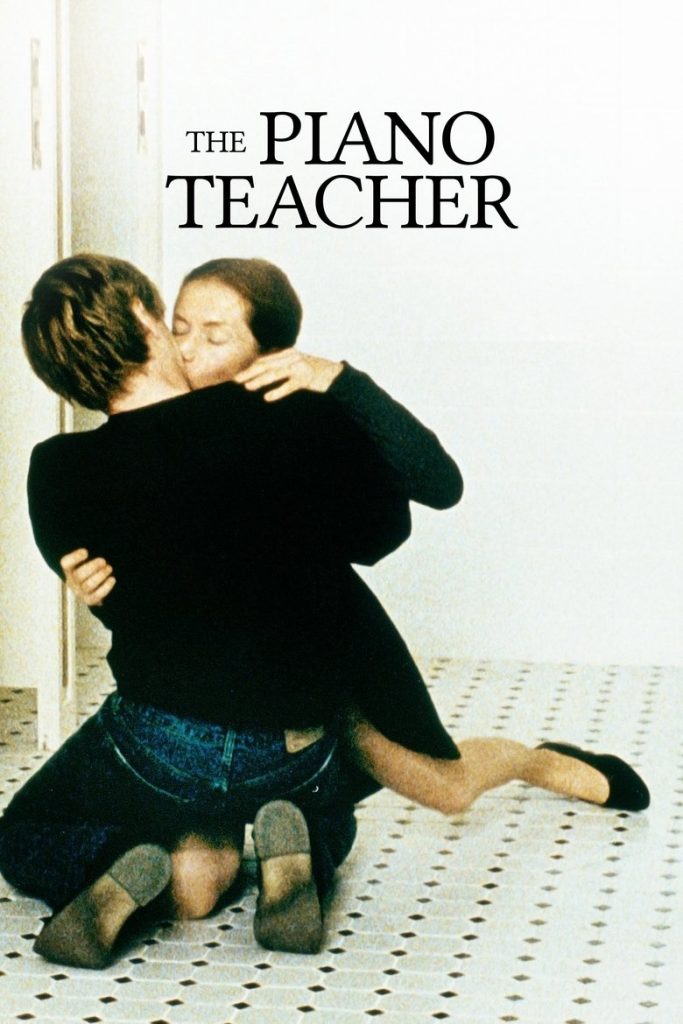
The Piano Teacher is a 2001 drama film that explores the complex psychological dynamics between a strict piano teacher and her talented student. Set against the backdrop of classical music, it delves into themes of control, desire, and emotional repression. The film examines the teacher's unconventional personal life and the intense relationship that develops, challenging traditional boundaries.
Parent Guide
This R-rated film contains mature psychological themes, sexual content, and intense emotional situations suitable only for adults and mature older teens.
Content breakdown
Contains psychological tension and emotional peril rather than physical violence
Features disturbing psychological content and intense emotional situations
Contains adult language and dialogue about mature themes
Contains explicit sexual content and nudity central to the plot
May include social drinking in adult settings
High emotional intensity throughout with complex psychological dynamics
Parent tips
This R-rated film contains mature themes and content unsuitable for children and younger teens. Parents should be aware that it deals with psychological intensity, sexual content, and disturbing emotional situations that require mature perspective. The film's exploration of power dynamics and repressed desires makes it appropriate only for older, emotionally mature audiences who can process complex adult themes.
Parent chat guide
Parent follow-up questions
- What instrument did the teacher play?
- Did you see any pianos in the movie?
- What colors did you notice in the music scenes?
- Was the music happy or sad?
- Did the people in the movie sing or just play instruments?
- What was the teacher's job in the movie?
- How did music help tell the story?
- What made the relationship between teacher and student special?
- How do people show they care about music?
- What challenges did the characters face with their music?
- How did music express emotions in the film?
- What responsibilities do teachers have toward students?
- How did the characters' personalities affect their music?
- What does dedication to art look like?
- How can creative people balance their personal and professional lives?
- How does the film explore power dynamics in relationships?
- What commentary does the film make about artistic passion versus personal boundaries?
- How do societal expectations influence the characters' behaviors?
- What does the film suggest about repression and expression of desire?
- How does the setting and music contribute to the psychological tension?
🎭 Story Kernel
The film is a brutal autopsy of artistic sublimation and the violence of repression. Erika Kohut, a virtuoso piano teacher, has channeled all her primal desires—sexual, emotional, violent—into the rigid discipline of classical music. Her life is a meticulously performed score where control is everything. When Walter, her talented and virile student, breaches her defenses, he doesn't offer liberation but a mirror. Their relationship is not a romance but a catastrophic collision of two opposing forces: his raw, entitled masculinity and her labyrinthine, sadomasochistic internal world. The film argues that when human nature is forced into an art form for too long, the art becomes a cage, and the only possible finale is self-destruction.
🎬 Visual Aesthetics
Haneke's camera is a cold, clinical observer, employing static medium shots and long takes that create a suffocating, museum-like atmosphere. The color palette is dominated by sterile whites, institutional greens, and muted tones, reflecting Erika's emotionally frigid world. Key actions are often framed through doorways or reflected in glass, emphasizing voyeurism and separation. The most potent visual metaphor is the glass case at the music school; Erika is constantly seen behind it, a specimen in her own habitat. The violence, when it comes, is shot with the same detached precision as a piano lesson, making it all the more shocking and intimate.
🔍 Details & Easter Eggs
💡 Behind the Scenes
Isabelle Huppert's fearless performance was guided by Michael Haneke's notorious precision; he provided her with a 30-page backstory for Erika. The film is an adaptation of Elfriede Jelinek's autobiographical novel, which drew from her own experiences in Vienna's conservative musical world. The piano pieces, including works by Schubert and Bach, were chosen for their structural rigor, mirroring Erika's psyche. Notably, the concert hall and conservatory scenes were filmed in actual Viennese institutions, adding to the film's austere, authentic atmosphere.
Where to watch
Choose region:
- HBO Max
- Criterion Channel
- Shout! Factory TV
- Apple TV
- Google Play Movies
- YouTube
- Fandango At Home
Trailer
Trailer playback is unavailable in your region.