
The Princess Bride (1987)
Story overview
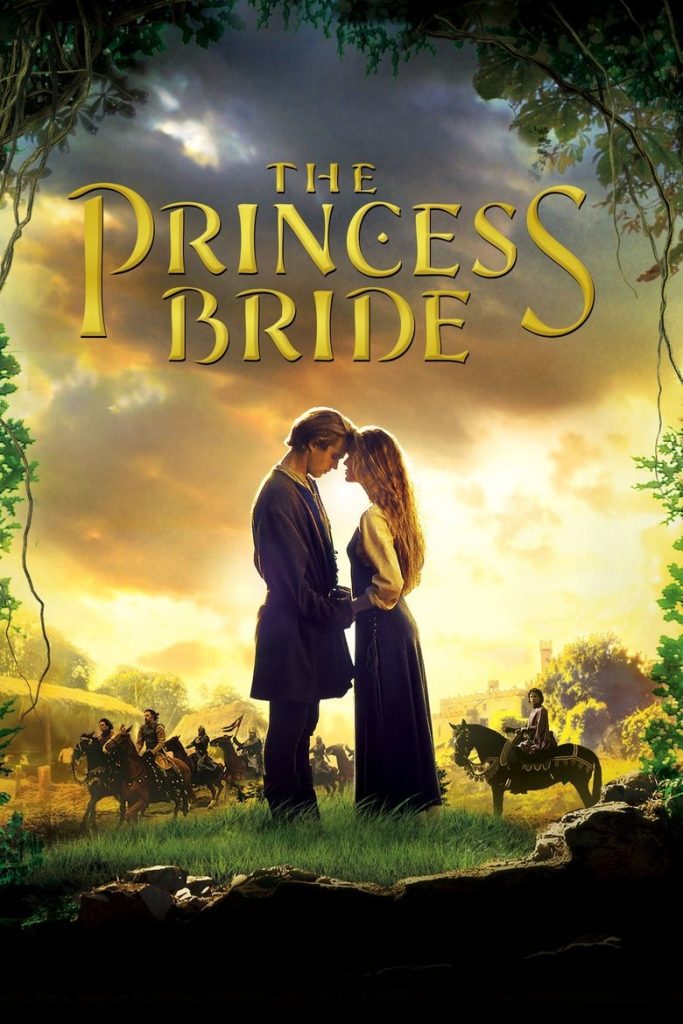
The Princess Bride is a beloved 1987 adventure-comedy that blends fantasy, romance, and humor in a storybook-style narrative. Framed as a grandfather reading to his sick grandson, the film follows Princess Buttercup and her true love Westley as they face villains, sword fights, and fantastical creatures. With witty dialogue, memorable characters, and a playful tone, it's a classic that appeals to both children and adults.
Parent Guide
A charming, witty fairy tale adventure with mild action and peril, suitable for most children ages 8 and up. The playful tone softens intense moments, and positive messages about love and courage prevail.
Content breakdown
Stylized sword fights (no blood), comedic violence (e.g., a character is 'mostly dead'), and perilous situations (quicksand, fire, large rodents). All presented humorously with minimal realism.
Briefly intense scenes in the Fire Swamp (fire bursts, Rodents of Unusual Size) and a torture device (the 'Machine') shown comically. Villains are cartoonish, not truly frightening.
No strong language; mild insults like 'inconceivable!' used humorously. Clean dialogue throughout.
Only romantic kissing and embraces; no nudity or sexual references. Focus is on chivalric romance.
No depiction of alcohol, drugs, or smoking. One scene with a character drinking from a goblet, unspecified.
Moments of suspense and peril are balanced by humor and a happy ending. Themes of loss and revenge are handled lightly. Emotional core is uplifting.
Parent tips
This PG-rated film is generally family-friendly but includes some mild peril and comedic violence. Best for ages 8+, younger children might find certain scenes (like the Fire Swamp or Rodents of Unusual Size) briefly intense. The humor is clever and often satirical, which older kids will appreciate more. A great choice for shared viewing with opportunities to discuss themes like true love, bravery, and storytelling.
Parent chat guide
Parent follow-up questions
- Which character did you like best?
- Was there any part that felt too scary?
- What was the funniest thing you saw?
- Why do you think the grandfather is telling this story?
- How did Westley show bravery?
- What would you do in the Fire Swamp?
- How does the movie make fun of fairy tale clichés?
- Is revenge a good motivation for Inigo?
- What makes the humor work for both kids and adults?
- How does the film use meta-storytelling to comment on narratives?
- Discuss the themes of loyalty and deception in the characters.
- Why has this movie remained a cult classic over decades?
🎭 Story Kernel
The film's core isn't about rescuing a princess; it's a metanarrative about the power and necessity of storytelling itself. The framing device of a grandfather reading to his sick grandson argues that classic tropes—true love, honor, revenge—are not clichés but foundational human needs. Westley's journey is a deconstruction of the perfect hero—he's arrogant, gets bested in a battle of wits, and nearly dies from torture—yet his unwavering commitment to Buttercup makes him genuinely heroic. The villains are driven by vanity (Prince Humperdinck), sadistic professionalism (Count Rugen), and brute-force careerism (Vizzini), making their defeat a victory for wit and heart over hollow ambition.
🎬 Visual Aesthetics
Rob Reiner employs a soft, storybook aesthetic for Florin, using warm filters and painterly compositions that feel lifted from an illustrated tome, contrasting with the grim, shadowy realism of the Pit of Despair. The camera often adopts a classic, stable stance during heroic moments (like the Cliffs of Insanity duel), honoring swashbuckler tradition, while using tighter, more frantic shots for comedy (e.g., the Battle of Wits). The action is deliberately theatrical—clanging swords, acrobatic flips—eschewing gritty realism to maintain the fable's tone. Symbolism is playful yet pointed: the Fire Swamp's dangers (ROUSes, lightning sand, flame spurts) externalize the chaotic perils of life that true love must navigate.
🔍 Details & Easter Eggs
💡 Behind the Scenes
André the Giant, who played Fezzik, was in near-constant pain during filming due to his acromegaly, yet performed all his own stunts. Mandy Patinkin channeled the grief of his own father's death into Inigo Montoya's quest for vengeance, making 'Hello. My name is Inigo Montoya. You killed my father. Prepare to die.' profoundly personal. The Cliffs of Insanity were shot at the stunning Cliffs of Moher in Ireland. Cary Elwes and Robin Wright performed most of their own stunts, with Elwes actually being knocked unconscious by Christopher Guest (Count Rugen) during the sword-fight rehearsal, a moment kept in the final cut.
Where to watch
Choose region:
- Disney Plus
- fuboTV
- Freeform
- Amazon Video
- Apple TV Store
- Google Play Movies
- YouTube
- Fandango At Home
Trailer
Trailer playback is unavailable in your region.