
The Railway Man (2013)
Story overview
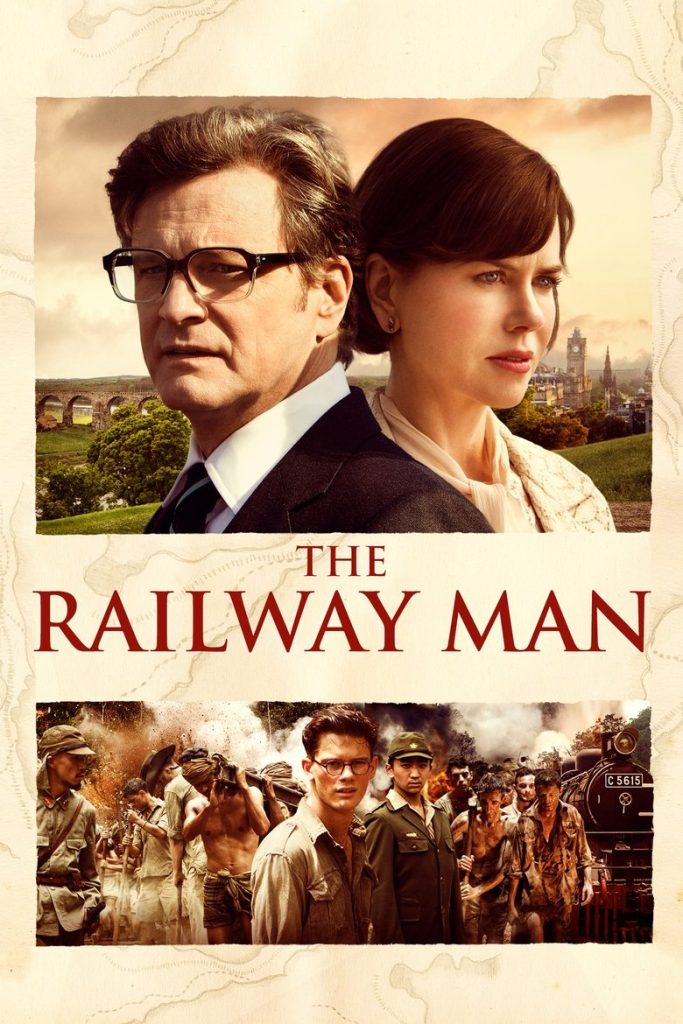
Based on a true story, 'The Railway Man' follows Eric Lomax, a British Army officer who was captured and tortured by Japanese forces during World War II while working on the infamous 'Death Railway' in Thailand. Decades later, haunted by trauma, he seeks out one of his former captors in an attempt to find closure and reconciliation. The film alternates between his wartime experiences and his post-war life, exploring themes of forgiveness, resilience, and the long-lasting impact of war.
Parent Guide
A powerful but intense historical drama about wartime trauma and reconciliation. Contains graphic depictions of torture and prisoner-of-war conditions that may be disturbing. Recommended for mature audiences only.
Content breakdown
Graphic depictions of wartime violence including torture scenes (waterboarding, beatings, psychological torment), prisoner abuse, and battlefield violence. Realistic portrayals of suffering and injury. Several intense interrogation sequences.
Disturbing content related to prisoner-of-war camps, torture, and psychological trauma. Realistic depictions of human suffering. Flashbacks to traumatic events. Themes of post-traumatic stress disorder and emotional anguish.
Occasional war-related strong language including 'bastard' and 'damn.' No excessive or gratuitous profanity.
No sexual content or nudity. Some brief romantic moments between married characters.
Social drinking in post-war scenes. No substance abuse depicted.
High emotional intensity throughout. Themes of trauma, suffering, anger, and eventual forgiveness. The film deals with heavy psychological and emotional content that may be overwhelming for sensitive viewers.
Parent tips
This film deals with intense themes of wartime trauma, torture, and post-traumatic stress. It includes realistic depictions of prisoner-of-war conditions, physical violence, and psychological suffering. While ultimately a story of healing and forgiveness, the content is emotionally heavy and may be disturbing for younger viewers. Best suited for mature teens who can handle historical war dramas with graphic elements.
Parent chat guide
Parent follow-up questions
—
—
- What do you know about World War II?
- Why do you think Eric was so affected by what happened to him?
- What does 'forgiveness' mean to you?
- How does the film show the long-term effects of trauma?
- What did you think about Eric's decision to confront his torturer?
- How does the film balance historical accuracy with storytelling?
- What does the film suggest about the possibility of reconciliation after violence?
- How does the film portray the psychological impact of war compared to physical injuries?
🎭 Story Kernel
The Railway Man is fundamentally about the persistence of trauma and the radical, terrifying choice of forgiveness as the only possible liberation. Eric Lomax's journey isn't about forgetting the Japanese torture he endured as a POW forced to build the Burma Railway; it's about metabolizing it. His marriage to Patti becomes the fragile bridge back to humanity, yet it's his confrontation with Takashi Nagase—his former interpreter and tormentor—that forms the story's brutal, beating heart. The film argues that true healing requires facing the source of the wound, not with vengeance, but with a recognition of shared, broken humanity. The climax isn't a violent act, but the excruciating, transformative moment when Lomax chooses to see the aged, remorseful man before him, not the ghost of his captor.
🎬 Visual Aesthetics
The film employs a stark, deliberate visual dichotomy. The wartime sequences are washed in a harsh, desaturated palette of jungle greens and mud browns, with handheld camerawork creating a sense of claustrophobic, relentless dread. In contrast, the 1980s timeline is rendered in cooler, more composed blues and greys, reflecting Eric's emotional frost and the sterile peace of his post-war life. Key symbolic visuals anchor the narrative: the recurring image of the railway tracks, lines of convergence and division; the claustrophobic 'cooler' torture box; and the powerful, wordless close-ups on Firth and Sanada's faces during their final confrontation, where the entire emotional history of the film is communicated through eyes and silence.
🔍 Details & Easter Eggs
💡 Behind the Scenes
The film is based on the autobiography of the real Eric Lomax. Colin Firth and Jeremy Irvine, who play the older and younger Eric, did not meet before filming to preserve the emotional disconnect between the traumatized man and his past self. Key scenes were shot on the actual Burma-Siam railway in Thailand, near the real Hellfire Pass. Director Jonathan Teplitzky worked closely with Lomax's widow, Patti, to accurately portray their relationship. Notably, the real Takashi Nagase spent decades after the war returning to Thailand to reconcile with his past and help locate the remains of Allied POWs, a fact mirrored in his character's journey.
Where to watch
Choose region:
- Peacock Premium
- Peacock Premium Plus
- The Roku Channel
- Tubi TV
- Amazon Video
- Google Play Movies
- YouTube
- Fandango At Home
Trailer
Trailer playback is unavailable in your region.