The Rat Catcher (2023)
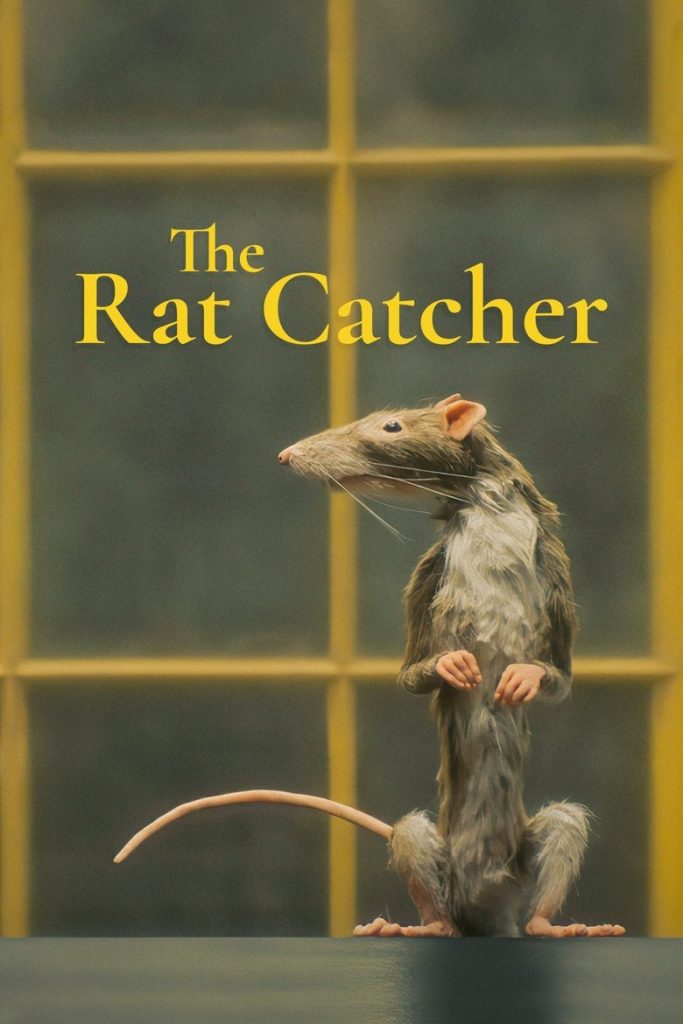
Story overview
In a quaint English village, a reporter and a mechanic engage with a ratcatcher who elaborates on his ingenious strategy to outsmart the rats he pursues, blending subtle humor with a focus on clever problem-solving in a brief, whimsical narrative.
Parent Guide
This short comedy is family-friendly and mild, with no significant content concerns. It's best suited for children ages 8 and up who can appreciate the subtle humor and narrative focus on clever planning.
Content breakdown
No violence or peril is depicted. The ratcatcher's plan involves outsmarting rats through strategy, not physical harm or dangerous situations.
Nothing scary or disturbing; the tone is light and comedic, with rats portrayed in a non-threatening manner as part of the plot.
No offensive or strong language is expected, consistent with the PG rating and comedic, gentle style.
No sexual content or nudity; the film focuses solely on the ratcatcher's story and interactions.
No substance use is shown or implied in the brief runtime.
Emotional intensity is minimal, with mild humor and curiosity driving the narrative. There are no intense emotional scenes or conflicts.
Parent tips
This short film is suitable for most children due to its PG rating and lighthearted tone. It focuses on cleverness and strategy rather than action or conflict. The ratcatcher's plan involves outthinking rather than harming the rats, which may spark discussions about creative solutions and animal treatment. With a runtime of only 17 minutes, it's an easy watch for families, but younger children might need help understanding some of the dialogue or the concept of pest control.
Parent chat guide
Parent follow-up questions
- Did you like the ratcatcher's story? Why or why not?
- What animals did you see in the movie?
- Can you think of a clever way to solve a problem like the ratcatcher did?
- How would you describe the ratcatcher's plan? Was it smart or silly?
- What do you think the reporter and mechanic learned from listening to him?
- If you were in the village, how would you help with the rats?
- What themes about intelligence or strategy did you notice in the film?
- How does the film use comedy to talk about a serious topic like pest control?
- Do you think the ratcatcher's methods were ethical? Why or why not?
- Analyze the film's style: how does Wes Anderson's direction add to the humor and storytelling?
- Discuss the social commentary on rural life or human-animal conflicts implied in the plot.
- Compare this short film to other works by Wes Anderson—what similarities or differences do you see in tone or message?
🎭 Story Kernel
The Rat Catcher is a chilling exploration of professional obsession and the erasure of the boundary between human and animal. Based on Roald Dahl’s short story, the film centers on a specialized exterminator whose methods are as repulsive as the vermin he hunts. Wes Anderson uses this narrative to examine the grotesque nature of expertise; the protagonist has spent so much time thinking like a rat that he has physically and psychologically morphed into one. It is a study of the uncanny, where the civilized observers—the reporter and the mechanic—are forced to confront a man who has abandoned social decorum for predatory instinct. The film suggests that to truly conquer an enemy, one must risk losing their own identity to the very thing they despise, resulting in a haunting portrait of dehumanization and the unsettling cost of singular mastery.
🎬 Visual Aesthetics
Anderson employs a stark, theatrical aesthetic that deviates from his typical pastel vibrance, opting instead for a palette of jaundiced yellows, muddy browns, and dusty ochres. The cinematography utilizes his signature flat, symmetrical compositions, but here they serve to trap the characters in a claustrophobic, stage-like environment. A standout element is the integration of stop-motion animation for the rat itself, which creates a jarring, uncanny valley effect against the live-action performers. This stylistic choice emphasizes the artifice of the story while making the vermin feel more tangible and threatening. The use of pantomime—where characters handle invisible objects—further blurs the line between reality and performance, forcing the audience to focus on the rhythmic, staccato delivery of Dahl’s prose and the unsettling physicality of Ralph Fiennes’ performance, which anchors the film's visual tension.
🔍 Details & Easter Eggs
💡 Behind the Scenes
The Rat Catcher is one of four short films directed by Wes Anderson for Netflix, all based on the works of Roald Dahl. This project marks Anderson's second major foray into Dahl's bibliography following 2009's Fantastic Mr. Fox. The film features a recurring ensemble cast used across the shorts, including Ralph Fiennes, Richard Ayoade, and Rupert Friend. Interestingly, Ralph Fiennes plays a dual role in the series, appearing as both the titular Rat Man and as Roald Dahl himself in the framing segments. The production was noted for its rapid shooting schedule and its deliberate use of minimalist, stage-bound sets.
Where to watch
Choose region:
- Netflix
- Netflix Standard with Ads