
The Road Within (2014)
Story overview
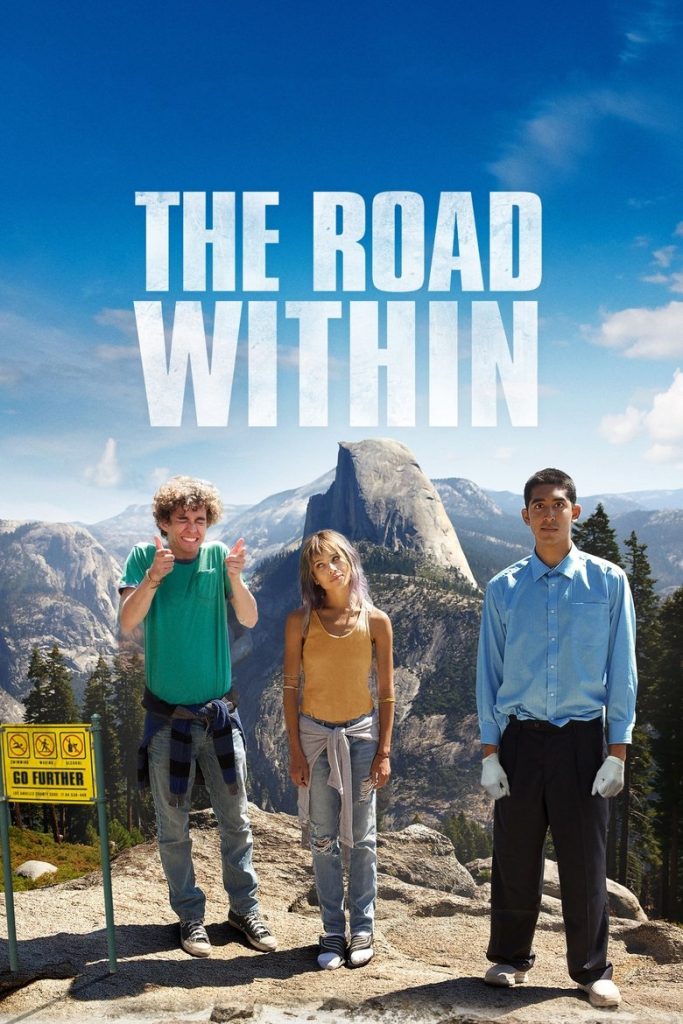
The Road Within (2014) is a heartfelt comedy-drama about Vincent, a young man with Tourette's Syndrome who escapes from a treatment center with his mother's ashes. He's joined by Alex, who has obsessive-compulsive disorder, and Marie, who has anorexia, as they embark on an unauthorized road trip to scatter the ashes at the ocean. The film explores themes of grief, friendship, mental health, and self-acceptance as these three unconventional companions navigate both external challenges and their internal struggles.
Parent Guide
This R-rated comedy-drama deals with mature themes including mental illness, grief, and family dysfunction. While ultimately uplifting, it contains strong language, sexual content, and emotionally intense scenes. Best for mature teens 16+ who can handle discussions about mental health challenges and loss.
Content breakdown
Some tense moments including a car accident scene (not graphic), characters running from authorities, and emotional confrontations. No physical violence between characters.
Themes of death and grief (carrying mother's ashes), realistic portrayal of mental health struggles including Tourette's tics, OCD rituals, and anorexia. Some emotionally intense scenes of family conflict and personal crisis.
Frequent strong language including f-words (approximately 15+), s-words, and other profanity. Some sexual references in dialogue.
Sexual dialogue and references. A scene with partial nudity (bare buttocks) during a sexual situation. Kissing and implied sexual activity (not graphic). Discussions about relationships and sexuality.
Social drinking in bars/restaurants. Characters drink alcohol in several scenes. No drug use shown.
High emotional intensity dealing with grief over a parent's death, struggles with mental health conditions, family conflict, and personal identity. Characters experience emotional breakdowns, confrontations, and cathartic moments. The journey is emotionally taxing but ultimately hopeful.
Parent tips
This R-rated film contains strong language, mature themes about mental illness and death, and some sexual content. Best for mature teens 16+ who can handle discussions about grief, mental health challenges, and family dysfunction. The film portrays characters with Tourette's, OCD, and anorexia with sensitivity but shows their struggles realistically. Parents should be prepared to discuss mental health stigma, coping with loss, and healthy relationships.
Parent chat guide
Parent follow-up questions
—
—
- What did you notice about how Vincent's body moved sometimes? How do you think it feels when people stare at someone who is different?
- Why do you think Vincent wanted to take his mom's ashes to the ocean? How do people remember loved ones who have died?
- How accurately do you think the film portrayed mental health conditions? What stereotypes did it challenge or reinforce?
- What did you think about the relationship dynamics between Vincent, Alex, and Marie? How did they help each other grow?
- How did the film handle themes of grief and letting go? What healthy and unhealthy ways of coping did you notice?
- What did you learn about living with Tourette's Syndrome from Vincent's experiences? How did others' reactions affect him?
- How did family expectations and pressures impact each character's journey? What messages about independence did the film convey?
🎭 Story Kernel
The film's core theme is the radical, often painful, interdependence required for true autonomy. It's not about three individuals with Tourette's, OCD, and anorexia 'overcoming' their conditions for society's comfort. The journey forces them to become each other's external coping mechanisms—Vincent's tics disrupt Alex's rituals, Alex's compulsions challenge Marie's control, and Marie's fragility demands Vincent's protective focus. Their escape from the clinic is a rebellion against being 'managed,' but the real rebellion is learning that their freedom is contingent on honoring each other's flawed, non-negotiable needs. The destination (the ocean) becomes irrelevant; the process of chaotic, unscripted co-regulation is the point.
🎬 Visual Aesthetics
The cinematography employs a handheld, intimate style that refuses clinical distance. Early scenes at the clinic use sterile blues and grays, framing characters through doors and windows, visually boxing them in. Once on the road, the palette warms to dusty golds and greens, with the camera moving fluidly among the trio, often in tight close-ups that capture raw, unfiltered moments—a tic, a compulsive hand-wash, a fearful glance. The car itself becomes a moving prison-then-sanctuary, its confined space forcing proximity. The final beach scenes are washed in overexposed, almost blinding light, symbolizing the overwhelming yet liberating exposure of their true selves, stripped of institutional buffers.
🔍 Details & Easter Eggs
💡 Behind the Scenes
The film is a remake of the German movie 'Vincent Wants to Sea' (2010). Actor Dev Patel, who plays Alex, spent time with individuals diagnosed with OCD to understand the physical and mental rituals, incorporating specific gestures he observed. The roadside diner scene where Marie struggles to eat was filmed in a single, intense take to capture the authentic anxiety. Notably, the filmmakers consulted with advocacy groups for Tourette syndrome and eating disorders during production to avoid sensationalism and ensure the portrayals stemmed from character rather than condition.
Where to watch
Choose region:
- Netflix
- Amazon Prime Video
- AMC Plus Apple TV Channel
- AMC+
- Netflix Standard with Ads
- Amazon Prime Video with Ads
- The Roku Channel
- YouTube Free
- Amazon Prime Video Free with Ads
- Tubi TV
- Amazon Video
- Apple TV Store
- Google Play Movies
- YouTube
- Fandango At Home
Trailer
Trailer playback is unavailable in your region.